Auto Feeders That Learn Your Fish's Routines
By Mei-Lin Zhou • 9th Dec
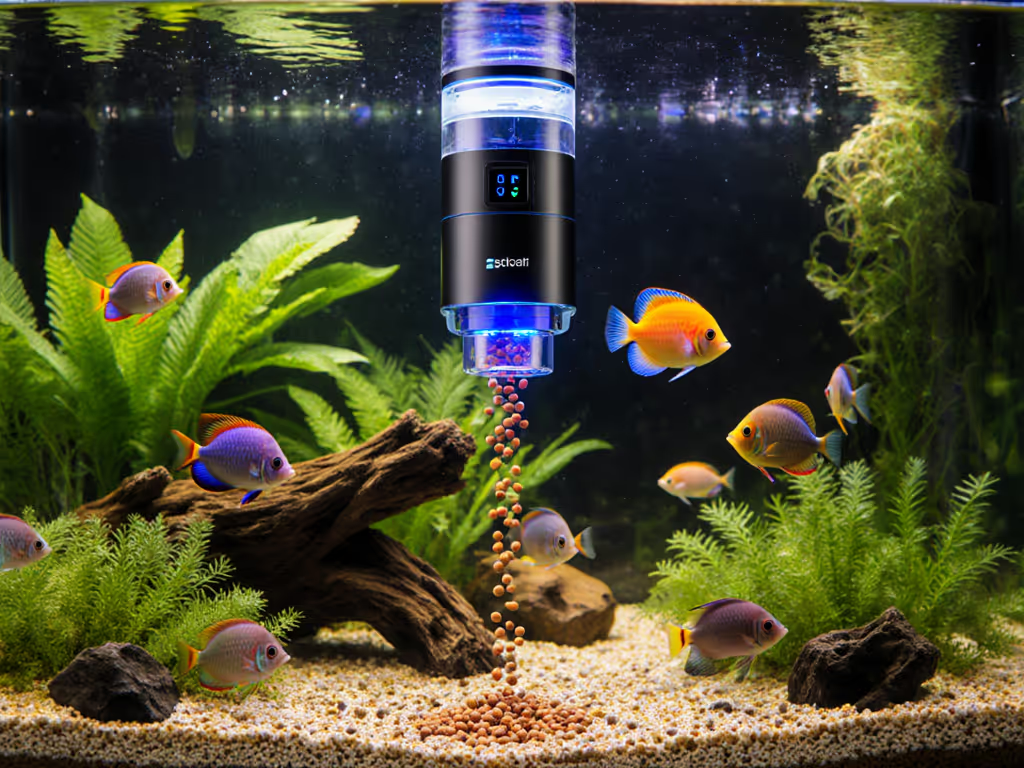
When choosing an auto fish food feeder, your biggest hope isn't just convenience, it's trust. Trust that the device truly understands your fish's needs, especially when you're away. What sets modern solutions apart are adaptive feeding systems designed not just to dispense food, but to respond to your aquarium's unique rhythms. For seasoned aquarists like us, those who've stared at cloudy water after overfeeding or worried during business trips, this isn't just tech. It is peace of mind rooted in observation. Let's explore how these systems can align with your careful stewardship. If you're new to the basics, see our automatic fish feeder guide for core concepts before diving into adaptive features.
The Heart of Smart Feeding: Beyond Simple Timers
How do adaptive feeders actually learn my fish's habits?
Truly intelligent systems move beyond preset schedules. They use behavior-based feeding algorithms that analyze subtle cues: how quickly fish swarm at feeding time, whether leftovers settle on the substrate, even water quality trends after meals. Think of it as a digital extension of your own observation skills. Studies show fish thrive when portion consistency matches their actual consumption, not theoretical body-weight percentages. A feeder that adjusts portions based on real-time feeding adaptation ensures no wasted food clouds your water or stresses your ecosystem. This isn't speculative; it's practical tech that mirrors how we'd feed manually if we could watch 24/7.
Start small, observe closely, let the fish teach you.
Can adaptive feeders prevent overfeeding? I've struggled with algae blooms after vacations.
Absolutely. Overfeeding causes 80% of nutrient-related crashes in established tanks, a fact confirmed by aquarium health surveys. Traditional timers dump the same amount daily, ignoring whether your angelfish are full or your corals are polyping. Advanced adaptive feeding systems detect slowdowns in consumption. If fish ignore the second feeding, the system may reduce the next portion. Some even integrate with water sensors to pause feeding if nitrates rise. Remember my neighbor's daughter, sobbing because her guppies vanished in milky water? She'd sprinkled flakes constantly, thinking more love = more food. Restoring clarity required restraint: fasting, tiny portions, and patience. Today's feeders automate that restraint, turning guesswork into precision. They don't just feed fish, they protect your entire ecosystem. Planning a trip? Compare options in our 7-day vacation feeder reliability test to pick a travel-proof setup.
I travel often. How reliable are these during power outages or schedule changes?
Reliability hinges on observation-backed design. For outage-proof setups, weigh the tradeoffs in our battery vs AC feeder comparison. Top-tier units include:
- Battery backups (30+ hours) maintaining schedules through outages
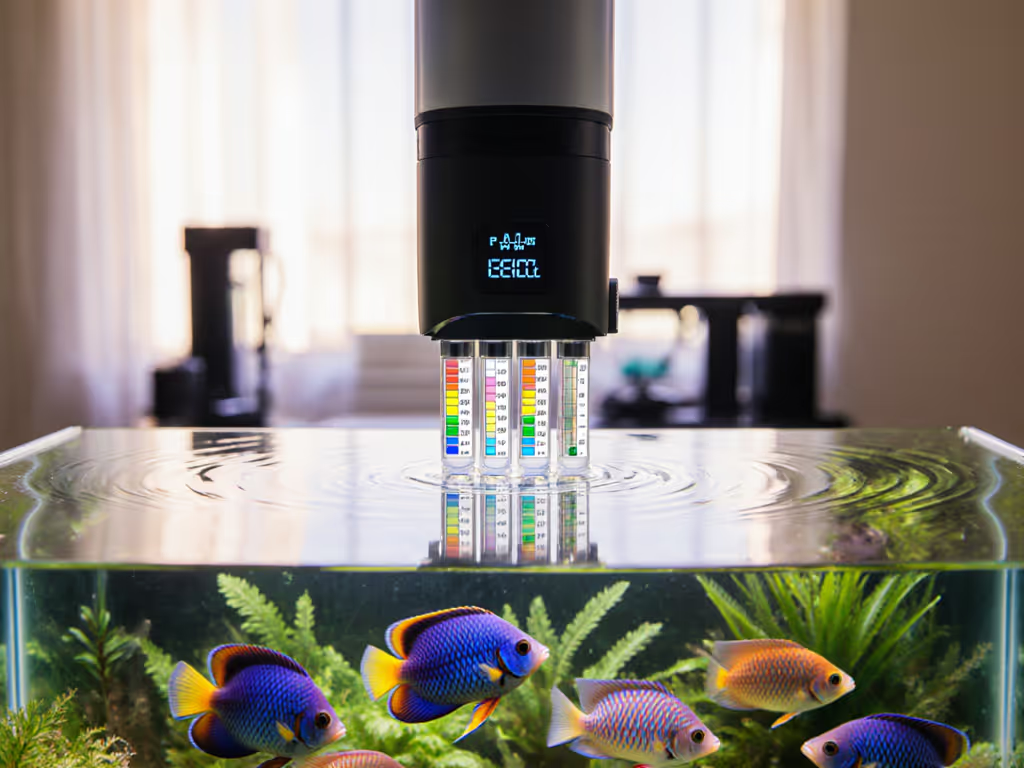
- Water-soluble sensor checks that skip feeding if conductivity indicates poor water quality
- Cloud sync so you can adjust portions mid-trip via app
Yet the wisest systems don't assume autonomy. They alert you: "Fish consumed 30% less today (check for illness)." This balances tech with intuition. Your role isn't replaced; it's amplified. Before trusting a feeder on a two-week trip, I recommend a "dry run" at home: monitor consumption for 3 days, then adjust settings based on what you see. Your fish's response is the ultimate calibration tool.
Can they handle complex tanks with multiple species?
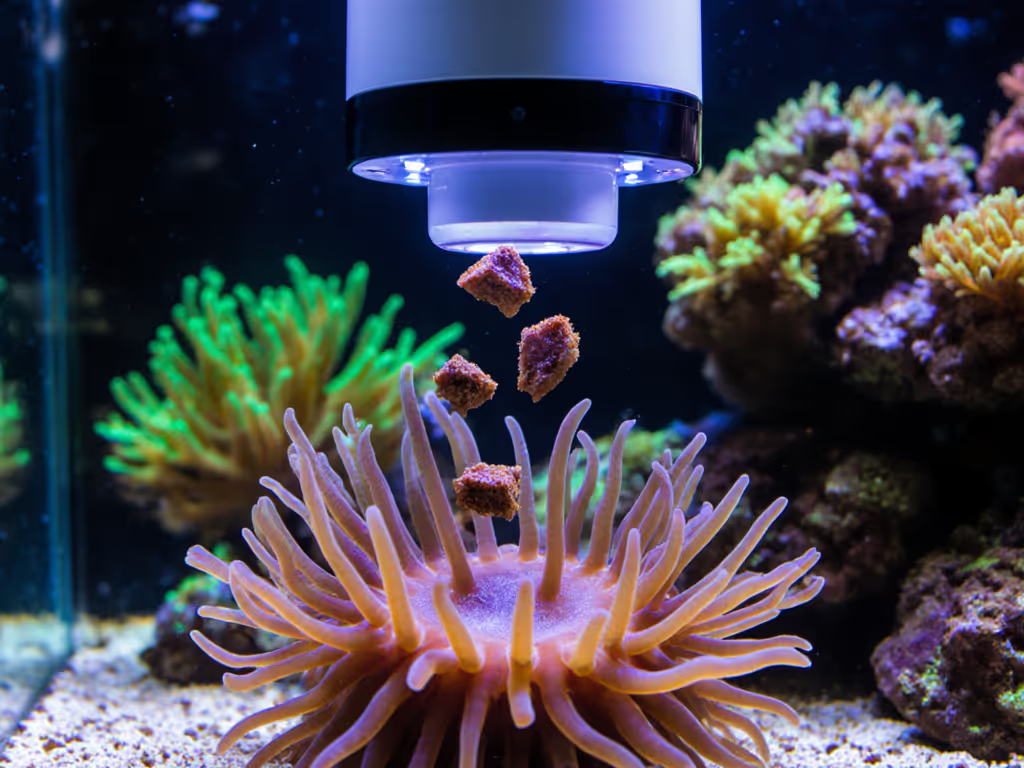
Yes, but cautiously. Predictive fish nutrition shines when feeding diverse communities. Imagine a reef tank: tangs need frequent algae, while mandarins require live pods. Basic feeders overwhelm mandarins with pellet debris. Adaptive models let you program staggered sequences: pods first, then slow-sinking pellets. To build sequences like these, follow our advanced feeder programming guide. Key questions to ask:
- Does it support multiple food types (frozen, pellets, liquid)?
- Can portions be customized per feeding cycle (e.g., smaller AM, larger PM)?
- Does it log consumption data to spot species-specific patterns?
One client's 120-gallon tank houses shy seahorses and boisterous cichlids. His feeder learned to drop food away from filter intakes after observing consistent waste. The tech adapted, the aquarist observed.
I'm wary of complicated tech. How steep is the learning curve?
Your concern is completely valid. Many engineers-turned-aquarists feel this way! Excellent adaptive feeders prioritize human simplicity:
- Gradual onboarding: Start with one daily feeding, then add complexity
- Visual diagnostics: Color-coded lights (green = happy fish, yellow = check portions)
- No-jargon interfaces: "Feeding slowdown detected" instead of "algorithmic consumption deviation"
True innovation isn't flashy features, it is reducing your mental load. If a system requires daily tweaks, it's not adaptive; it's another chore. Look for feeders that simplify your routine while respecting your expertise. After all, you built this thriving ecosystem through careful attention, not automation alone.
Why Observation Always Comes First
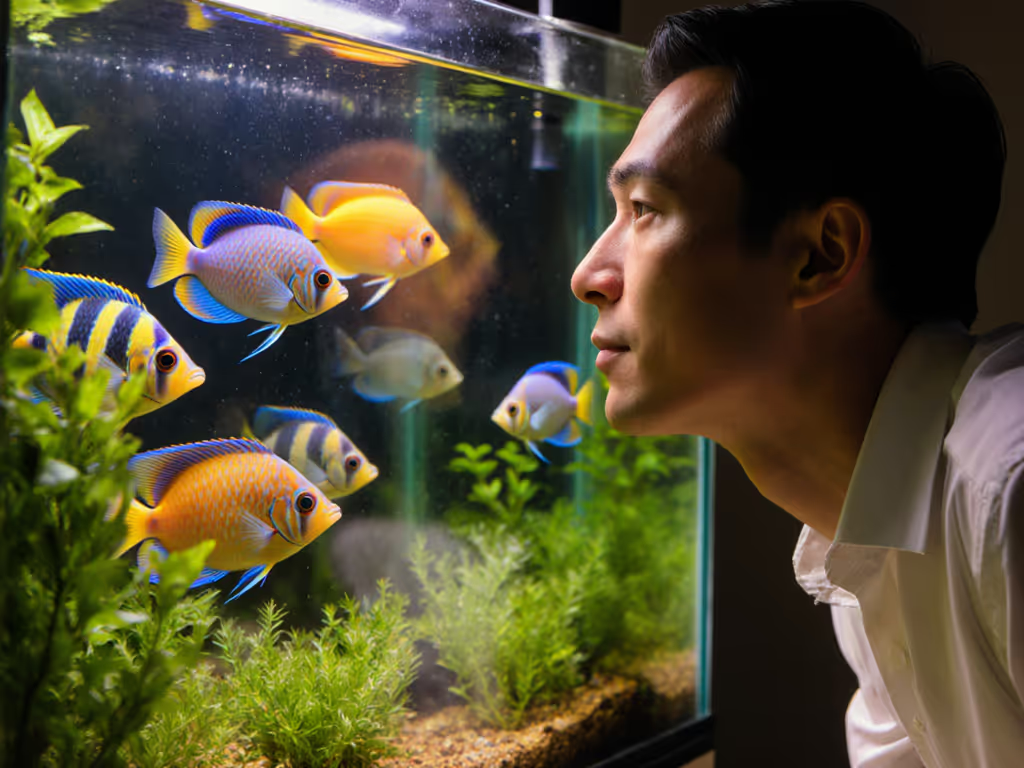
Technology should serve your relationship with your fish, not replace it. An auto fish food feeder excels only when it honors what you already know: fish communicate through behavior. That darting silver shape isn't "just hungry", it is signaling perfect water conditions. The slow swimmer isn't "lazy", it is asking for less food. Smart aquarium AI worth its salt confirms your instincts, not overrules them.
I've seen brilliant feeders fail because owners stopped watching. One hobbyist relied entirely on his "AI" feeder, then panicked when his discus stopped eating. The tech recorded perfect portions, but he missed the early signs of hexamita. Machines can't diagnose illness; they can only reflect patterns you must interpret.
Pause, watch, then adjust.
This is where adaptive systems earn their keep. They free you from logistics so you can focus on observation. No longer chained to feeding times, you notice how moonlight phases affect nocturnal sharks or how temperature shifts alter appetite. The data they provide, a consumption dip before a storm, becomes a new layer of understanding.
The True Measure of Success
An exceptional auto feeder doesn't just deliver food. It delivers confidence. Confidence that your tank will thrive when you're showing your grandkids the coral garden. Confidence that you're not overfeeding when guilt whispers "Did I give enough?" Most importantly, it buys you what every conscientious keeper needs: time to simply enjoy your underwater world.
If you're exploring adaptive feeding, start by tracking your fish's natural rhythms for one week. Note when they're most active, how long food lasts, and any water parameter shifts. This baseline makes tech adoption purposeful, not a leap of faith. When your feeder's alerts align with what you've observed, you'll know it's working with you.
Related Articles