Feeding Anemones Right: Automated Routine
By Mei-Lin Zhou • 11th Mar
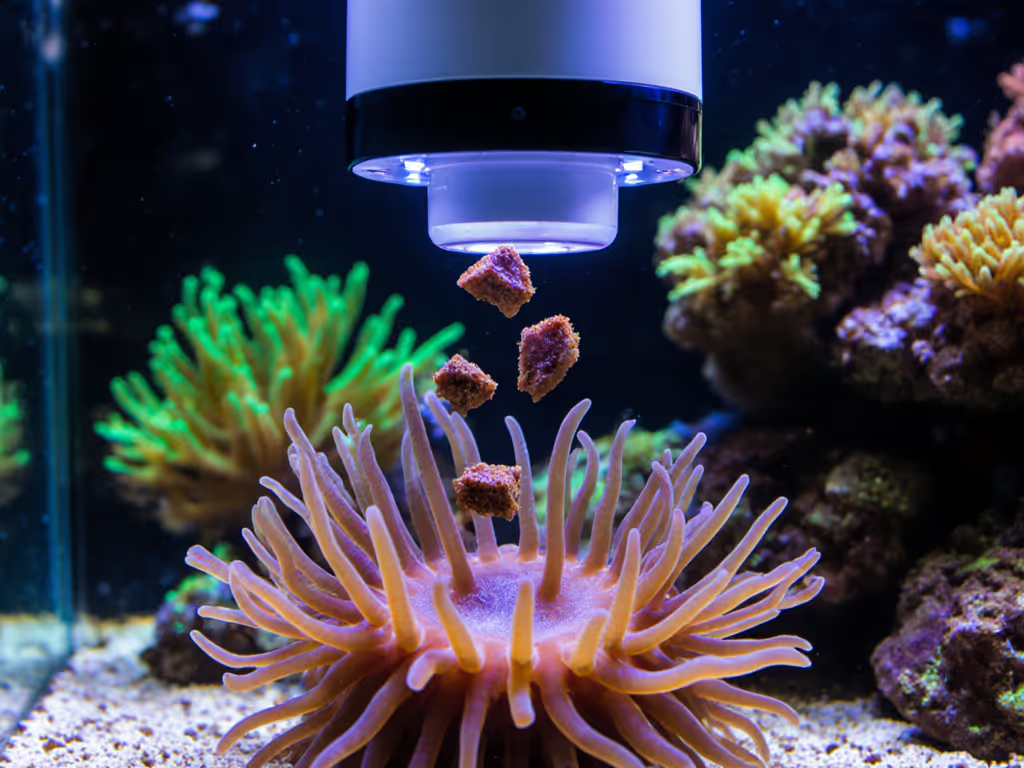
Anemones present a rewarding challenge for experienced aquarists: they're relatively hardy, visually striking, and deeply engaging to observe, yet their feeding needs demand precision. Unlike fish that accept varied schedules and portion sizes, anemone feeder adaptation requires consistency, careful observation, and a clear understanding of their unique biology. This guide explores soft coral feeding techniques through the lens of practical, repeatable routines that work in harmony with your tank's ecosystem.
What Powers an Anemone's Growth?
Before establishing your feeding schedule, it helps to understand how anemones actually thrive. These invertebrates maintain a symbiotic relationship with photosynthesizing microorganisms living inside them, meaning they gain significant energy from light alone.[1] However, light alone isn't sufficient. To truly flourish, anemones require a regular source of protein in the form of small meaty morsels of seafood.[1] The distinction is crucial: soft coral feeding techniques must account for this dual-energy model. For the biology behind how feeding impacts water quality and fish health, see our science-backed feeding guide. You're not simply substituting light with food; you're supplementing a biological relationship with targeted nutrition.
This is where observation becomes your greatest tool. Some aquarists become anxious about underfeeding; others overcorrect with excess. I once mentored a fellow keeper whose anemones looked deflated and pale, while her water quality deteriorated (cloudy, nitrate-laden, and uninviting). She'd been so concerned with "making sure they ate enough" that she was burying them in food twice daily. When we scaled back to a simpler schedule, observed how her anemones responded, and let their behavior guide portions, everything shifted. Clear water returned. Colors brightened. Her whole tank ecosystem stabilized. The lesson wasn't about restriction; it was about letting the animals teach us what they actually need.
How Often Should You Feed Your Anemones?
The most common question from conscientious keepers is: What's the right frequency? The answer is refreshingly straightforward: Feed your anemones 1-3 times weekly, depending on size and activity level.[1] This range exists because individual animals have different metabolic rates and environmental factors. To align feedings with natural activity peaks, program schedules using circadian rhythm best practices.
For a more precise starting point, consider this framework:
- Once weekly works well for most anemones in established, photosynthetically rich environments
- Twice weekly suits larger specimens or those in lower-light conditions
- Three times weekly is appropriate if you're actively supporting growth or recovery
If your anemone is hosting clownfish, feeding frequency drops significantly (the clownfish provide consistent nutrient transfer through waste and occasional food scraps).[1] This symbiosis is one of the hobby's most elegant examples of how observation-led care simplifies routines.
What Foods Support Sustained Health?
Anemones are not fussy eaters.[1] Your menu can include:
- Raw shrimp (thawed, unseasoned)
- Mussel
- Squid
- Brine shrimp
- Cockle
- Gamma fish
Variety matters here. Rotating between food types prevents dietary monotony and ensures your anemone receives a broader spectrum of nutrients. Many experienced keepers report that anemones offered diverse meaty foods alongside photosynthesis show improved health, faster reproduction, and more vibrant coloration.[3]
How Do You Deliver Food Without Stressing the Animal?
This is where soft coral food delivery transitions from science to technique. Portion size and method directly influence whether your anemone thrives or regresses.
Sizing Your Portions: Cut food into pieces proportional to the anemone's mouth. A quarter-inch chunk suits smaller specimens, while larger anemones can digest bigger pieces.[1] This precision prevents choking, stress, and incomplete digestion (a common cause of bloating and disease).
Delivery Method: The process itself should be calm and non-invasive:
- Allow food to drift or drop gently into the tentacles rather than forcing it.[2]
- Use a feeding stick or tank tongs to position food near (not into) the mouth.[1]
- Some keepers gently wobble food to trigger a feeding response, mimicking the natural behavior of prey in the water column.[2]
- Never force food into the anemone's mouth because this causes severe, potentially lethal damage to the actinopharynx (the central digestive cavity).[2]
Watch your anemone's response. If it eagerly reaches and grasps the food, you're on the right track. If it's indifferent or spits food back out, the animal is either satiated or not hungry at that moment.[3] These behavioral cues are your real-time feedback system (far more reliable than any schedule).
What Does a Sustainable Feeding Routine Look Like?
Here's a routine you can repeat. Monday through Friday, keep a feeding log:
-
Observe first: Before offering food, note your anemone's appearance - tentacle extension, mouth position, overall posture. Is it active or withdrawn?
-
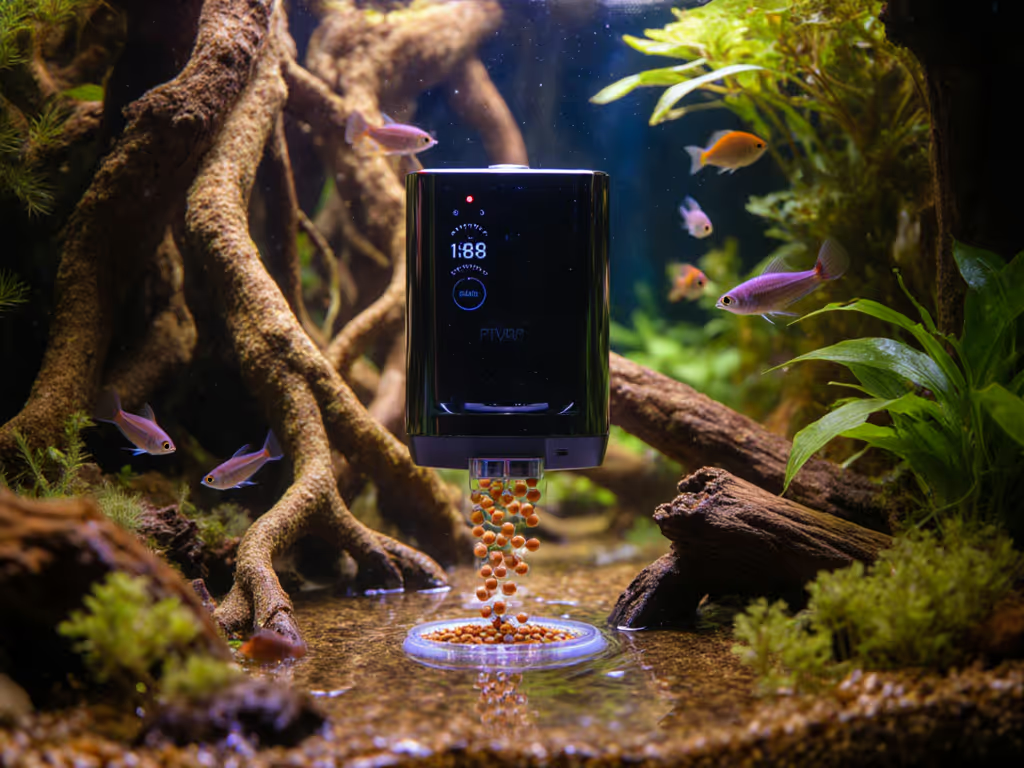
Prepare deliberately: Thaw raw shrimp in a small cup of your tank water. This matches water temperature and reduces osmotic stress. Cut one portion, store the rest frozen. Want hands-off frozen delivery? See our inD aquatics aF4 frozen feeder review for automated, portioned meaty feeds.
-
Deliver with intention: Using tank tongs, position the food near the anemone's tentacles during your designated feeding window (early morning or evening is ideal). Watch for 2-3 minutes. Does it feed? If you run an aquarium controller, you can integrate feeders with controller-triggered flow pauses to keep food near the anemone.
-
Document and adjust: Log what you fed, how much, and whether the anemone consumed it fully. Did it spit anything out? Was the anemone more responsive on certain days?
-
Let gaps teach you: Skip a day between feedings. This mimics natural feast-famine cycles and prevents overloading your biological filtration. A well-established tank can handle weekly feeding indefinitely.[1]
Start small, observe closely, let the fish teach you. This isn't poetic advice (it's the most practical approach to anemone feeding schedule consistency). Aquarists who rely on rote schedules often miss crucial signals: declining health, seasonal appetite changes, or shifts in lighting that affect photosynthetic energy availability.
Why Does This Matter for Your Tank's Stability?
Precision in stationary invertebrate feeding directly prevents the water quality crises that stress entire ecosystems. Overfeeding causes uneaten food to decompose, spiking ammonia and nitrates, which drive algae blooms and gill stress in fish.[1] Under-feeding leaves anemones malnourished, weakening their immune response and color.
Consistent, observation-based feeding occupies a stable middle ground. Your water stays clear. Nitrate levels remain manageable. Anemones maintain vibrant hues and responsive behavior. Your entire tank (fish, coral, and invertebrates) benefits from this restraint and precision.
How Can You Verify You're On Track?
After four weeks of consistent feeding, you should observe:
- Expanded tentacles within 1-2 hours of feeding
- Stable mouth position (not perpetually open, which signals stress)
- Consistent color saturation or gradual brightening
- Healthy foot attachment (no recession)
- Regular reproduction or growth if applicable
If your anemone appears deflated during digestion or occasionally hides after feeding, this is normal (digestion in anemones is relatively slow).[3] However, if it remains withdrawn for days or loses color, your feeding schedule or portion size likely needs adjustment.
What Comes Next in Your Feeding Mastery?
The foundation of coral-targeted food dispersal is observation-led consistency. Ready to upgrade gear? Compare high-end reef feeders for precise nutrient control. Once you've established a baseline routine that works for your specific anemone and tank conditions, you're positioned to explore deeper refinements: seasonal adjustments, targeted supplementation for breeding populations, or the addition of liquid coral foods for multi-species feeding windows.
Your log becomes invaluable data. Over months, patterns emerge: peak appetite periods, seasonal fluctuations, individual personality differences. Continue dialoging with your local aquarium club or online communities; share your observations and learn from others managing similar species. The hobby rewards patience, attention to detail, and the willingness to let your animals guide your decisions. Your anemones will teach you far more than any guide alone can convey.
Related Articles