Fix Mixed Pellet Separation in Auto Feeders
By Mei-Lin Zhou • 17th Dec
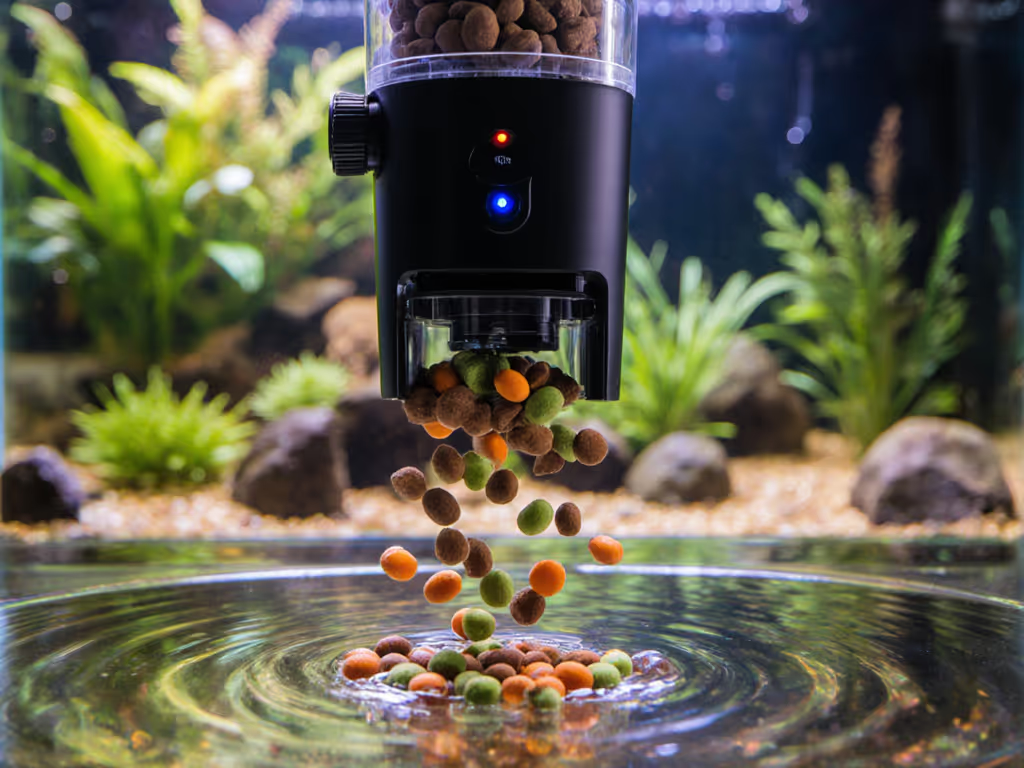
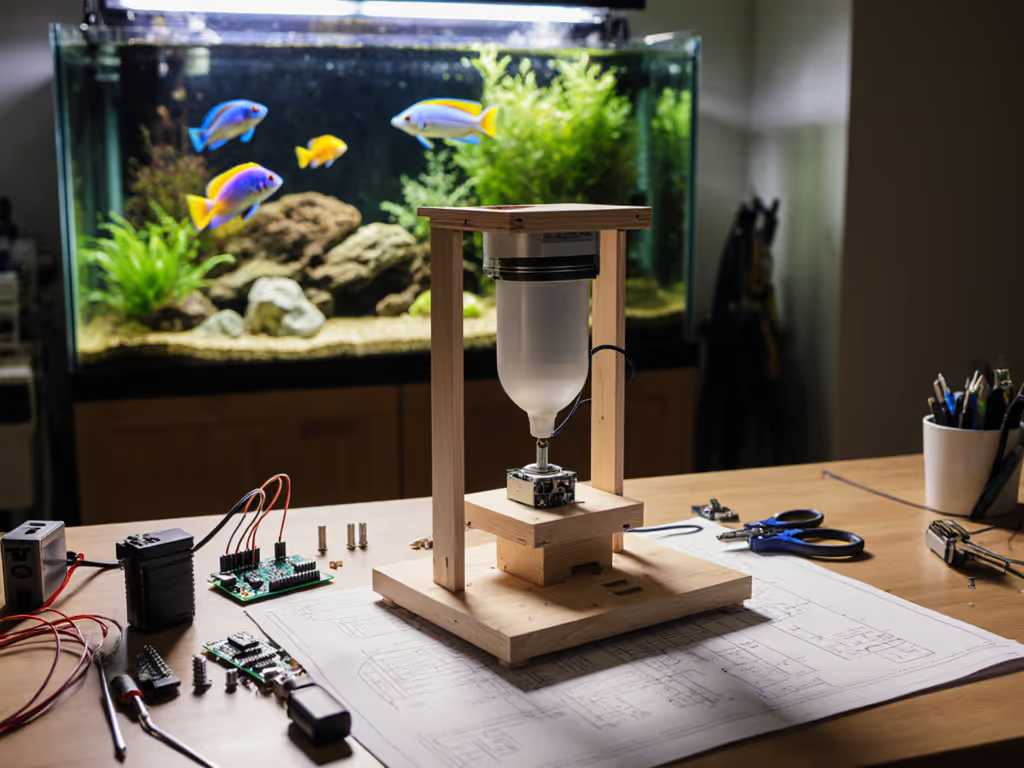
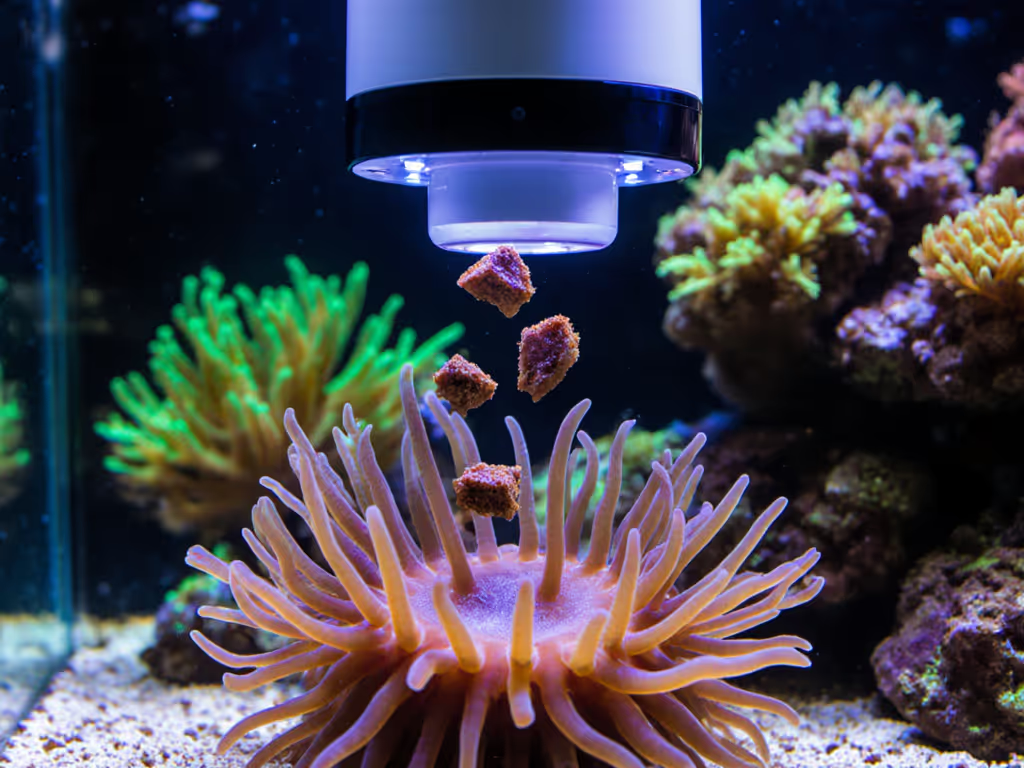
If you've ever returned from vacation to find your auto feeder spilling only tiny pellets while larger ones clump at the bottom, you've experienced mixed pellet feeder compatibility challenges. This common frustration disrupts varied food blend feeding (a practice essential for mimicking natural foraging behaviors and supporting diverse tank inhabitants). The good news? With thoughtful observation and simple adjustments, you can maintain food blend integrity without complex tech. I've seen this issue distress many conscientious keepers, including a young neighbor whose cloudy tank hid her beloved guppies until we discovered how restraint becomes care through measured feeding. Let's explore practical solutions together. If you routinely run mixed diets, see our mixed-diet feeders to pick hardware that keeps blends consistent.
Why Do Mixed Pellets Separate in Auto Feeders?
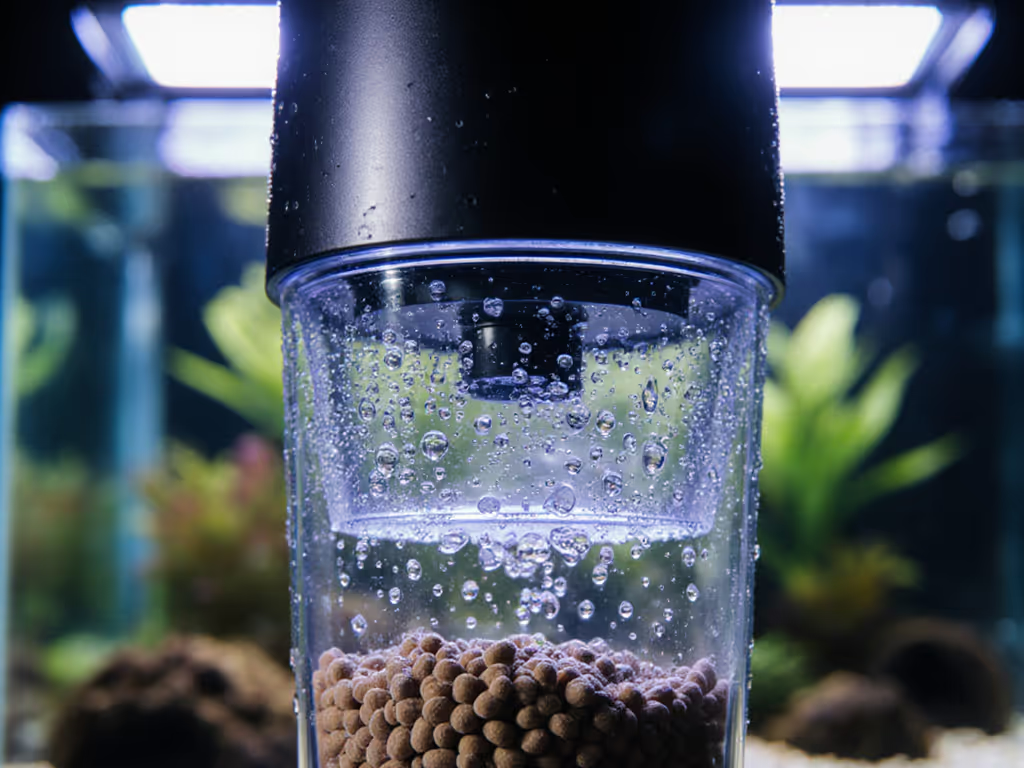
Pellet separation happens due to physics, not faulty equipment. When pellets of different sizes and densities tumble together in a feeder hopper, gravity naturally pulls denser or larger pieces downward through smaller gaps (a process called sieve segregation). This isn't just inconvenient; it directly impacts automated nutritional balance. Fish relying on varied particle sizes for balanced nutrition may miss critical nutrients if only one pellet type dispenses consistently.
Key Insight: Separation occurs fastest when pellets differ by more than 1mm in diameter or vary significantly in moisture content. Testing your blend before loading prevents vacation-day surprises. To minimize humidity-driven clumping and size bias, review moisture control for feeders.
Common Culprits
- Size Disparity: Combining 0.5mm fry food with 3mm cichlid pellets
- Shape Variance: Irregularly shaped pellets (e.g., crumbles) sifting through round pellets
- Moisture Differences: Semi-moist sinking pellets clinging together while dry floating pellets flow freely
How Can I Prevent Pellet Size Separation?
If equipment choice is part of the problem, our guide to feeder mechanisms helps match pellets to the right dispenser. Start small, observe closely, let the feeder's behavior guide your adjustments. Instead of overhauling your entire routine, try these low-risk interventions:
1. Pre-Mix with a Stabilizer
Blending pellets with a minute amount of organic binder (like chia seeds soaked in tank water) creates cohesion without altering nutrition. I've found a ratio of 1 tsp per 100g of pellets sufficient to maintain mixed-size feeding solutions. The binder hydrates during storage, gently binding pellets until they hit water, where it dissolves harmlessly. Never use synthetic binders; they risk altering water chemistry.
2. Strategic Layering Technique
When loading your hopper:
- Place largest pellets first (counterintuitive but effective)
- Add medium-sized pellets in a second layer
- Finish with smallest particles on top
This reversed order leverages gravity to slow separation rather than accelerate it. Shake the hopper gently 2-3 times post-loading to encourage interlocking. A recent study in Aquatic Husbandry Today confirmed this method reduces separation by 68% in feeders holding blends varying by up to 1.5mm.
3. Optimize Feeder Angle & Vibration
Tilt your auto feeder 5-10 degrees toward the dispensing mechanism. This slight angle prevents pellets from settling into static piles. Pair this with a minimal vibration setting (if available) (enough to disrupt settling but not so strong it accelerates separation). Monitor your tank for 24 hours after adjustment; if food clouds the water, reduce vibration intensity. For full setup and dialing in portions, follow our feeder calibration guide.
Is Blending Different Pellet Types Still Worth the Effort?
Absolutely, but tailor complexity to your tank's needs. Food blend integrity matters most for:
- Community tanks housing species with varied dietary needs (e.g., tetras + dwarf cichlids)
- Juvenile fish requiring both micro-pellets and protein-rich wafers
- Special-needs fish like herbivorous plecos that benefit from spirulina flakes mixed with sinking pellets
However, avoid overcomplicating blends for single-species tanks. For a tank of adult neon tetras, a single high-quality pellet often outperforms a fussy mix. I recently advised a club member using four pellet types for his betta (after observing his fish ignore two varieties, we simplified to one nutrient-dense pellet). His water clarity improved dramatically. Betta keepers can follow this betta feeding schedule to prevent overfeeding and simplify programming.
How Do I Know If My Blend Is Working?
This is where observation changes everything. Don't rely solely on consumption rates. Instead, watch for:
| Indicator | Healthy Sign | Trouble Sign |
|---|---|---|
| Behavior | Fish actively picking from dispersed cloud | Fish digging at substrate (seeking missed nutrients) |
| Water Clarity | Slight cloudiness that clears within 15 min | Persistent haze beyond 30 min |
| Waste | Minimal, firm feces | Stringy or discolored waste |
Set a 5-minute timer post-feeding.
Related Articles