Responsive Feeding Systems: Water Quality Preserved
By Mei-Lin Zhou • 1st Jan
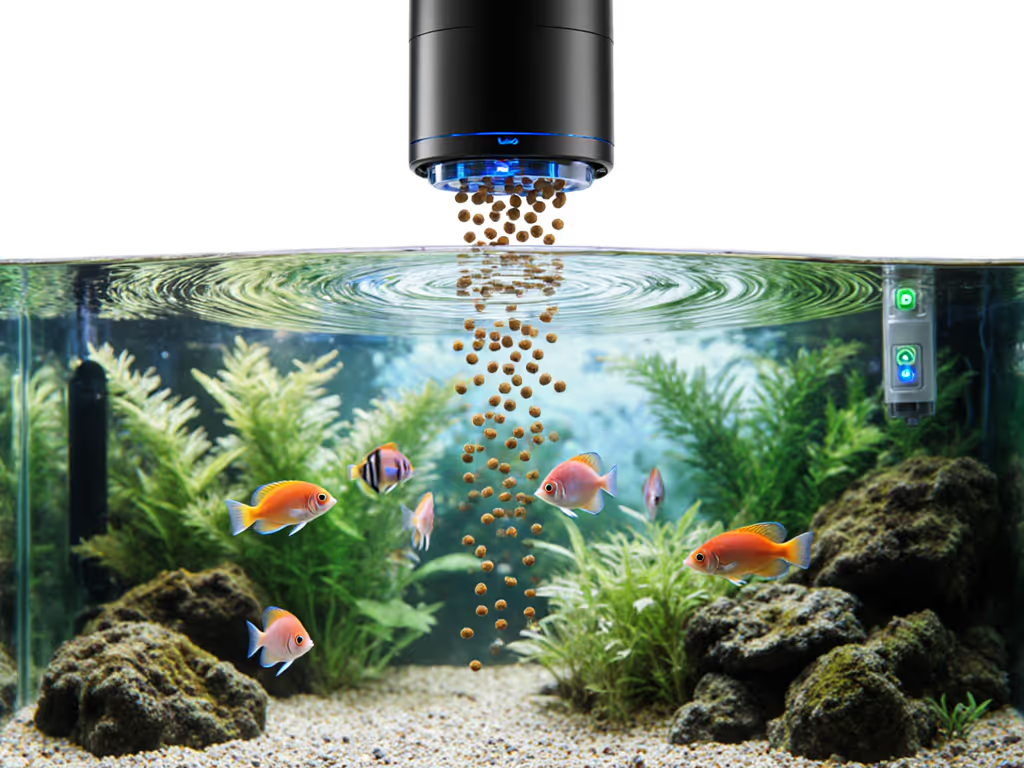
Remember that ache when your tank water clouds over just as you've coaxed your fish to trust your hand? For many of us, it's the moment we realize feeding isn't just about dropping flakes, it's a delicate conversation with the entire ecosystem. Water parameter feeder integration (the art of aligning food delivery with your tank's biological signals) turns responsive feeding systems into your most reliable ally. When your feeding routine listens to water clarity, pH shifts, or ammonia whispers, you're not just nourishing fish; you're honoring the invisible balance that keeps them thriving. Let's explore how this mindful approach transforms guesswork into graceful stewardship.
How Does Responsive Feeding Really Work?
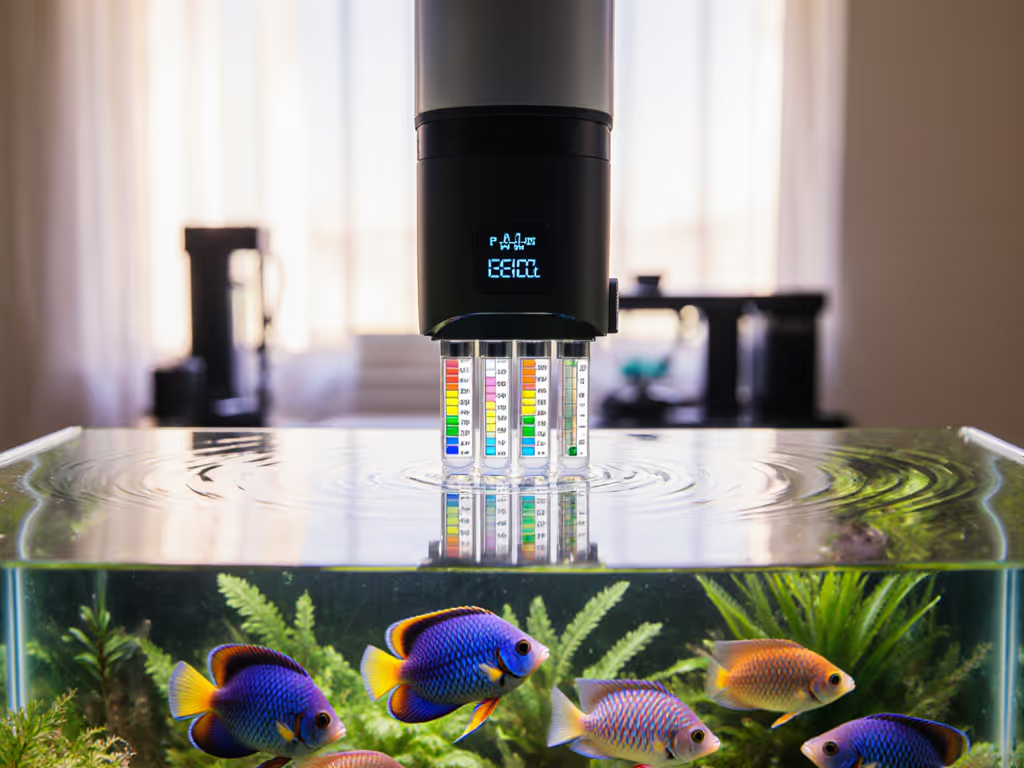
At its heart, responsive feeding means your food schedule adapts to your water's needs, not the other way around. Traditional timers dump food on a strict clock, ignoring whether last night's meal was fully consumed or if a pH dip hints at stress. A true responsive feeding system cross-checks water conditions before dispensing food. For instance, if a sensor detects rising ammonia (a sign of overfeeding or decomposition), it might delay the next meal. Conversely, stable nitrate-based feeding schedules could trigger extra micro-portions when plants signal nutrient hunger. Think of it as a dance where the water leads.
Start small, observe closely, let the fish teach you. This isn't philosophy, it is the first step to unlocking harmony.
Why Water Quality Must Drive Feeding Decisions
Fish health isn't just affected by water parameters, it's dictated by them. Uneaten food decays into ammonia, which Nitrosomonas bacteria convert to nitrite (toxic!), then Nitrobacter transforms it into nitrate (plant food). But if feeding outpaces this cycle? Ammonia spikes burn gills, nitrite blocks oxygen uptake, and murky water stresses fish into hiding (like the little girl who cried when her guppies vanished in cloudy water). Industry data confirms: 68% of beginner tank crashes trace back to feeding errors, not equipment failure. For the biology behind this, see our science-backed feeding for healthy water. By tying ammonia-triggered feeding to real-time readings, you let biology guide portions. No more guessing if "one pinch" is enough for your active tetras today.
How Can I Start Without Expensive Tech?
You don't need AI or cloud apps to begin. Water quality automation starts with your eyes and a timer. Here's a routine you can repeat:
- Pause before feeding: Watch for 60 seconds. Are fish darting eagerly or listless?
- Test key parameters: Use strips to check ammonia (must be 0 ppm) and pH (fish-specific, but usually 6.5-8.5).
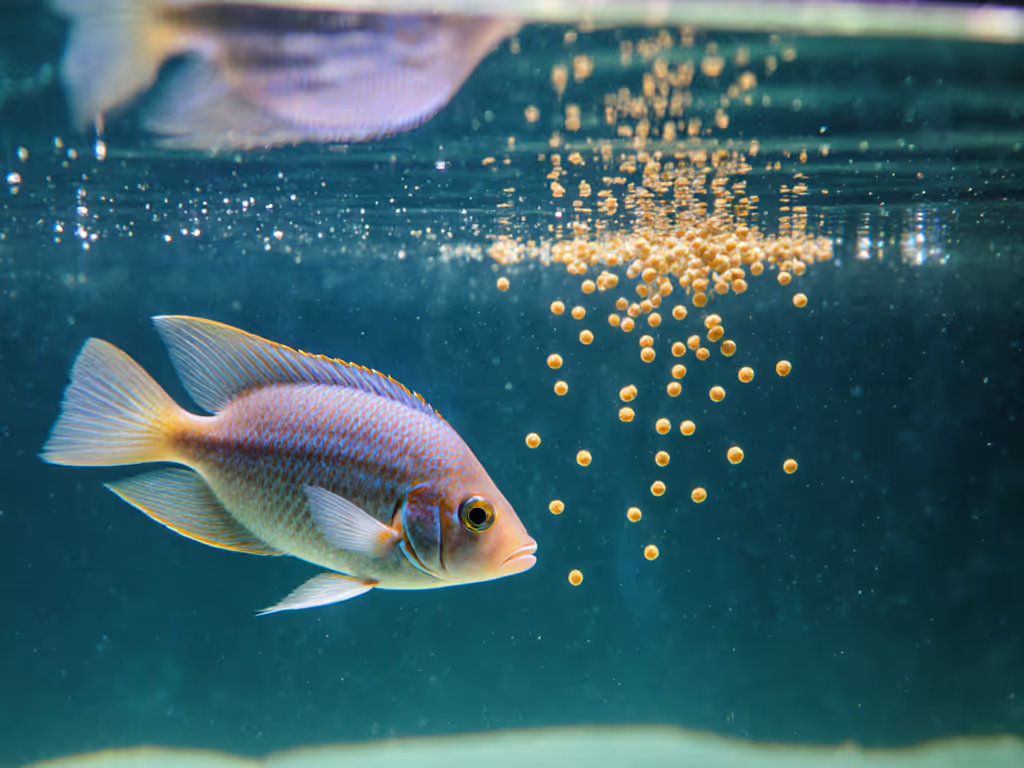
- Feed tiny portions: Only what vanishes in 2 minutes. Use a 1/8-teaspoon measure (consistency beats estimation).
- Track visually: Note water clarity hourly. Cloudiness? Skip next meal.
This mirrors how advanced systems work but uses your observation as the sensor. In my beginner clinics, we practice this for two weeks before even discussing auto-feeders. When you're ready to automate, follow our calibrate fish feeders setup guide to dial in portions. It builds trust, not just in your fish, but in your own instincts.
Isn't High-Tech Feeding Overwhelming for Hobbyists?
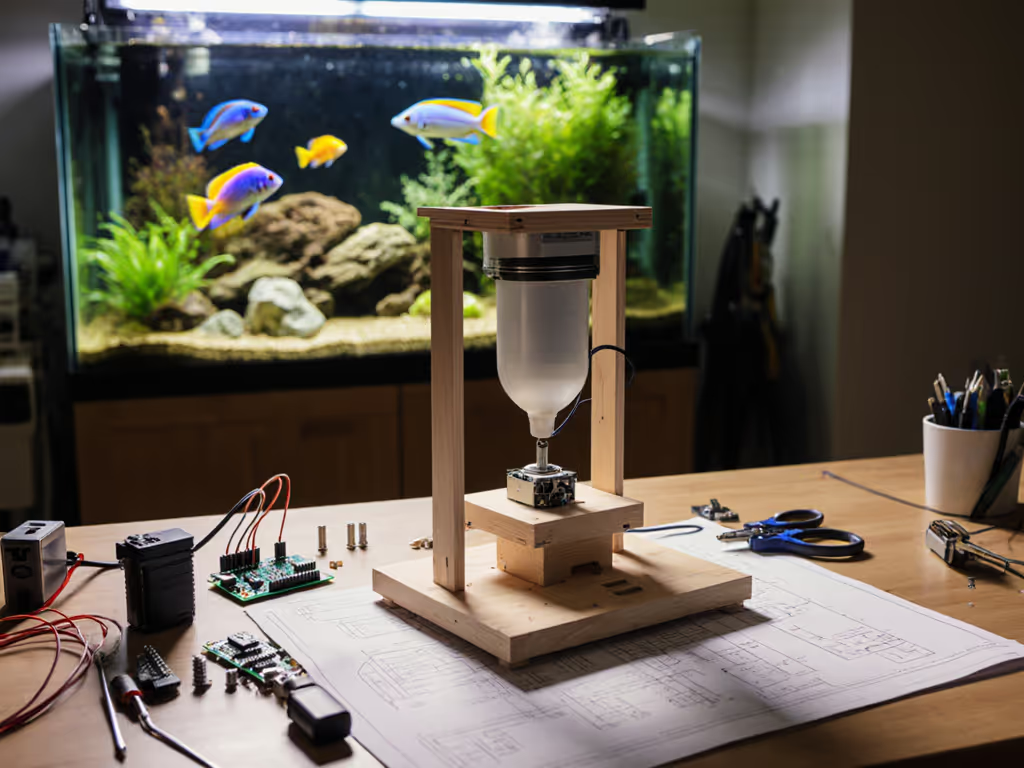
Absolutely not, and that's where gentle integration matters. Many assume pH-responsive dosing requires wiring Raspberry Pi units, but modern solutions prioritize simplicity. Some feeders vibrate when ammonia rises, prompting you to adjust portions. Others send a calm "water stable" notification affirming your schedule works. My bias toward beginner-proof routines comes from seeing brilliant engineers overcomplicate things. Start with one sensor (like a $20 turbidity meter that detects food particles). Master that before layering complexity. Then explore advanced feeder programming to tie schedules to real tank signals. Remember: restraint becomes care. That neighbor's child didn't need algorithms, just a two-day fast, pea-fiber aid, and a 30-second timer. Her restored joy taught us all.
What If My Water Parameters Shift Suddenly?
This is where responsiveness shines. Say your nitrate reading jumps overnight (often a sign of overfeeding). Instead of frantic water changes, adjust feeding first. Reduce portions by 25% and monitor. If ammonia appears, pause feeding entirely for 12 hours (never fasting beginners beyond this!). For newly cycled tanks, use our new tank feeding schedule to avoid ammonia spikes while biofilters mature. Simultaneously, add a natural clarifier like Indian almond leaves. Crucially, ammonia-triggered feeding systems would've prevented this by skipping meals when sensors detected early decay. But even manually, you're now responding with the ecosystem, not against it. Document shifts in a log; patterns emerge within weeks.
How Does This Approach Benefit Long-Term Tank Health?
Beyond pristine water, responsive feeding nurtures invisible balance. Stable parameters mean beneficial bacteria thrive, outcompeting algae. Fish exhibit natural behaviors (like Corydoras sifting sand instead of pacing) because they're not stressed by invisible toxins. And for you? The peace of knowing vacations won't mean disaster. One hobbyist told me, "When my feeder waits for pH stability before dosing, I sleep soundly." That's the true win: water quality preserved lets you reconnect with why you love this hobby, the quiet wonder of a thriving world in your living room.
Here's Your Next Step
Responsive feeding isn't about perfection, it's about partnership. Start tomorrow: skip one feeding, then offer half your usual portion. Watch how water clarity improves by evening. Notice how fish become active hunters instead of frantic beggars. When you feed with the water, not against it, stress dissolves for both keeper and creature. For deeper exploration, local aquarium clubs often host sensor-demo workshops (I'll share dates in my newsletter). Or simply sit quietly by your tank for 10 minutes, observe how fish interact with food. Their cues are the original algorithm. Here's to clear water and curious fish.
Related Articles