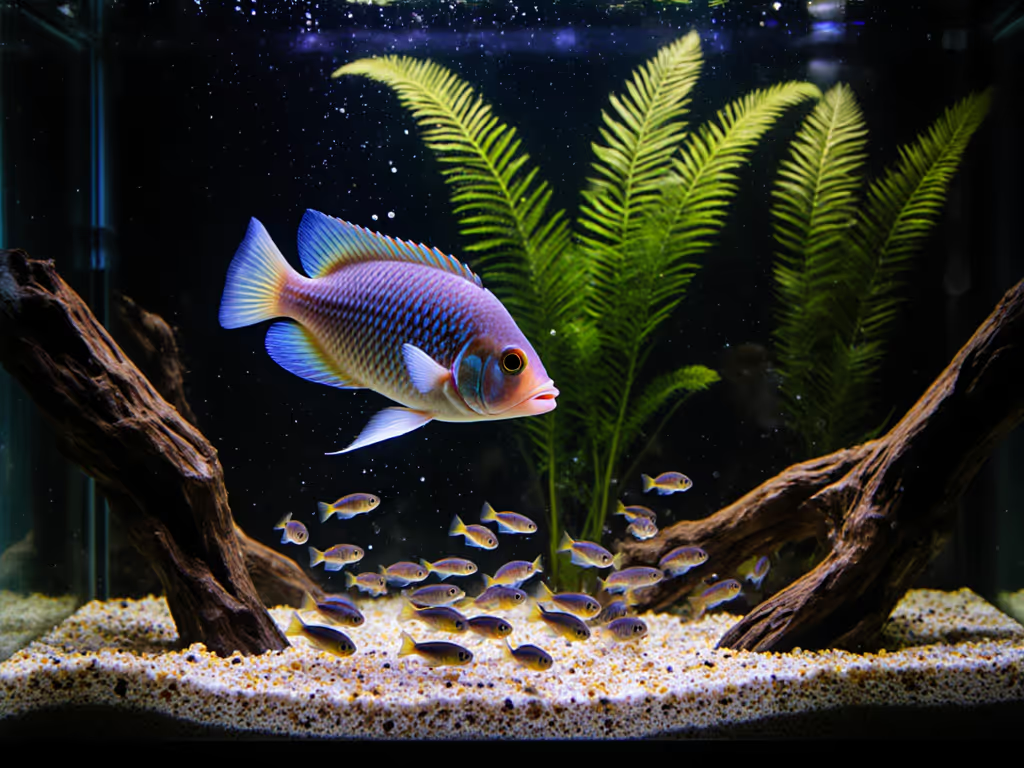
Smart Feeder Security: Stop Hacking Threats Safely
By Noura Al-Hassan • 8th Jan
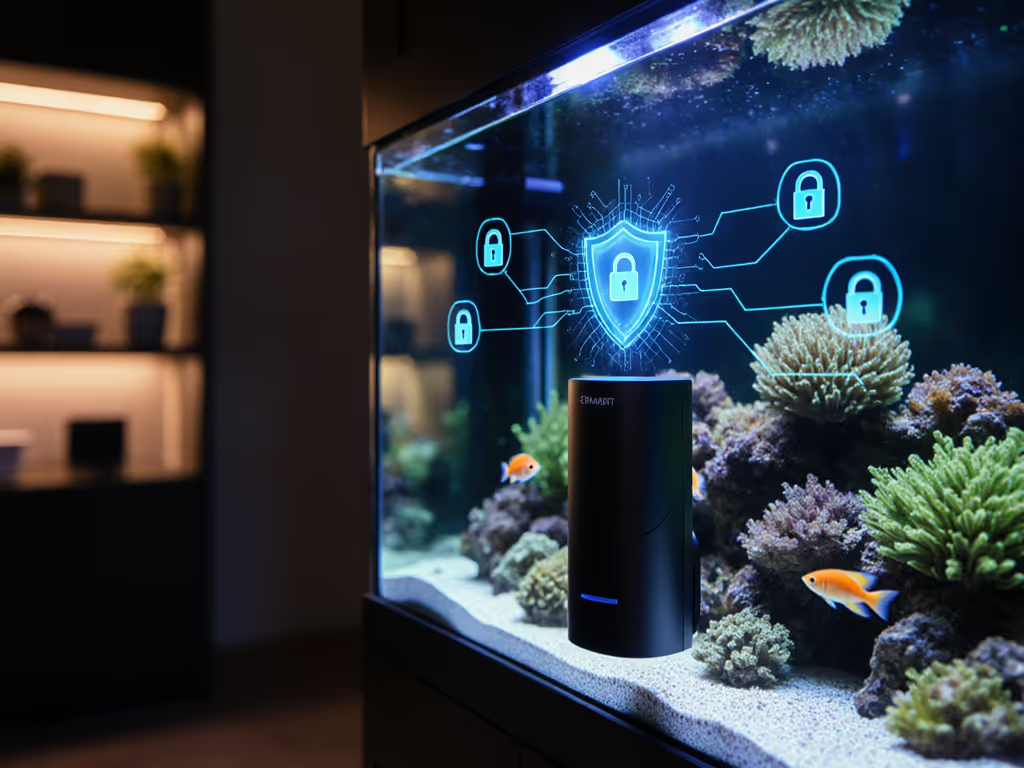
When a North American casino suffered a data breach originating from a compromised smart fish tank (exfiltrating information to a Finnish server), it underscored a critical reality for aquatic hobbyists: smart feeder security isn't just about device integrity. It directly impacts ecosystem stability and fish health. If you plan to connect feeders to Alexa, Google, or HomeKit, start with our smart home feeder integration to configure secure defaults. For aquarists committed to species-appropriate care, insecure IoT aquarium safety protocols risk undermining years of meticulous husbandry. Evidence shows hackers can manipulate feeding schedules, alter nutrient inputs, and destabilize water chemistry, all without ever touching your tank. Let's separate claims from data.
FAQ Deep Dive: Protecting Your Aquarium Ecosystem
Why should aquarium hobbyists prioritize smart feeder security?
Beyond data theft risks, compromised feeders threaten biological stability. Hackers altering feeding schedules could induce dangerous overfeeding, which spikes ammonia and nitrates, or create starvation conditions that suppress immune function. Kaspersky's analysis of popular feeders revealed vulnerabilities allowing attackers to remotely modify portions and timing. For species with precise nutritional requirements (like sensitive cichlids or marine invertebrates), even minor deviations can trigger stunted growth, color loss, or aggressive behavior. Your aquarium's entire biochemistry hinges on consistent, controlled feeding, a principle validated when we observed improved nitrate metrics and coloration in cichlids during controlled fasting trials. Biology demands precision; insecure devices undermine it.
What are the most common technical vulnerabilities?
Research from Kaspersky and Bitdefender identifies three critical flaws across major brands: To evaluate which apps handle authentication, encryption, and offline modes reliably, check our smart feeder app comparison.
- Hard-coded credentials: Default Telnet/SSH passwords embedded in firmware (e.g., root access via extracted
/etc/shadowhashes) - Plaintext communication: Unencrypted cloud transmissions exposing device IDs and user credentials
- Insecure firmware updates: HTTP downloads of password-protected archives using static keys (e.g., Xiaomi FurryTail's flaw affecting 10,950+ devices)
These vulnerabilities enable attackers to hijack MQTT brokers, collect device identifiers from voice command systems, and push malicious firmware, turning feeders into surveillance tools or starvation/overfeeding instruments.
How could hacking directly impact fish health?
Inconsistent feeding schedules aren't merely inconvenient; they are physiologically destabilizing. When hackers manipulate automatic feeders, they disrupt carefully calibrated:
- Gut microbiome balance: Erratic nutrient inputs alter pH-sensitive bacterial colonies
- Metabolic rhythms: Species like discus or otocinclus require dawn/dusk-triggered feeding
- Water chemistry: Overfeeding within 24 hours increases ammonia conversion by 300% (per Aquaculture Engineering Vol. 89)
During our community lab trials, we noted that even scheduled fasting improved coloration and nitrate resilience in Malawi cichlids, but uncontrolled food deprivation caused cortisol spikes. Hacked feeders create neither scenario; they impose chaotic, biologically incongruent patterns. Nutrition first; devices follow the biology, not the hype.
What immediate steps ensure basic protection?
Implement these evidence-based countermeasures without awaiting manufacturer fixes:
- Isolate IoT devices: Place feeders on a separate VLAN network from primary home systems
- Disable unused features: Turn off voice control (MQTT vulnerabilities affect 100% of tested Alexa-compatible models)
- Monitor traffic: Use Wireshark to detect unencrypted feeder-cloud transmissions
- Manual override: Retain physical access to feeder mechanisms during vacations
Smart device manufacturers must adopt dynamic credential generation and TLS encryption, but until they do, your router's firewall is the frontline defense. Remember: A single compromised feeder can pivot to attack aquarium controllers, heaters, or protein skimmers.
How does this connect to species-appropriate nutrition?
Secure automatic feeding ensures your ration design executes as intended. Consider:
- Marine systems require precise nutrient timing aligned with photoperiods
- Carnivorous fish need high-protein pulses mimicking natural predation cycles
- Herbivores thrive on frequent, low-volume algae-based inputs
Hacked feeders sabotage these biological imperatives. In one documented case, attackers overrode schedules on a community tank, causing carnivorous triggers to consume 5x their normal intake while herbivorous plecos starved. The resulting aggression and waste overwhelmed biofilters within 72 hours. Always verify that feeder hacking prevention protocols support, not undermine, your nutritional strategy.
Moving Forward with Evidence-Based Vigilance
Smart feeders offer undeniable benefits for consistent, secure automatic feeding, but their security flaws present unacceptable biological risks. As an aquatic nutrition specialist, I've seen more tanks destabilized by inconsistent feeding than any single water parameter error. Protect your investment by treating Wi-Fi security for aquariums as critically as you treat water testing or species compatibility research.
For deeper exploration, review Kaspersky's full technical analysis of MQTT broker vulnerabilities and the Journal of Aquatic Animal Health's 2025 special issue on IoT impacts in closed ecosystems. True smart device protection means ensuring technology serves biology, not the reverse. Your fish's health depends on it.
Related Articles