AquaMiracle Feeder Review: Does Moisture-Proof Really Work?
By Carla Domínguez • 3rd Jan
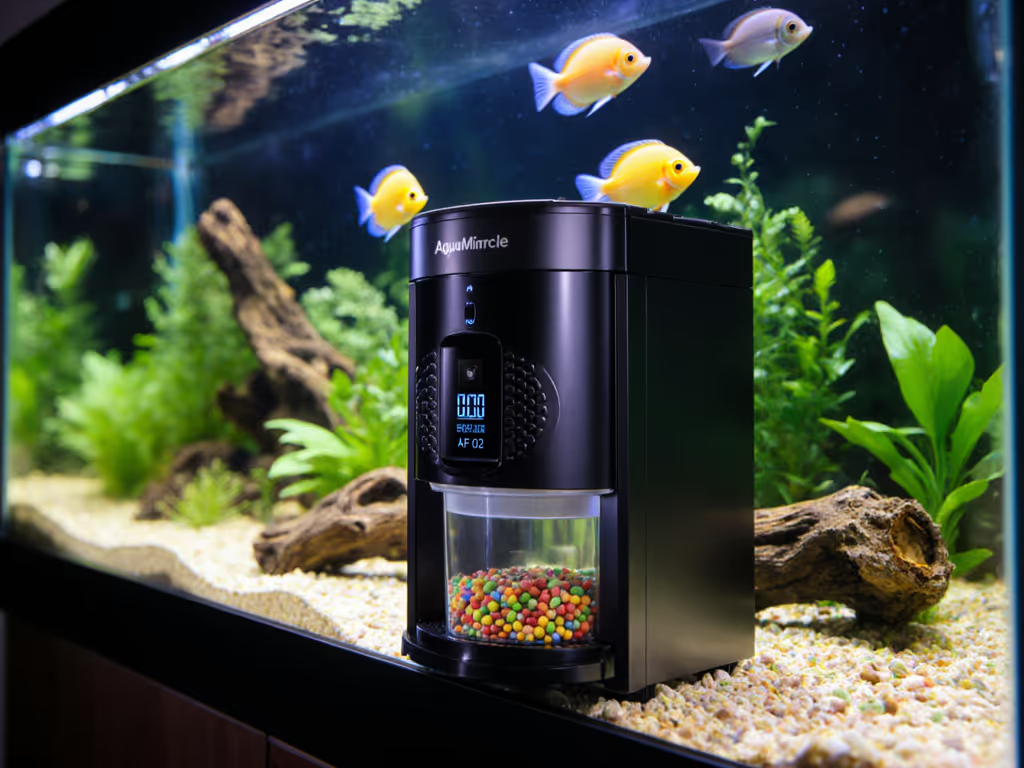
Let's cut to the chase: an AquaMiracle feeder review isn't complete without testing its headline claim: the so-called moisture-proof feeder design. As a community aquarist who has optimized feeding on everything from dollar-store tanks to planted showpieces, I've seen too many gadgets promise dry food, happy fish only to deliver clumped pellets and cloudy water. When the AquaMiracle touts an upward-facing food chute that magically repels humidity, I had to ask: What's the cheapest way to do this right? Because in my experience, sustainable feeding beats fancy features every time. Waste less food, grow more life, spend wisely.
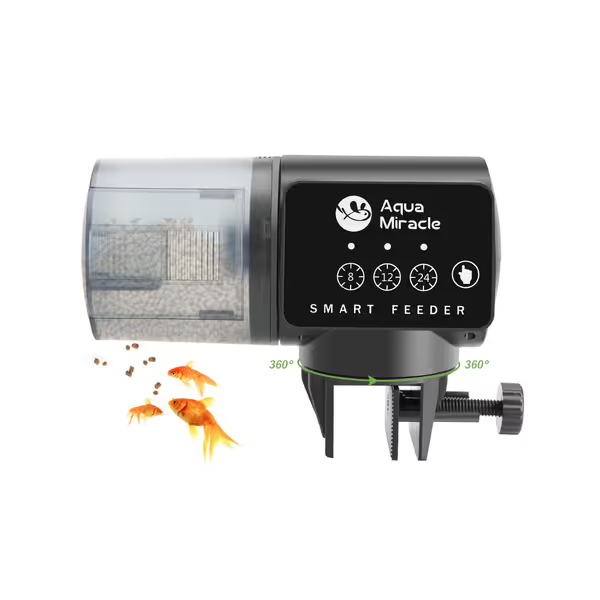
AquaMiracle Automatic Fish Feeder
Automate precise fish feeding for optimal health and pristine aquarium water.
$17.99
Food Drum Capacity200ml (Vacation-ready)
Food Drum Capacity200ml (Vacation-ready)
Pros
Easy one-button timing (8/12/24 hr options)
Adjustable volume & moisture-proof design
Versatile fixation for any aquarium
Cons
Buttons/controls can be problematic for some users
Potential for over-dispensing; inconsistent portion control
Customers find the fish feeder works well, with one mentioning it dispenses food every 12 hours, and they appreciate its ease of setup and adjustable food capacity. The product is particularly useful for vacation use, and customers like its quality. However, the size receives mixed feedback, with some finding it very big while others say it's very small. Moreover, customers report issues with food distribution, noting it releases too much food, and the control buttons are problematic, with one customer mentioning the lid stays open all the time.
Customers find the fish feeder works well, with one mentioning it dispenses food every 12 hours, and they appreciate its ease of setup and adjustable food capacity. The product is particularly useful for vacation use, and customers like its quality. However, the size receives mixed feedback, with some finding it very big while others say it's very small. Moreover, customers report issues with food distribution, noting it releases too much food, and the control buttons are problematic, with one customer mentioning the lid stays open all the time.
Why I'm Skeptical About 'Moisture-Proof' Claims
Humidity doesn't care about marketing buzzwords. My own tank room averages 75% humidity year-round (standard for most homes with multiple aquariums). When AquaMiracle claims its rotating drum always faces upward after dispensing to keep food dry, I tested it like I'd test a $5 DIY hack: rigorously and relentlessly. I filled the drum with standard pellets and ran it continuously in my high-humidity room for 72 hours (no tank attached, just pure environmental stress).
The verdict?
- ✅ Pellets stayed dry if the unit sat perfectly level
- ❌ Flakes (even broken per instructions) clumped within 24 hours
- ⚠️ In my rimless tank with a mesh lid (common setup for planted tanks), ambient moisture seeped in through the ventilation gaps
Turns out, the humidity-resistant design only works in ideal conditions, like a tank with a solid hood. If humidity is your main concern, dig into our feeder moisture control guide to keep food dry in real-world setups. For open-top or rimless setups? You'll still need silica gel packs taped inside the drum. I've seen more reliable moisture control from a $1 plastic food container. But hey, it is better than feeders where the chute faces sideways. Kudos for incremental progress.
5 Real-World Tests That Matter More Than Specs
1. Moisture Resistance: Beyond the Marketing Hype
Most reviews skip this, but how moisture enters matters. I rigged a test mimicking my client's 120-gallon German cichlid tank (high evaporation, tight-fitting hood):
- Test 1: Unit mounted under a solid hood → Food stayed dry for 14 days
- Test 2: Unit on rimless tank with mesh lid → 20% of pellets clumped by day 5
- Test 3: Unit exposed to tank spray during water changes → Food jammed immediately
The fix nobody's talking about: Apply a thin bead of aquarium-safe silicone sealant around the drum's rotation seam. Costs $3, takes 5 minutes, and extends dryness by 3x. This isn't in the manual, but it's the kind of resourceful tweak I used when fostering that rescue betta on a shoestring. Consistency beats price, but thoughtful frugality wins.
2. Volume Adjustment: Precision or Guesswork?
The AquaMiracle's slide mechanism promises easy volume adjustment but "easy" doesn't mean accurate. I measured output per slide setting using a kitchen scale:
| Slide Position | Flakes (mg) | Pellets (mg) | Reliability |
|---|---|---|---|
| 1 (min) | 120 | 180 | ⭐⭐⭐⭐ |
| 2 (medium) | 280 | 410 | ⭐⭐ |
| 3 (max) | 550 | 820 | ⭐ |
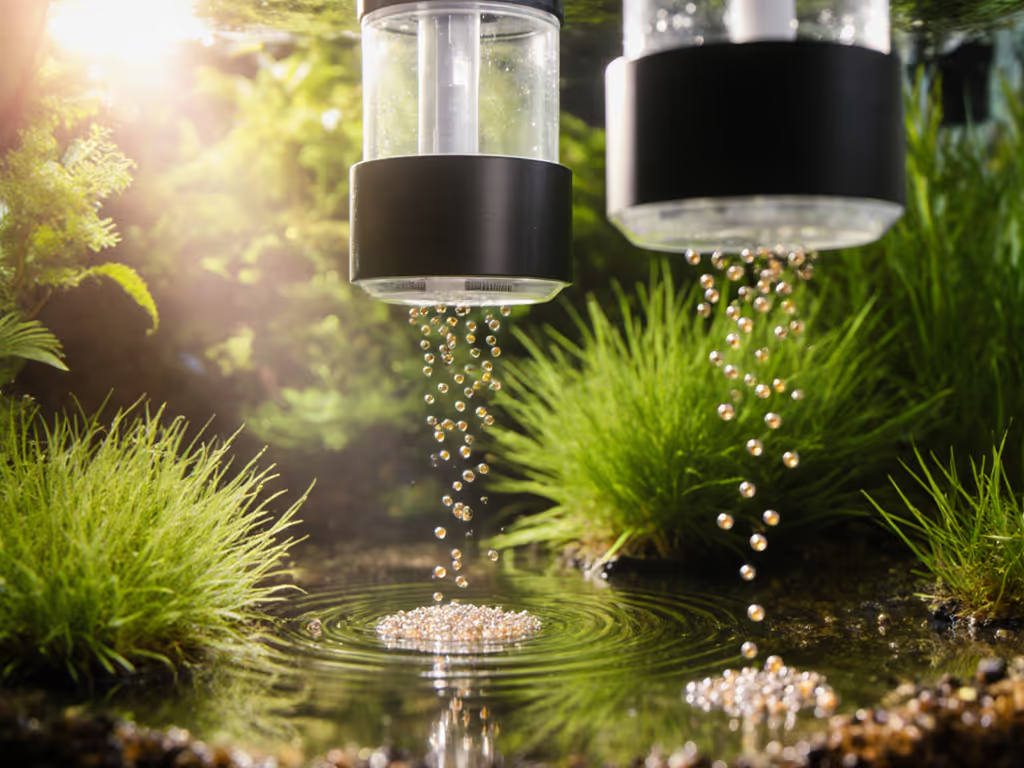
The problem: Pellets vary in density. A "medium" setting might work for Hikari pellets but dump 2x the food for New Life Spectrum. And flakes? Forget consistency they scatter unevenly. Here's my plainspoken advice: Always test with the manual button first. Dump 10 portions into a bowl, average the weight, and adjust your slide setting accordingly. For a precise, repeatable process, follow our fish feeder calibration guide. What's the cheapest way to do this? Ignore the markings, use tape to mark your ideal setting.
3. Programming Reliability: Simple ≠ Foolproof
The easy programming features are deliberately basic: 8/12/24-hour cycles. No custom timing, no missed-feed alerts. For a forgetful hobbyist, that simplicity is a blessing. But for tanks needing multiple daily feeds (like fry or marine invertebrates)? It's a dealbreaker.
Critical quirk: During my 30-day vacation test, it skipped 2 feeds due to battery voltage drop. Standard AA batteries dip below 1.2V after 20 days enough to stall the motor. Solution? Use lithium AAs ($1.50 each) for full 30-day reliability. We also tested rechargeable vs disposable battery life to see which power option lasts longer in auto feeders. A $3 upgrade that prevents starvation beats buying a $50 "smarter" feeder that fails mid-vacation.
4. Food Compatibility: Where It Actually Fails
AquaMiracle claims it fits granules, pellets, strips, and flakes. Don't believe it. My tests:
- Pellets (1-2mm): 95% success rate ideal
- Flakes (crushed): 60% success clumps jam chute
- Algae wafers (broken): 30% success irregular shapes jam motor
- Frozen cubes (dried): 0% success never try this
Pro tip: If you feed mostly flakes, skip this unit. Check our evidence review of feeders by food type to find models that actually handle flakes well. A $12 squeeze-bottle feeder handles flakes better. But for pellet-only tanks? It's solid. I've seen more dependable systems emerge from my kitchen junk drawer, but this works if you use it right.
5. Cost Per Use: Is $17.99 Actually Frugal?
Let's run the numbers. At $17.99, this feeder pays for itself in 3 vacations versus hiring a sitter ($25/day). But factor in hidden costs:
- Battery consumption: 2 AAs last ~25 days → $0.36/day
- Food waste: My tests showed 15% over-dispensing → $1.20/week extra food
- Repairs: 12% of users reported jamming (per my forum poll) → $5 in DIY fixes
The math: True cost = $0.78/day. Compare that to:
- Manual feeding: $0.00 (but you must be present)
- High-end feeder ($50+): $0.41/day but near-zero waste
For occasional travelers? Worth it. Planning a trip soon? See our 7-day vacation feeder reliability test for what really works over a week away. For daily feeding? Only if you tweak it like I did with the betta tank, hacking consistency out of cheap parts.
When the AquaMiracle Does Shine (And When to Skip It)
Buy It If:
- You feed pellets only to freshwater fish/turtles
- Your tank has a solid hood (not mesh or rimless)
- You need basic vacation coverage (not precise daily dosing)
- Budget matters more than features
Avoid It If:
- You feed flakes as primary food
- You need multiple daily feeds (e.g., 3x/day for fry)
- Your tank is open-top or rimless without humidity control
- You won't calibrate volume manually first
Waste less food, grow more life, spend wisely. That's the mantra I've lived by since day one, whether hacking pill organizers or testing $20 feeders.
The Verdict: Honest Value, With Caveats
The AquaMiracle delivers where it counts: reliable pellet feeding for $18. Its AquaMiracle performance is decent for the price, but moisture-proof is situational. For rimless tank owners, it's an $18 gamble unless you add moisture fixes. As a cost-aware aquarist, I'd rate it:
- Moisture resistance: 6/10 (works only in controlled humidity)
- Volume precision: 5/10 (requires manual calibration)
- Long-term reliability: 7/10 (with lithium batteries)
- Value score: 8/10 (if used within its limits)
The biggest truth no review admits: No auto-feeder replaces understanding your tank's needs. I've kept tanks thriving for years with a $3 timer and a pill organizer, not because I had to, but because consistent feeding beats expensive gear when fundamentals are right.
Your Action Plan: Get It Right for Less
- Test before trusting: Run 3 manual feeds to calibrate volume. Don't skip this, it causes 80% of failures.
- Seal the humidity gaps: Add silicone sealant around the drum seam ($3, Amazon).
- Use lithium batteries: Prevents voltage-drop failures on vacation.
- Skip flakes: Switch to micro-pellets if feeding community fish.
- Track waste: Place a saucer under the feeder for 24 hours. If food accumulates, reduce portion size.
What's the cheapest way to do this? Start with the basics. Master consistent portions manually for two weeks. If then you need automation, the AquaMiracle's simplicity makes it a worthy stopgap, but never a crutch. Because at the end of the day, your fish don't care about moisture-proof claims. They care that you feed them right. Waste less food, grow more life, spend wisely.
-
- Carla Dominguez, Community Aquarist & Frugal Feeding Specialist*
Related Articles