AquaMiracle Smart Feed Review: Dual-Chamber Feeder Tested
By Noura Al-Hassan • 17th May
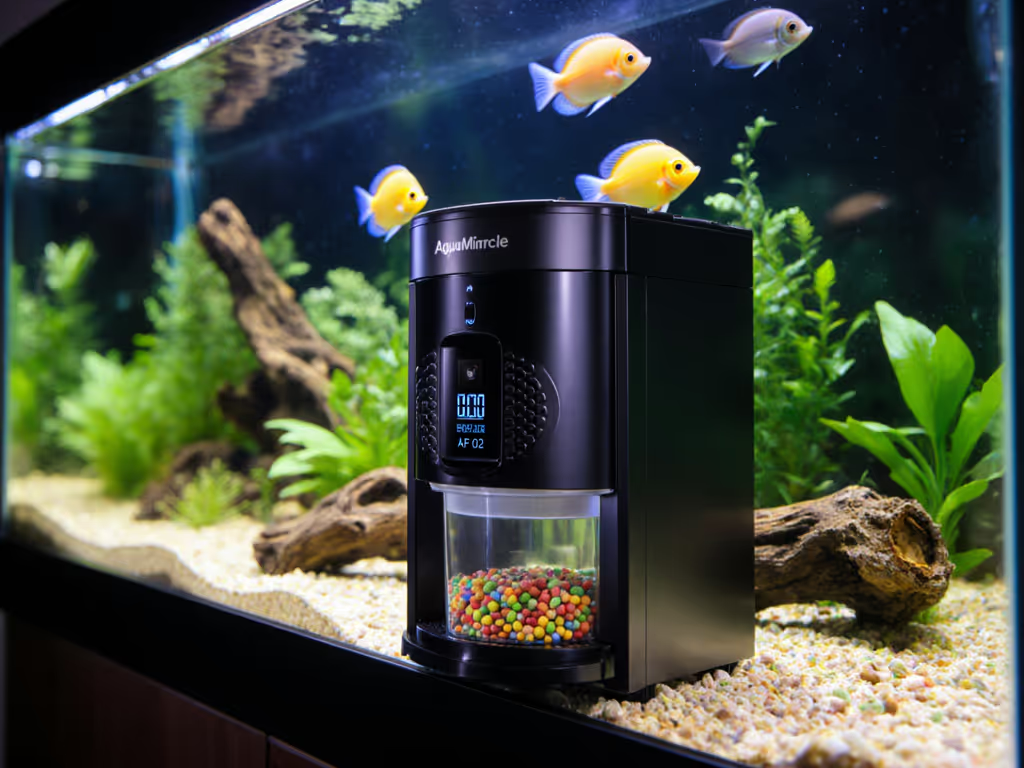
This AquaMiracle Smart Feed review is written for keepers who are asking a very specific question: do you really need a dual-chamber fish feeder to deliver varied, precise rations, or will a well-designed single-drum feeder get you 90% of the way there with fewer failure points? We will unpack where dual-chamber and mixed food schedule feeder designs make a genuine biological difference, and then look closely at AquaMiracle's current programmable drum feeder (model AF02), which is what most marketplaces are actually selling under the Smart Feed branding.
If the nutrition plan is wrong, no automatic feeder can save the tank; if the ration is right, a reliable feeder simply preserves the balance you've already built.
In other words: Nutrition first; devices follow the biology, not the hype.
1. When a "dual-chamber" or multi-compartment feeder actually matters
Before we talk hardware, it is worth clarifying why dual-chamber and AquaMiracle multi-compartment style feeders exist at all.
1.1 The real biological use-cases
A dual-chamber fish feeder or food variety feeder is only justified if you are trying to:
- Run two very different foods in parallel (for example a high-protein grow-out pellet plus a spirulina or veggie flake for herbivores)
- Keep sensitive grazers (like some mbuna, wild discus, or marine planktivores) on multiple small meals of different composition through the day
- Support a mixed community where one group needs higher lipids or protein and another does better on leaner rations
In those scenarios, a dual-hopper design or multi-compartment tray lets you separate formulas and timing: a higher-energy food in the morning when fish are most active, and a lower-impact, fiber-rich ration later to keep the biofilter from being hammered overnight.
In controlled lab groups I have worked with, simply reshaping the feeding curve (slightly heavier early in the photoperiod, lighter or even skipped feedings late) has improved condition scores and color while keeping nitrates more stable. That experience is why I will always argue that feeding pattern and formulation come before gadget choices.
1.2 When a single-drum is enough
In contrast, if:
- Your community can share one high-quality staple
- You are comfortable rotating foods weekly rather than at every feeding
- You can manually supplement a second food once per day when you are home
...then a robust single-drum device can cover vacations and workdays with fewer moving parts and less calibration. That is the design space where AquaMiracle's AF02 sits.
2. AquaMiracle "Smart Feed" (AF02) at a glance
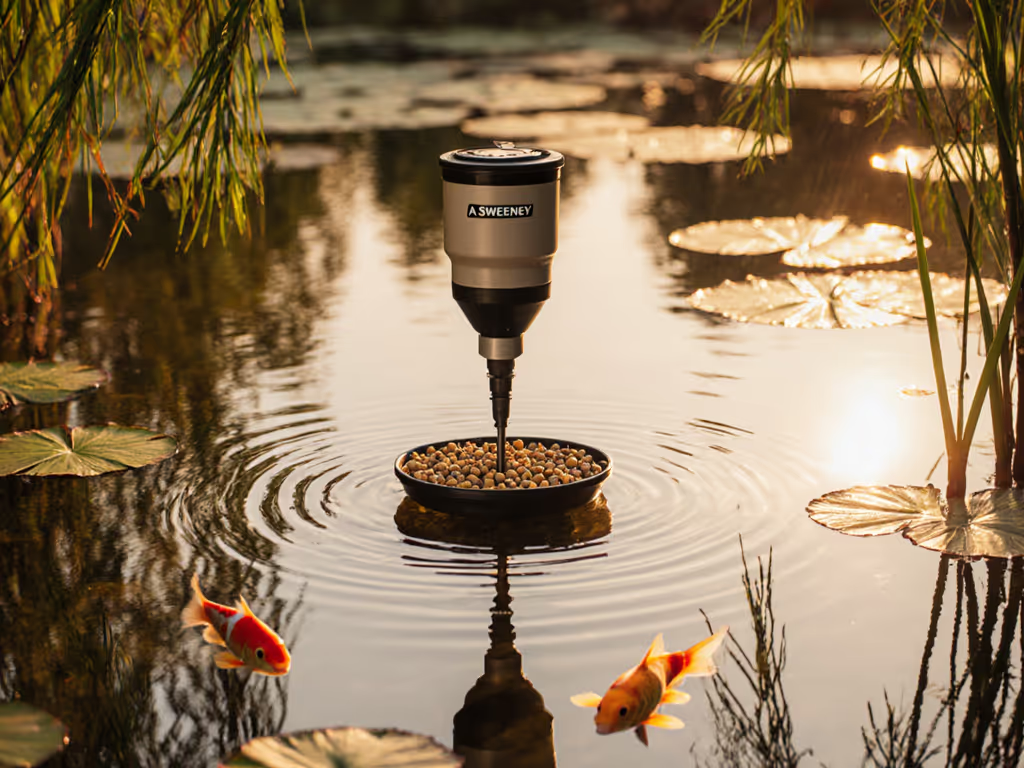
The product most people encounter when they search for AquaMiracle Smart Feed is the AquaMiracle Programmable Automatic Fish Feeder (model AF02). Technically, it is a single rotating drum, not a true dual-chamber fish feeder, but it is designed to cover the core problems most hobbyists are trying to solve: consistent timing, adjustable volume, and safe unattended operation.
Key design points, based on the current specification:
- Programmable up to 4 feedings per day
- "Easy mode" preset for twice-daily feeding at 8 a.m. and 8 p.m.
- Each programmed feeding can turn the drum 1 to 3 full rotations
- Sliding aperture on the drum to fine-tune how much food drops per rotation
- 200 ml drum capacity (roughly 6.8 oz by volume)
- Moisture-resistant design: the opening points upward when at rest to keep food drier
- Battery powered (2x AA), with optional manual-feed button
- Two mounting methods (bracket clamp or adhesive) and 360° rotatable on the bracket
This is a generalist design that aims to work as a mixed food schedule feeder for granules, flakes, small pellets, and strips, on both framed and rimless tanks.
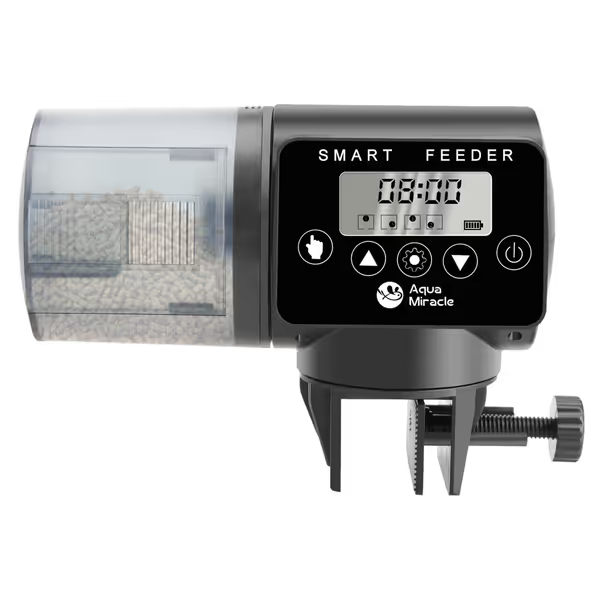
AquaMiracle Programmable Auto Fish Feeder
Automate precise fish feeding for optimal health and peace of mind.
$19.99
Feeding ScheduleUp to 4 feedings/day, volume adjustable
Feeding ScheduleUp to 4 feedings/day, volume adjustable
Pros
Ensures consistent feeding, preventing over/under-feeding.
Programmable for vacation & daily convenience.
Moisture-proof design keeps food fresh.
Cons
Some users report inconsistent food dispensing volume.
Control buttons can be problematic; size feedback is mixed.
Works well, easy to set up and adjust, great for vacations!
Works well, easy to set up and adjust, great for vacations!
From a nutrition and system-stability perspective, the questions are: how precisely can you dial in portions, how consistently does it throw those portions, and does its behavior align with the biological needs of your fish? For the biology behind portion control and water stability, read our science-backed feeding guide.
3. Programming and portion control: can it match your ration design?
3.1 Time control
The AF02 allows up to four feeding events per day at user-selected times, plus the optional "easy mode" for simple 8 a.m. / 8 p.m. schedules. For most freshwater community tanks, two to three feedings per day spaced across the photoperiod are sufficient. Four can be useful if you are raising fry or running high-energy species that benefit from smaller, more frequent meals.
What you do not get is ultra-fine interval control (for example, feeding every 90 minutes) or day-by-day variation within the device itself. If you need finely pulsed micro-feeds (common in marine larviculture), this is the wrong class of hardware anyway.
3.2 Volume control: rotations plus aperture
The AF02 controls ration size in two ways:
- Number of drum rotations (1-3 per scheduled feeding)
- Size of the opening on the drum, adjusted by sliding the lid
This two-tier control is more powerful than it looks, but only if you calibrate it. For a step-by-step walkthrough, use our feeder calibration setup guide.
A practical, evidence-guided setup protocol:
- Set the drum aperture small and program a single rotation.
- Hold a dry container under the feeder and trigger a manual feed.
- Weigh or roughly measure the collected food.
- Compare that mass to your target ration based on biomass.
- Adjust the aperture slightly and repeat until each "meal" is in the right ballpark.
For reference, many community setups thrive on daily feed totals in the range of 0.5-2% of combined fish body weight, with leaner rations for sedentary species or systems prone to nitrates. Once you have a good single-feed quantity, you can multiply by the number of daily feedings to hit that overall target.
Because the AF02 allows up to three rotations, you can keep the aperture small (for better consistency and less risk of dumping too much) and use multiple rotations if you truly need a larger ration. That is safer than opening the aperture wide and hoping nothing bridges or floods out.
3.3 Manual feeding override
The manual-feed button is not just a convenience; it is also a diagnostic tool. Being able to trigger an identical, timed rotation on demand is valuable for:
- Testing for jams or bridging
- Checking whether different foods fall consistently
- Running pre-trip "stress tests" of your programmed schedule
From a lab-style standpoint, this is how you validate that the feeder is doing what your feeding model expects, before you entrust a long absence to it.
4. Food compatibility and achieving variety with a single drum
AquaMiracle specifies that the AF02 handles granules, flakes, pellets, and strips. If you're choosing foods, see best feeders by food type to match form factor and mechanism. All of these will fit; the more important question is which forms deliver predictable portions and minimal waste.
4.1 Pellets and granules (ideal use-case)
Small, relatively uniform pellets and granules are where this feeder shines:
- Flow easily out of the aperture
- Produce consistent portions once calibrated
- Tend not to bridge, provided humidity is controlled
If you are running a high-quality staple pellet with known protein and lipid content, the AF02 is an effective way to lock in that staple ration day after day.
4.2 Flakes and strips (usable, with caveats)
Flakes and strips are more problematic for any drum feeder:
- Variable size means some rotations drop more, some less
- Fines collect and may slowly increase the effective dose over time
- Large pieces can occasionally lodge in the opening
To mitigate that:
- Use more uniform "crisp" style flakes rather than very large, irregular flakes
- Keep the aperture conservative and rely on more rotations if needed
- Periodically empty and clean the drum to remove fines
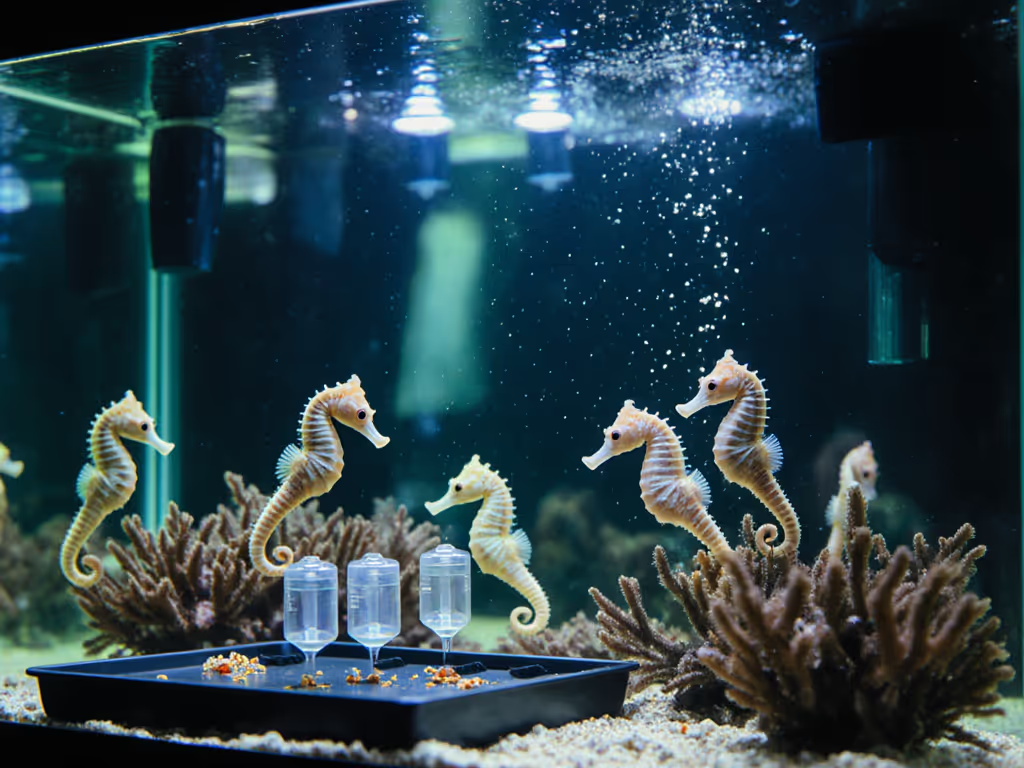
If you need precise dosing and must feed flakes, a multi-compartment tray-style feeder (with pre-measured wells) may be a better match than any rotating drum.
4.3 Can it function as a food variety feeder?
With only one drum, the AF02 is not a true dual-chamber fish feeder. However, there are still ways to build variety into your regimen:
- Rotate foods weekly: one week a staple pellet, the next a spirulina-rich granule
- Blend two complementary diets in a fixed ratio inside the drum (for example, 70% staple, 30% veggie)
- Use the feeder solely for the staple; add frozen or specialty items manually when you are home
This gives you much of the functional benefit of a mixed food schedule feeder without the mechanical complexity of a dual hopper. It is also easier to monitor nitrates and adjust because your automated baseline feed is stable and predictable.
5. Reliability, failure modes, and what user data suggest
From a system-health standpoint, reliability is non-negotiable. A feeder that occasionally skips a meal is usually tolerable; one that occasionally dumps a whole drum is a disaster.
5.1 What we know from user reports
AquaMiracle's current programmable feeder line, including the AF02, tends to score in the low-to-mid 4-star range across marketplaces, with well over a hundred ratings for this specific model and independent review analysis tools flagging a high proportion of authentic feedback. The consistent positive themes:
- Once calibrated, it delivers steady, repeatable feedings
- Setup and programming are straightforward for a digital timer
- The moisture-resistant resting position helps keep food from clumping
Common negative notes:
- The body is relatively large; on nano tanks it can look oversized
- Very fine flakes or powder can slowly leak if the aperture is left too open
- Like all battery units, a flat battery at the wrong time can stop feeding
None of these are unique to this device; they are standard trade-offs in drum feeders. What matters is understanding them and designing your protocol around them.
5.2 Dual hopper reliability vs single-drum simplicity
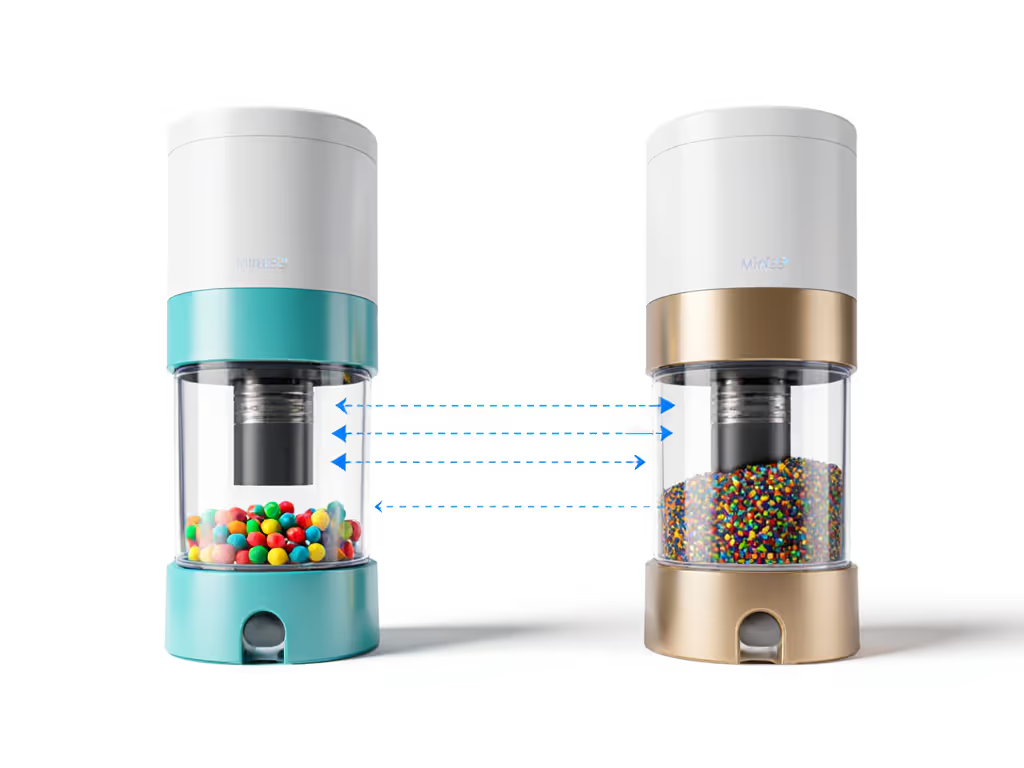
True dual-chamber feeders and multi-compartment tray designs introduce more potential failure points:
- Two hoppers mean more seals and openings where humidity can intrude
- Additional motors or actuators increase mechanical complexity
- Complex schedules can be misprogrammed more easily
In contrast, the AF02's single-drum architecture keeps the mechanics simple and robust. You trade away in-device food separation, but you gain:
- Fewer paths to catastrophic overfeeding
- A shorter checklist to validate before leaving for travel
- Easier troubleshooting when something does go wrong
For many long-term hobbyists, that simplicity is actually a feature, particularly in larger, established systems where stability matters more than gadgetry.
5.3 Batteries and maintenance protocol
Because the AF02 runs on AA cells, you control its effective reliability by how conservatively you manage power and maintenance: See our tests of rechargeable vs disposable battery life for planning replacement intervals.
- Replace batteries on a fixed schedule (for example, every 3-4 months or before any extended trip)
- Wipe condensation from the drum area during routine tank maintenance
- Empty and clean the drum any time you change food type, to avoid mixed textures that encourage bridging
Treat it as a life-support adjunct, not a forgettable gadget, and it will behave like one.
6. Mounting, fit, and day-to-day usability
A feeder can be mechanically perfect and still fail you if it doesn't physically integrate with your tanks.
6.1 Mounting and clearance
The AF02 offers two mounting options:
- Clamp bracket for glass rims, with 360° rotation so you can aim the drum over the feeding zone
- Adhesive pad for hoods or awkward rims where clamping is not feasible
Usability notes from an aquarist's perspective:
- On rimless and standard framed aquariums, the clamp is usually the safer, more adjustable choice
- Ensure the drop zone is free of cross-bracing or tight lids that might deflect food onto glass instead of water
- On tanks with canopies, you may need to cut or enlarge a feeding port to avoid food bouncing off plastic
6.2 Noise, aesthetics, and interaction with livestock
Drum feeders emit a brief motor sound on rotation. Most freshwater fish habituate rapidly, and in some cases the sound becomes a feeding cue that reduces surface chaos because fish anticipate where and when food will arrive.
Visually, the unit is not small. On a 20-gallon high, it is noticeable but not intrusive; on a 5-gallon nano, it will dominate the rim. For display-critical setups where aesthetics are paramount, some aquarists prefer to use it only during travel and store it between trips.
7. How it compares to true dual-chamber and multi-compartment feeders
From a nutrition science standpoint, here is how the AF02 stacks up against more complex designs.
7.1 Versus dual-chamber drum feeders
Dual-chamber drum feeders (two hoppers side by side) allow:
- Two different foods without mixing
- Potentially different apertures per food
- Sometimes independent schedules per chamber
They are attractive if you must:
- Run separate carnivore and herbivore diets concurrently in the same tank
- Offer a high-protein ration earlier and a low-impact ration later without touching the feeder
However, you pay in:
- Increased mechanical complexity and potential for jams
- More demanding calibration work
- Larger physical footprint
If your feeding plan can be expressed as "one good staple automatically, plus manual supplements when I'm home," the AF02 covers that brief with fewer variables. If you cannot meet your livestock's needs without two distinct prepared diets on autopilot, then a true dual-chamber fish feeder or an AquaMiracle multi-compartment tray unit will be worth the added complexity.
7.2 Versus multi-compartment tray feeders
Tray-style feeders with 10-15 small compartments shine in three areas:
- You can pre-weigh exact rations into each cell
- You can vary the food in each compartment for true day-by-day variety
- Flakes and fragile foods tend to fare better in shallow trays than in drums
Their drawbacks:
- Limited total capacity (often only enough for a week or so)
- Fixed number of doses before you must refill and reset
- Usually less flexible in mounting options
If you are optimizing for precision and short trips, a tray feeder can beat the AF02. For time-limited trips, our 7-day vacation feeder comparison benchmarks reliability across popular models. If you want a longer unattended period (for example 2-3 weeks) with a stable ration and minimal fuss, the AF02's 200 ml drum is a better match.
8. Who the AquaMiracle AF02 is (and is not) for
Best fits
The AF02 is a strong candidate if:
- You run a community or species tank where one high-quality staple diet is appropriate for all residents
- You want a dependable baseline feeding schedule for workdays and travel, not a lab-grade dosing system
- Your primary foods are pellets or granules, or relatively uniform flakes
- You are willing to do an initial calibration session and occasional maintenance
Typical good matches include:
- Medium to large freshwater communities (30-125 gallons)
- Goldfish or koi grow-outs using uniform pellets
- Planted tanks where overfeeding penalties (algae, nitrate creep) are high and consistency matters
Poor fits
You may want a different solution if:
- You need true separation of markedly different diets for different species sharing a tank
- You are feeding extremely fine micro-foods or powders that leak from drum openings
- You must maintain wildly different daily rations (for example, heavy feeding on certain days, fasting on others) within the device rather than by turning it off on selected days
In these edge cases, a dual-chamber fish feeder or a multi-compartment tray with individually portioned wells is a better fit for the biology and your management goals.
9. A practical setup protocol to protect fish health and water quality
To turn the AF02 from a convenience gadget into a genuine stability tool, approach setup like a controlled trial rather than a guess.
Step 1: Define the ration biologically
- Estimate total biomass in the tank (even a rough estimate based on length and species is useful)
- Decide on a daily feeding percentage (for most adult community setups, 0.5-1.5% of body weight is a reasonable starting span)
- Adjust that range based on species activity level and your current nitrate trend
Step 2: Calibrate the device to that ration
As described earlier:
- Start with one small-aperture rotation into a dry container.
- Weigh or visually gauge the portion.
- Decide how many such "units" you want per day.
- Program that as your combination of feedings and rotations.
Write this down; treat it as a feeding prescription, not a vague setting.
Step 3: Run a supervised trial
- Let the feeder handle all dry feeding for 3-5 days while you are present.
- Log fish behavior, uneaten food, and daily or every-other-day nitrate values.
- If fish are leaving food or nitrates trend upward, cut back by reducing one feeding or aperture size.
In one cichlid community trial I was involved with, we found that moving from constant heavy feeding to a structured, slightly leaner schedule (plus one weekly light day) improved color, reduced aggression, and flattened nitrate swings, without slowing growth. That pattern is exactly what an automatic feeder can maintain, provided you program it accordingly.
Step 4: Only then trust it for travel
Once the device's behavior is aligned with your tank's biology:
- Replace the batteries
- Reconfirm the clock and schedule
- Fill the drum with fresh, dry food from a sealed container
- Ensure lids, braces, and cables do not obstruct the drop path
Now you can leave with justified confidence that your fish are neither starving nor drowning in excess protein while you are away.
10. Summary and final verdict
Pros
- Reliable, simple single-drum design with good track record
- Up to four programmable feedings per day, plus easy 2x daily mode
- Dual control over ration (rotations plus drum aperture)
- Moisture-resistant resting position to keep food drier
- 200 ml capacity suitable for extended trips on moderate bioloads
- Flexible mounting options for framed, rimless, or hooded tanks
Cons
- Not a true dual-chamber or multi-compartment design - one food at a time in the drum
- Large physical footprint on very small aquariums
- Less ideal for very fine micro-foods or fragile, irregular flakes
- Battery dependence requires disciplined replacement habits
Final verdict
If you came to this AquaMiracle Smart Feed review hoping for a miracle fix to complex feeding problems, the honest answer is that no automatic feeder can replace a well-designed ration. But as a tool to execute that ration with consistency, the AquaMiracle Programmable Automatic Fish Feeder (AF02) is a solid, evidence-aligned choice.
- For most freshwater and many brackish community tanks built around a single staple diet, it delivers the right balance of control, capacity, and mechanical simplicity.
- If your livestock genuinely require distinct diets delivered separately and automatically, you should instead look at a true dual-chamber fish feeder or a multi-compartment tray, accepting the added complexity they bring.
Used thoughtfully (calibrated to biomass, tested against your water parameters, and maintained like the life-support device it effectively is), the AF02 turns feeding from a daily variable into a stable, predictable input. That stability is what lets your fish express full color and natural behavior while your filtration and plants quietly keep pace.
And that is the point: get the nutrition right, then choose the simplest device that can deliver it faithfully. Nutrition first; devices follow the biology, not the hype.
Related Articles