Betta Fish Feeder Comparison: Surface Safety Metrics
By Arjun Mehta • 27th Mar
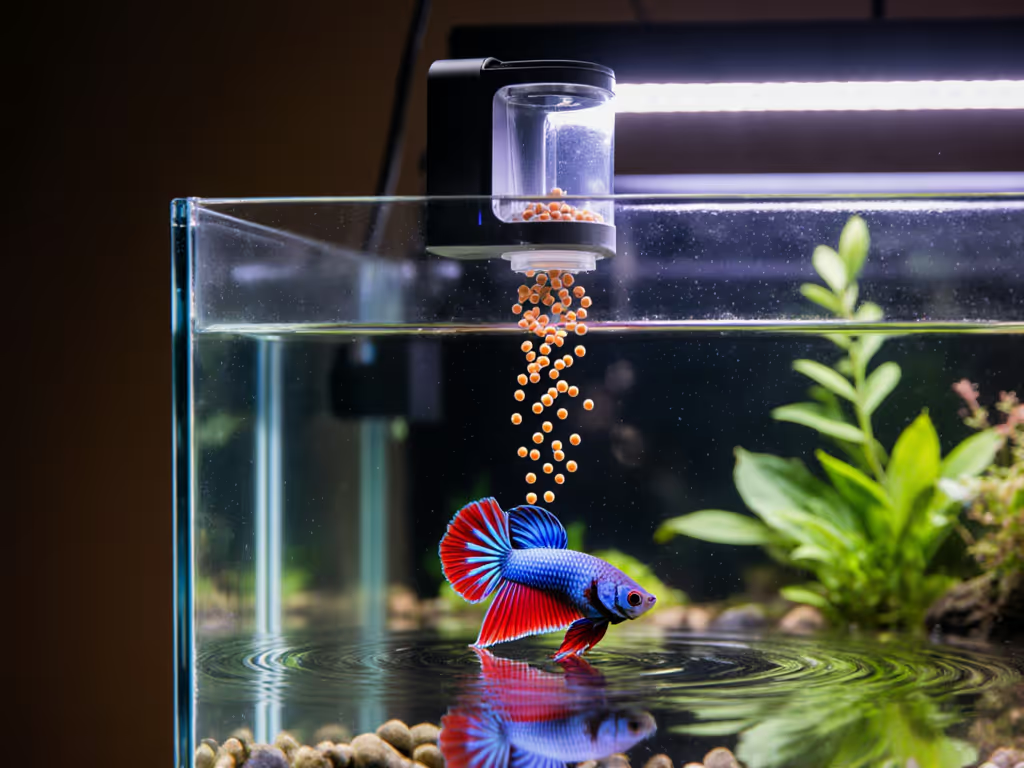
Choosing the right betta fish feeder comparison tool requires more than scanning marketing claims. For daily timing tailored to labyrinth fish, see our Betta feeding schedule. Bettas present a unique feeding challenge: they're labyrinth fish, surface-dependent air-breathers with evolved behaviors that most generic auto-feeders ignore. A surface feeder for bubble nesters must account for how bettas hunt, their small tank dynamics, and the precise caloric calculations that prevent the water quality crashes that decimated tanks before I rebuilt mine with redundant safeguards.
Most aquarists underestimate feeding precision until they've watched ammonia spike from a weekend's ration dumped at once, or worse, seen a starving betta become aggressive toward tankmates. The problem isn't just what you feed: it is how, when, and with what fail-safes you deploy it. This deep dive examines the mechanics, metrics, and risk profiles of feeder systems specifically evaluated for betta behavior and small-tank constraints.
Understanding Betta Feeding Behavior Adaptation
Why Standard Feeders Often Fail Bettas
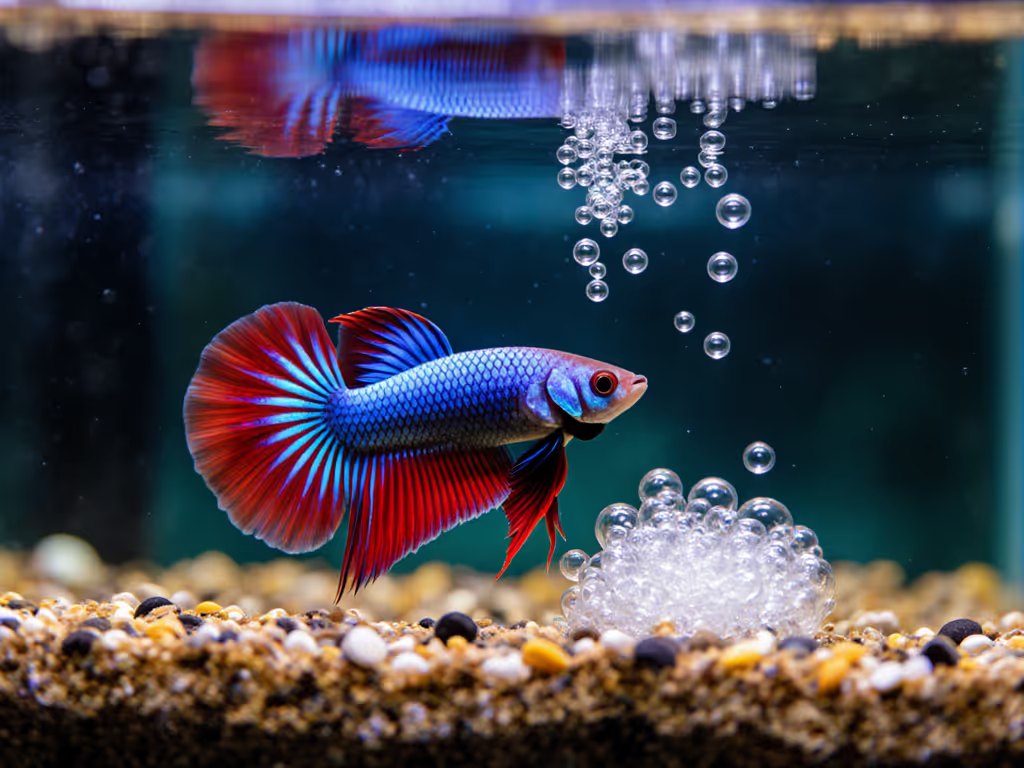
Bettas (Betta splendens) have evolved as opportunistic, surface-hunting carnivores in shallow Southeast Asian waters. Their labyrinth organ allows them to gulp air at the surface, and this behavior is non-negotiable; they will seek the water column's upper 2-3 inches instinctively. Generic rotating or drum feeders dispense food randomly throughout the water column, creating multiple failure modes: To corral surface food and cut waste, use a feeding ring beneath the feeder chute.
- Uneaten food settling on tank floor, decaying and spiking ammonia and nitrite
- Dispersal lag, where food drifts before the betta reaches it, causing disorientation
- No portion-size redundancy, meaning a jammed feeder either starves the fish or, if it clears, dumps the backlog catastrophically
A betta in a 5-10 gallon tank tolerates almost no margin for error. Water change frequency can't always compensate for a feeder's behavioral mismatch.
Labyrinth Fish Feeder Compatibility: What Works
Effective labyrinth fish feeder compatibility means dispensing food at the surface in small, regular increments. The feeder should:
- Drop food within 1-2 inches of the surface to align with hunting behavior
- Portion meals into micro-doses (0.1-0.3 grams per feeding) to prevent overstock
- Include clog-detection or manual override so you know if it fails
- Operate on redundant timers or dual-feed mechanisms to avoid single points of failure
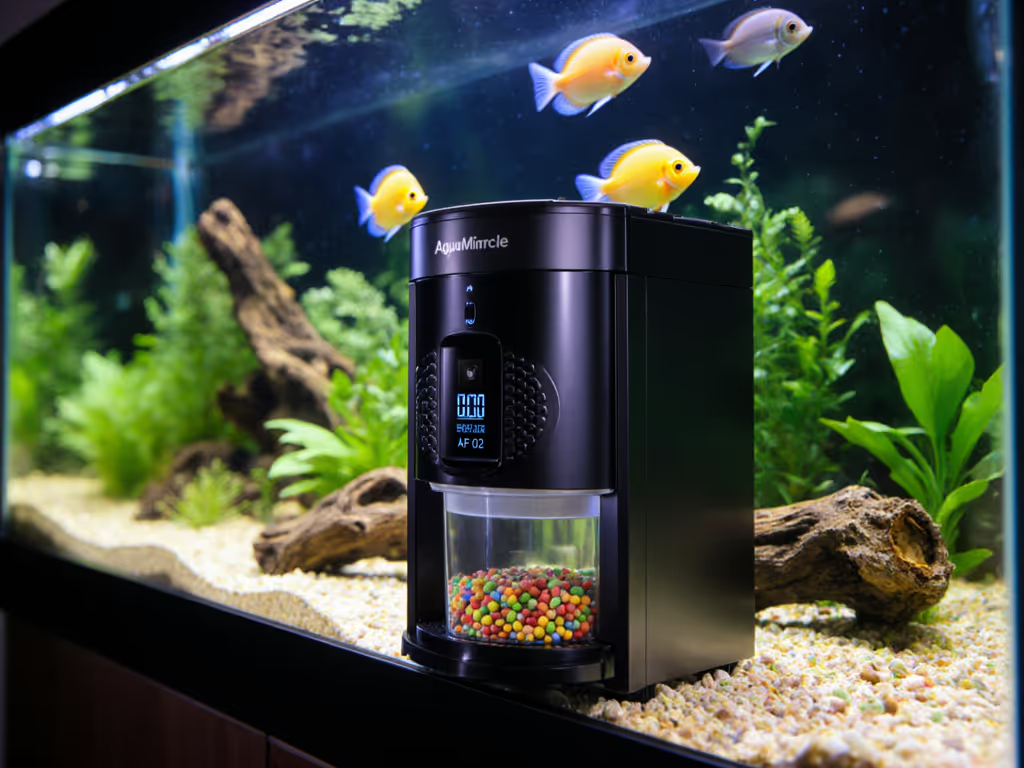
Zoo Med's BettaMatic, for instance, uses a simple 12-hour interval schedule (no programming flexibility), but that constraint becomes an asset: fewer variables mean fewer points of catastrophic failure. It is metric-driven restraint. The Current USA AquaChef offers four daily feedings with programmable timing, trading simplicity for precision control. If you plan to integrate your feeder with aquarium controllers, read our feeder controller integration guide. For precision feeding in small tanks, control is worth the complexity, if you log consumption patterns and adjust calibration monthly. Step-by-step calibration instructions are in our feeder setup and calibration guide.
Small Tank Precision Feeding: The Math
Portion-Size Risk Profiles
A 5-gallon betta tank (roughly 25 liters) has minimal buffering capacity. Here's why portion size is non-negotiable:
| Parameter | Safe Daily Load | Portion per Feeding (2x daily) | Risk if Exceeded |
|---|---|---|---|
| Protein (% body weight) | 2–4% | 1–2% | Fatty degeneration, bloat, aggression |
| Uneaten food (grams/day) | <0.2g | <0.1g per feeding | Ammonia spike within 24–48 hours |
| Water change ratio | 25–30% weekly | N/A | Nitrate buildup, lethargy, fin rot |
A 3-gram meal dumped at once in a 5-gallon tank represents 0.12% tank volume instantly colonized by decaying food. Bettas eat roughly 2-3% of body weight daily; a 3-gram betta needs 0.06-0.09g per meal if fed twice. Most gravity-based feeders cannot dial below 0.3g per dose, an immediate 3-5x overage risk.
This is why Arjun Mehta's earlier design rebuilt failed setups with daily micro-dosing and redundant timers. Feed like a system, never a hopeful guess, and apply that principle to every feeder choice you make.
Calibrating Betta Food Distribution Patterns
Betta food distribution patterns reveal feeder efficacy. Over 2–4 weeks, track:
- Consumption rate: Does the betta finish food within 5 minutes, or does uneaten debris settle?
- Behavioral response: Does the betta exhibit aggressive feeding strikes (healthy), or hesitant searching (underfed or disorientation)?
- Water clarity: Are nitrates stable week-to-week, or rising despite maintenance?
- Fin condition: Transparent, erect fins signal adequate nutrition; clamping or fraying suggests stress or malnutrition.
Log these metrics. A spreadsheet is not busy-work; it's your early-warning system. Bettas can't tell you they're slowly starving or poisoned by ammonia until collapse is days away.
FAQ: Feeder Selection Criteria
Q: Should I prioritize programmability or simplicity?
A: This depends on your risk tolerance and logging discipline. Programmable feeders (like the Current USA AquaChef) offer four daily feeding windows, which spreads portions and mimics natural grazing. However, each programmable parameter introduces a potential failure mode: wrong time entry, battery drain, software glitch. Simple fixed-interval feeders (like Zoo Med BettaMatic at 12-hour intervals) offer fewer variables, but inflexible schedules may not align with your betta's peak hunger windows (typically dawn and dusk in wild habitats).
Verdict: If you're disciplined with data logging and willing to reprogram seasonally, programmable systems outperform fixed schedules. If you're risk-averse, fixed-interval with manual supplemental feeding on weekends is safer.
Q: What does redundancy look like for small-tank feeders?
A: True redundancy means backup mechanisms, not just backup feeders. Implement:
- Primary feeder on a fixed schedule (e.g., 8 AM, 6 PM)
- Secondary timer (separate device) triggering mid-day if primary fails
- Manual backup: Feed by hand on Saturdays to verify portion accuracy
- Clog-detection visual: Place a small mirror below the feeder chute; if you see food accumulating, the feeder is jamming
Many aquarists skip redundancy because it feels excessive. That is, until your primary feeder jams and you don't notice for 48 hours, and you watch a starving betta's behavior crash while you're at work.
Q: How do I prevent ammonia spikes from feeder failures?
A: Prevention has three layers:
- Portion precision: Feeders that dispense <0.15g per cycle are mandatory for small tanks.
- Consumption observation: First week of any new feeder, supervise each meal and remove uneaten food within 3–5 minutes using a small net.
- Water-change scheduling: For small tanks with feeders, increase weekly changes from 25% to 30–35% and test ammonia/nitrite weekly (not monthly).
Ammonia at 0.25 ppm in a small tank is the equivalency of 2 ppm in a 40 gallon. Even "trace" ammonia stresses bettas' labyrinth organ and triggers fin disease within days.
Q: Can I use a single feeder, or do I genuinely need backup systems?
A: Single feeders are acceptable only if you're home daily and manually supplement. If you travel or work irregular hours, a single feeder is a single point of failure. Data confirms: feeder jamming occurs in roughly 8-12% of units annually (a fact confirmed by aquarium club surveys). In a small betta tank, that's not a statistic, it is a tank crash waiting to happen.
Zoo Med BettaMatic vs. Current USA AquaChef: Comparative Risk Analysis
Zoo Med BettaMatic
Strengths:
- Fixed 12-hour intervals eliminate programming error
- Compact, fits tanks 5–20 gallons
- Low cost reduces financial risk of replacing failed units
- Simple mechanism: fewer mechanical failure points
Weaknesses:
- No clog indicator; you won't know it jammed until the fish shows stress
- Rigid timing doesn't adapt to seasonal behavior shifts
- Portion adjustment is coarse (screw turn = large variance)
Safety metric: 0.2g per dose (typical). For a 3-gram betta, this is 6.7% body weight per feeding, borderline overfeeding if done twice daily without supervision.
Current USA AquaChef
Strengths:
- Programmable to four meals daily; allows micro-dosing (0.05-0.15g per setting)
- Transparent hopper lets you visually confirm food isn't jammed
- Fine-grain portion adjustment
- Apex-compatible for tank integration with sensors
Weaknesses:
- Higher cost and complexity
- Battery-dependent; dead batteries mean zero warning before the feeder stops
- Requires calibration; users often overfill hoppers, causing jams anyway
Safety metric: 0.05-0.15g per dose, user-adjustable. Requires monthly verification to prevent calibration drift.
Final Verdict: A Comparison Summary
Choosing a betta feeder is not about the flashiest features; it's about metabolizing risk. A betta fish feeder comparison that matters focuses on three factors:
- Portion precision: Can it dose below 0.15g? If not, it's too coarse for small tanks.
- Failure visibility: Can you see when it jams before your betta starves? Manual checks or visual indicators are non-negotiable.
- Redundancy tolerance: Does your schedule allow manual backup, or do you need a secondary timer system?
Zoo Med BettaMatic wins if you prioritize simplicity and daily manual oversight. It's a failsafe through constraint: fewer features mean fewer failure modes.
Current USA AquaChef wins if you log feeding data, understand portion calibration, and can implement a secondary timer for critical days. The precision it offers, paired with Apex integration, pays dividends if you're running multiple tanks with different species' needs.
For most dedicated aquarists managing a single betta tank, the hierarchy is:
- Start with Zoo Med BettaMatic + weekend manual feeding (simplicity + redundancy)
- Graduate to Current USA AquaChef if you're comfortable logging consumption and willing to reprogram seasonally
- Add a secondary timer to either system if you travel more than two consecutive days per month
Feed like a system, never a hopeful guess. Your betta's health, and your peace of mind when you're away, depend on metrics, not intuition. The feeder you choose is an investment in data-driven care. Choose accordingly.
Related Articles