Broadcast vs Directional Pond Feeders: Coverage Metrics
By Arjun Mehta • 2nd May
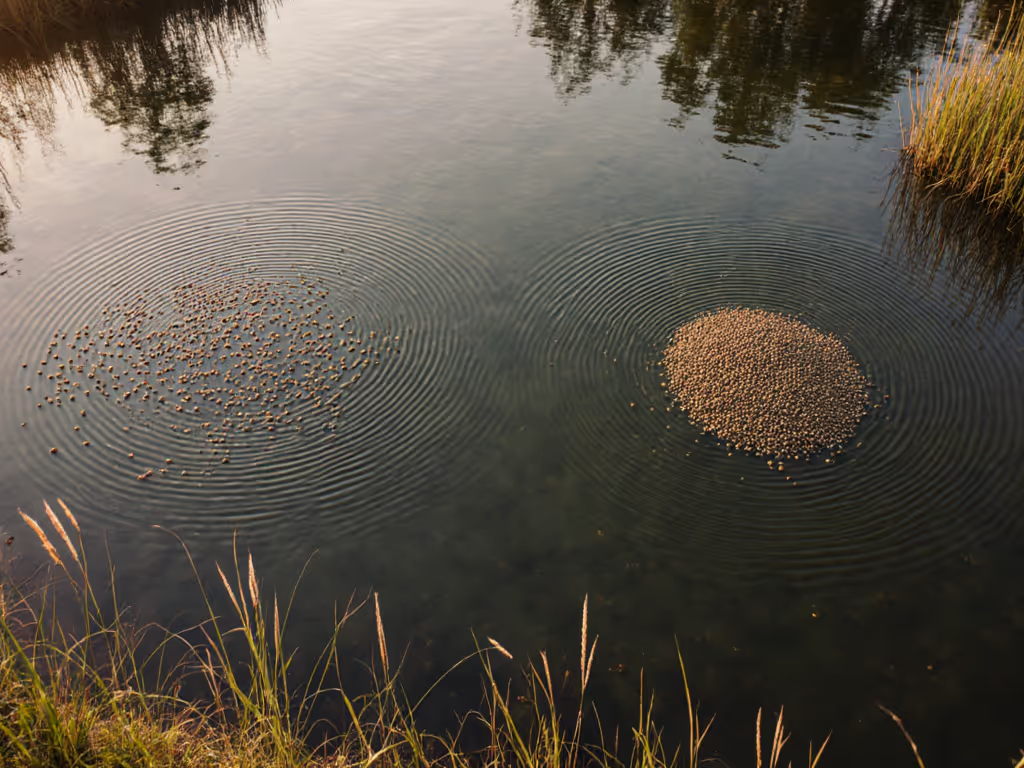
Broadcast vs directional pond feeders represent fundamentally different philosophies in aquatic food delivery. One scatters nutrition across the entire water column; the other targets specific zones where your fish congregate. Which approach actually serves your pond ecosystem management better depends on measurable data, not guesswork or marketing promises.
The Problem: Feeding Systems Fail at Scale
Pond feeding isn't like tossing flakes into a desktop aquarium. Get the full breakdown of pond vs aquarium feeder differences before you scale up. Volume changes everything. A pond spanning 500 gallons or more introduces distribution complexity: surface-dwelling koi, mid-water shiners, and bottom-foraging catfish rarely overlap in their feeding zones. Feed like a system, never a hopeful guess. This means understanding where your food actually lands and who consumes it.
When feeding systems break down, they break catastrophically. Uneaten food decomposes, ammonia spikes, and your ecosystem crashes faster than you'd expect. Redundancy and precision aren't luxuries; they're the framework that keeps your pond stable.
Broadcast Feeders: Coverage, Consistency, and Trade-offs
How Broadcast Systems Distribute Food
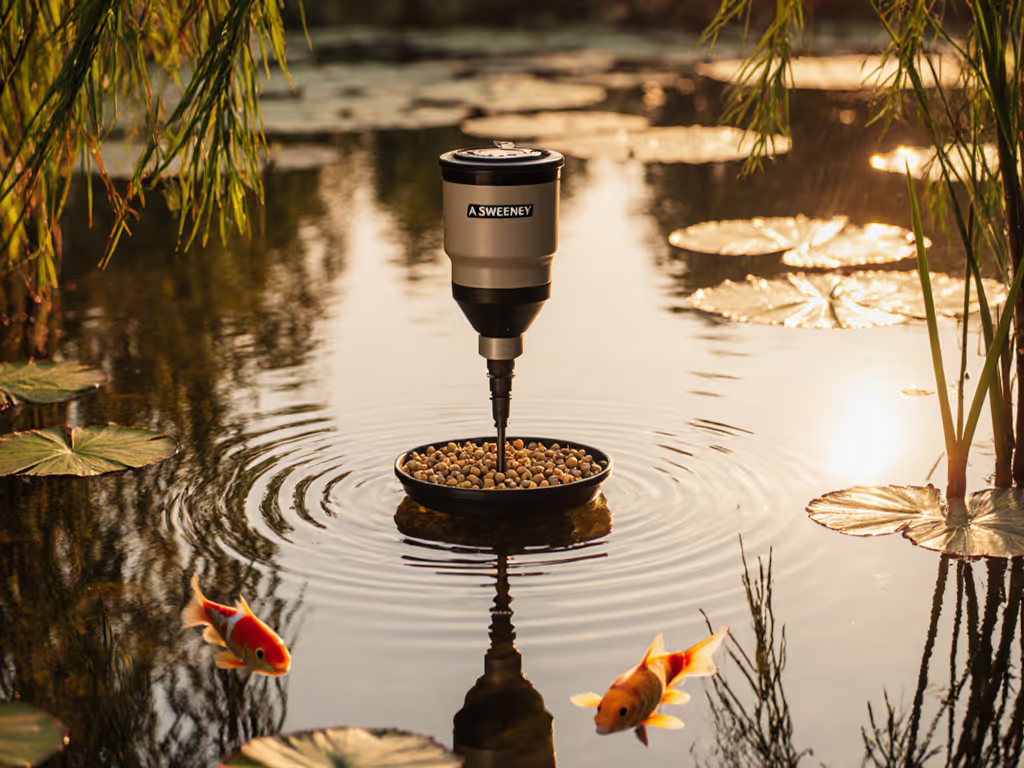
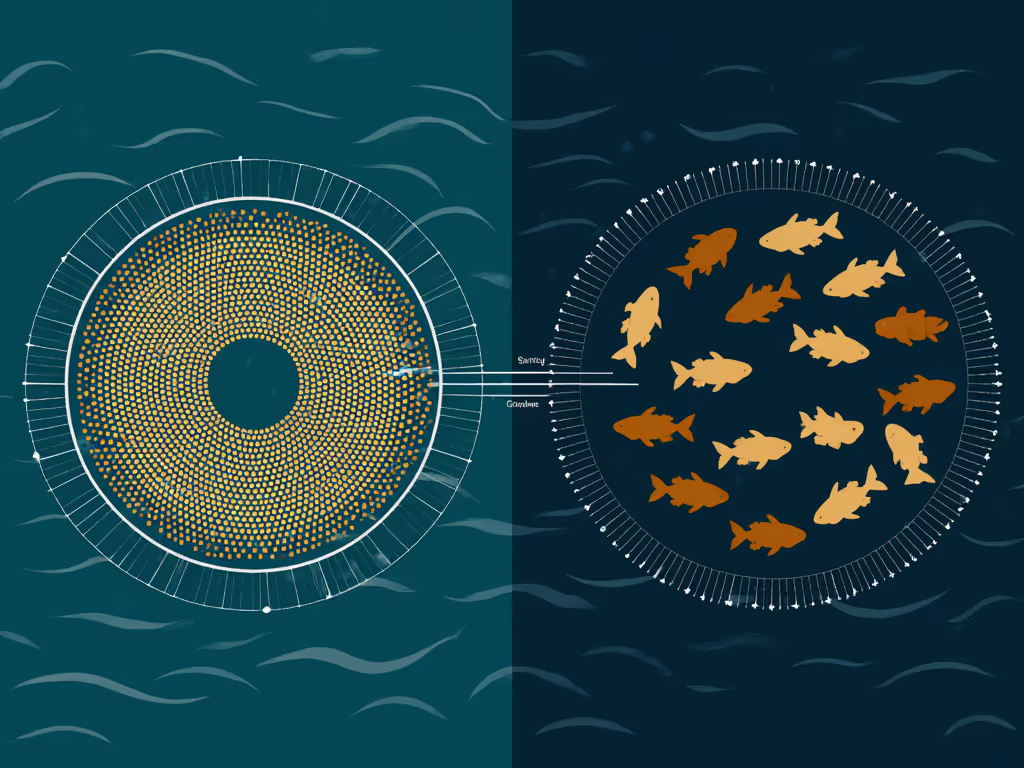
A fish pond feeder using a broadcast mechanism typically operates on a timer and dispenses pellets uniformly across a designated surface radius. The distribution pattern follows a bell curve: maximum concentration at the feeder's center, tapering toward the edges. For large ponds and lakes, see our guide to broadcast feeder placement for natural coverage.
Key metrics for broadcast feeders:
- Effective coverage radius: Typically 6-15 feet from the dispersal point, depending on pellet weight and water agitation
- Distribution uniformity: Center-heavy bias means 60-70% of food settles within a 50% radius reduction from theoretical maximum
- Settling time: Standard pellets take 15-45 seconds to reach bottom zone; slower sinking variants extend distribution further
- Waste percentage: 8-15% of dispersed food drifts beyond feeding zones or decays uneaten
Advantages in Specific Scenarios
Broadcast systems excel when your pond population is relatively evenly distributed across the surface and mid-water zones. They're also simpler mechanically, with fewer moving parts and fewer failure modes.
For ponds hosting primarily surface-feeders (like young koi or goldfish), broadcast's wide dispersion ensures no individual fish gets starved out by dominants clustering near a single feeder point.
The Ecosystem Trade-off
Broad dispersal creates a behavioral side effect: it encourages scattered grazing rather than concentrated feeding frenzies. This reduces competitive stress but also means harder-to-monitor individual consumption. You won't easily spot which fish are eating and which are struggling.
Directional Feeders: Precision Targeting and Population Stratification
How Targeted Systems Concentrate Delivery
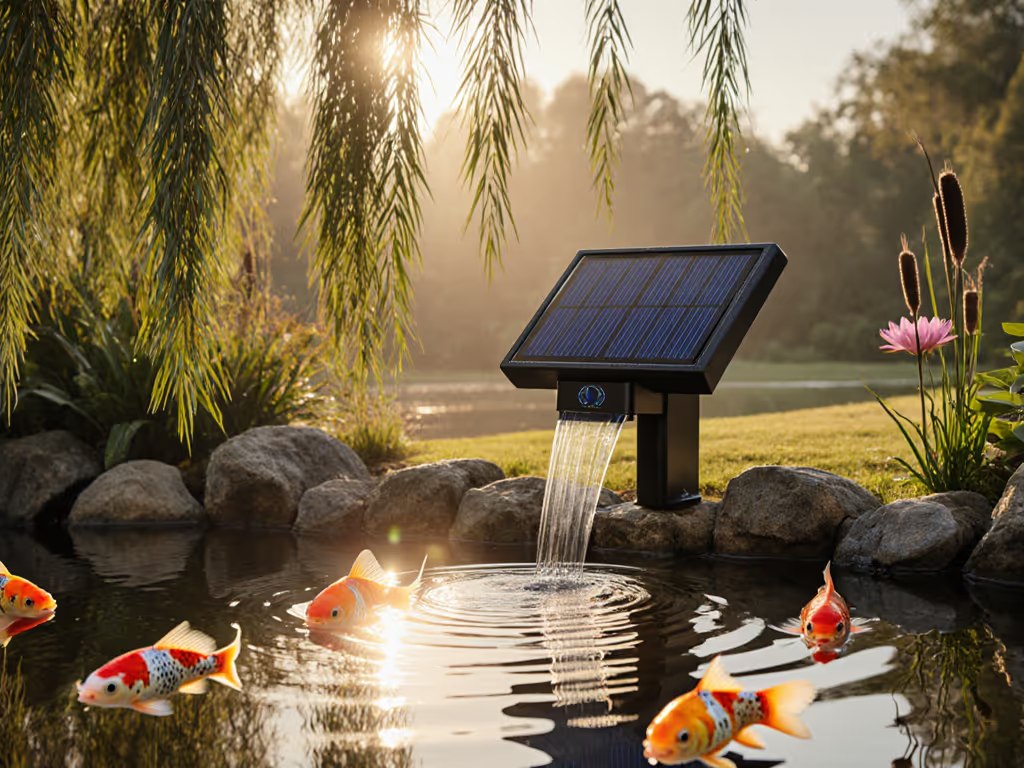
A targeted pond feeding system uses directional nozzles, chutes, or limited-angle hoppers to concentrate food delivery into a specific zone, typically a 2-4 foot radius. Some models employ dual or triple ports aimed at different depths.
Key metrics for directional feeders:
- Concentration radius: 2-6 feet, with 80-90% of food landing within the primary zone
- Depth targeting: Advanced units can adjust drop angle to feed surface, mid-water, or benthic zones independently
- Pellet loss rate: 2-5%, since food isn't dispersed into dead zones
- Consumption predictability: Single-point delivery creates measurable behavior, so you can count how many fish feed and estimate per-individual intake
Advantages for Mixed-Species Populations
Directional systems shine when your pond hosts a fish population with distinct vertical stratification: fast-moving surface eaters versus slow-moving bottom dwellers. To tune settings by behavior, use our species-specific feeding guide. By running multiple directional feeders at different zones, you ensure each species gets adequate nutrition without dominant individuals monopolizing all the food.
This approach also makes manual feeding supplementation easier. You can place a secondary feeder in a shaded zone where shy species hide, ensuring they're not outcompeted.
The Precision Benefit
Directional feeding reduces waste dramatically. When you're delivering 90% of your food into a defined zone, uneaten pellets remain visible and removable. This keeps ammonia and nitrate loads lower, a direct benefit to water clarity and parameter stability.
Comparative Coverage Analysis
Here's where the metrics diverge:
| Metric | Broadcast | Directional |
|---|---|---|
| Total coverage area | 18-180 sq ft (6-15 ft radius) | 4-50 sq ft (2-6 ft radius) |
| Food concentration efficiency | 60-70% in optimal zone | 80-90% in optimal zone |
| Waste rate | 8-15% | 2-5% |
| Monitoring ease | Low (dispersed feeding) | High (concentrated point) |
| Scalability (multiple feeders) | Risk of overlap waste | Synergistic zone coverage |
| Per-fish intake tracking | Difficult | Manageable |
The broadcast feeder covers more territory but concentrates less food in any single zone. A directional system sacrifices area for efficiency and control. For installation trade-offs and real-world layouts, read our even food distribution guide.
Ecosystem Impact: Beyond Coverage Area
Ammonia and Nitrate Dynamics
Uneaten food is the silent killer in ponds. A 10% waste rate across 2 lbs of daily feeding equals 0.2 lbs of decomposing organic matter, every single day. Over a month, that's 6 lbs of excess bioload.
Directional feeders' lower waste rate translates to measurable water parameter stability. Studies in closed aquatic systems confirm that reducing uneaten food by 5% can lower ammonia production by 8-12% and reduce subsequent nitrate accumulation.
Fish Behavior and Stress
Broadcast systems create a "free-for-all" feeding environment, with less competitive dominance but also less individual observation. Directional feeding creates feeding stations where you can monitor individual fish daily. Sick or under-eating fish become obvious within days, not weeks.
Population Health Outcomes
Fish population distribution matters more in confined pond systems than in open waters. When dominant koi push smaller fish away from food sources, the subordinates develop stress responses: immune suppression, stunted growth, and susceptibility to parasites.
Directional feeders positioned in refuge zones (plant cover, shaded ledges) ensure that timid species get adequate nutrition despite hierarchy constraints.
Choosing Your Approach: A Risk-Aware Framework
Neither system is universally superior. Your choice depends on answering these metric-driven questions:
- What's your fish population stratification? If 80% of your fish occupy a single feeding zone (surface for koi, mid-water for shiners), directional is more efficient. If they're evenly distributed, broadcast is defensible.
- What's your acceptable waste rate? If bioload is your limiting factor (heavily stocked pond, limited filtration), the 5-10% waste differential between systems translates to measurable parameter improvement.
- How much observation capacity do you have? Directional feeding demands more active monitoring. If you're traveling frequently, broadcast's lower-maintenance approach might suit you, despite lower efficiency.
- What's your redundancy setup? A single broadcast feeder is a single point of failure. Multiple directional feeders at different zones provide natural redundancy; if one malfunctions, others keep feeding stable.
Integration Strategy: Hybrid Approaches
The most resilient systems often combine both. Run a primary directional feeder for your main population during your active hours, paired with a secondary broadcast unit as a backup (fed at a lower rate) that activates if the main system fails.
This isn't redundancy for the sake of complexity; it's pond ecosystem management designed for failure recovery. Design for failure, then add the layers that keep your fish fed even when hardware breaks.
If you're considering IoT integration with timers and sensors, directional feeders work better with clog detection (they're prone to jamming in one port). Broadcast systems pair better with variable-rate dispensing, since the wider distribution forgives slight over-feeding.
Actionable Next Steps
Start by mapping your current fish population distribution over one week. Note where fish congregate at feeding time and where they scatter. Identify any subordinate fish that seem to miss meals.
Based on that observation, select a feeder type: directional if segregation is obvious, broadcast if distribution is even. Then commit to a one-month trial with measurement: track ammonia and nitrate levels weekly, monitor individual fish appearance, and log uneaten food visibility.
If you're installing a new system, choose hardware that allows adjustments (angle or dispersion settings you can refine). The best feeder is the one you can iterate on as you learn your pond's specific dynamics.
Your fish thrive when feeding becomes a system you've observed and tuned, not a routine you've guessed at. Start with metrics. Let data guide your design.
Related Articles