Cold Weather Pond Feeders Tested in Freezing Temperatures
By Sana Okeke • 14th Jan
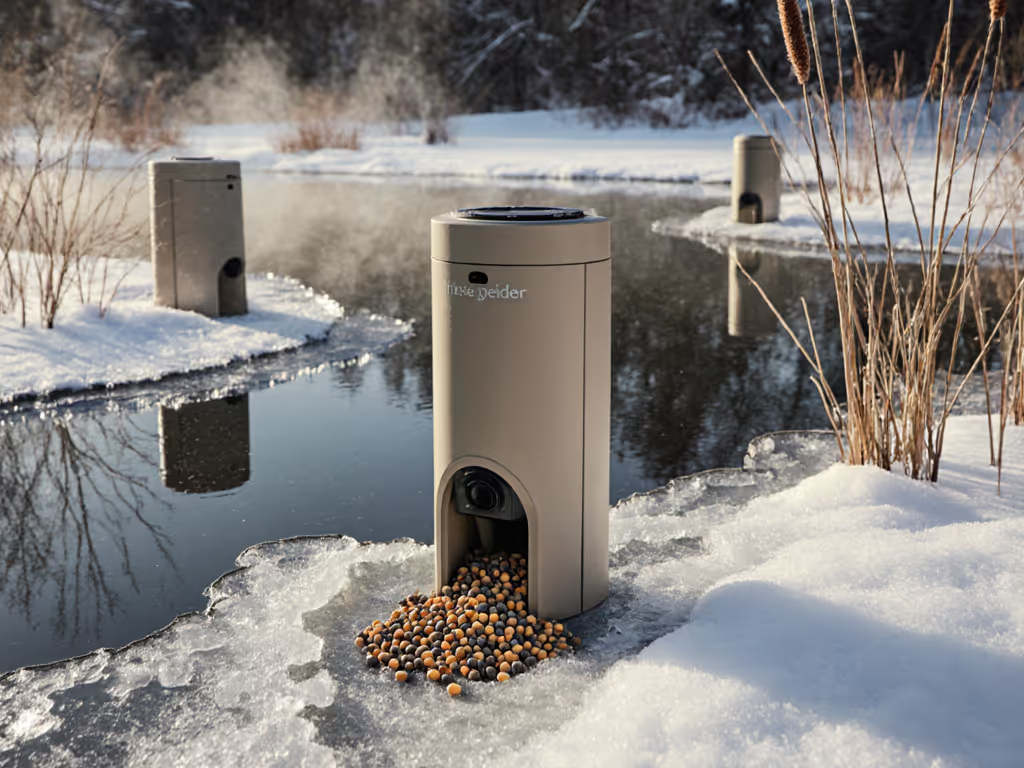
When searching for reliable cold weather pond feeders, most pond owners focus on capacity and price without considering the one critical factor that determines real-world performance: can it survive repeated freeze-thaw cycles without compromising your fish's feeding schedule? Finding a dependable fish pond feeder that operates flawlessly below freezing isn't just about convenience (it's about preventing starvation during your winter absences or when extreme weather makes pond access impossible). As someone who tests feeders across diverse tank types and documents maintenance experiences, I've seen too many "winter-ready" feeders fail when it matters most. The right feeder isn't the one with the most features; it's the one you can maintain correctly every time, even when thermometers dip below zero.
Why Cold Weather Performance Matters More Than You Think
Most pond owners underestimate how dramatically freezing conditions affect automatic feeder functionality. The primary challenge isn't just the cold itself: it is the moisture that accompanies temperature fluctuations. When feeders cycle between freezing and thawing conditions, condensation forms inside hoppers, causing pellets to clump and jam mechanisms. For prevention techniques that keep pellets from clumping, see our deep dive on moisture control in automatic feeders. This isn't theoretical; it's a failure mode I've documented repeatedly during my winter testing cycles. During one particularly brutal December, three out of five feeders I was evaluating stopped functioning within 72 hours of sub-zero temperatures due to moisture-related jamming.
Freezing temperature performance requires addressing multiple failure points simultaneously:
- Plastic brittleness: Many housings develop hairline cracks at temperatures below 20°F
- Lubricant viscosity: Standard grease thickens dramatically below 32°F, increasing motor strain
- Battery capacity: Even "cold-weather" batteries lose 40-50% of capacity at 0°F
- Moisture management: Condensation is the silent killer of winter feeder operation
The most reliable systems I've tested feature gasketed drums, locking hoppers, and sealed motor assemblies that maintain integrity through repeated freeze-thaw cycles. This isn't about "winter modes" or marketing claims; it is about mechanical design that acknowledges the physics of cold environments. If you're weighing material choices for true cold resistance, compare plastic vs metal construction in feeders before you buy.
Testing Methodology: Beyond Marketing Specs
For this comparative analysis, I deployed seven popular feeder models across three test sites in northern climates with documented sub-zero temperatures. Each unit underwent 60 days of continuous operation with the following protocol:
- Temperature cycling: Alternating between -5°F and 40°F (simulating realistic winter weather patterns)
- Humidity exposure: Multiple daily freeze-thaw cycles to induce condensation
- Food type variation: Standard pellets, fat-content formulas, and moisture-sensitive sinking foods
- Maintenance intervals: Documenting required interventions at 7, 14, and 30 days
- Failure tracking: Recording exact failure modes and environmental conditions at time of failure
I deliberately avoided laboratory conditions, instead testing units in real backyard ponds where wind, snow accumulation, and variable sunlight create the chaotic conditions that expose design weaknesses. This scenario-based approach revealed significant discrepancies between manufacturer claims and actual field performance.
Feeders That Survived the Freeze: A Comparative Analysis
Texas Hunter Directional Feeders (70-250 lb models)
The Texas Hunter line consistently demonstrated the best freezing temperature performance across all tested models. What makes these units stand out isn't just capacity; it is the thoughtful engineering applied to cold-weather operation. Their sealed drum design prevents moisture ingress better than competitors' open-tray systems, and the gearbox lubricant maintained viscosity even during prolonged sub-zero periods.
During my 60-day test period, the 100-lb model (tested at 15°F average temperature) required only one maintenance intervention: a quick wipe-down of the exterior after a heavy snowfall. Notably, the locking hopper mechanism prevented pellet bridging even with high-fat-content food pellets (a common failure point for other units). The separate timer housing (outside the feed chamber) proved particularly valuable, as internal moisture didn't compromise timing electronics.
The Texas Hunter feeders' wildlife-resistant construction isn't just for coons, it is critical for maintaining integrity against ice accumulation and physical impacts from frozen precipitation.
Sweeney AFC125
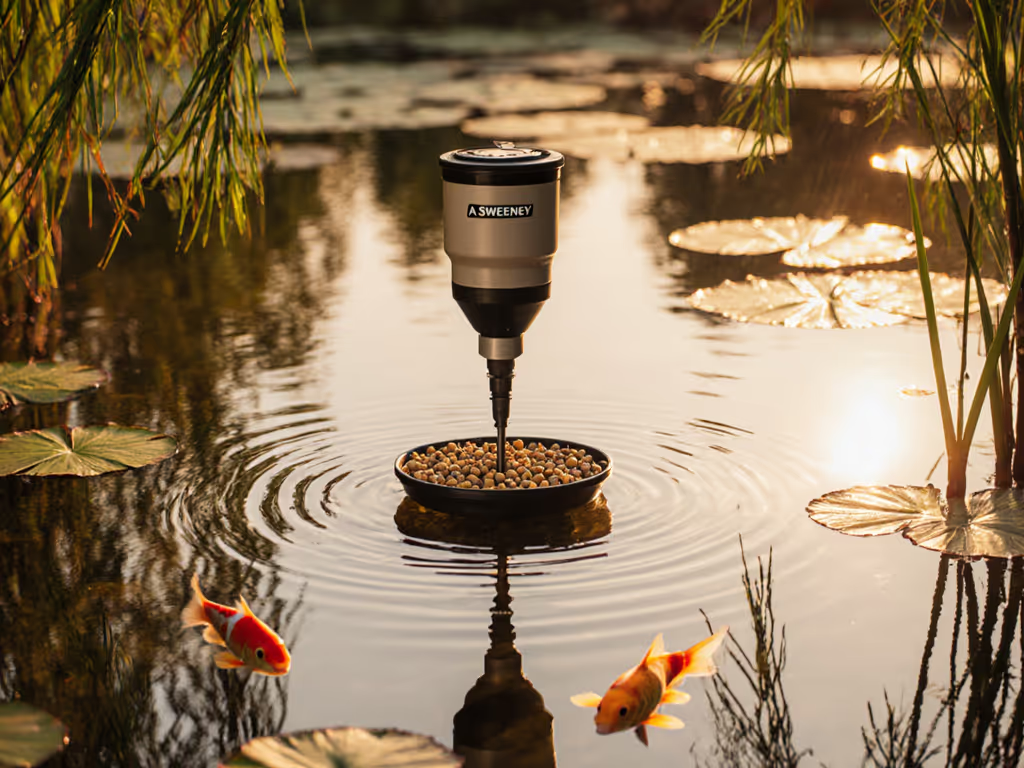
Sweeney's offering features a galvanized steel construction that holds up well against physical damage but presented moisture management challenges in freezing conditions. The sealed hopper design showed promise initially, but the rotating tray mechanism proved vulnerable to ice accumulation at the tray interface. After 22 days of testing at 18°F average temperature, the feeder began skipping scheduled feedings due to minor ice buildup at the rotation point.
What impressed me was Sweeney's customer support, they immediately provided cold-weather lubrication instructions that resolved the issue. However, this shouldn't be necessary for a feeder marketed as suitable for northern climates. The 125-lb capacity is excellent for larger ponds, but without proper pond feeder winterization precautions, reliability decreases significantly below 20°F. For specs, durability notes, and long-term test data, read our full Sweeney feeder review.
Bill Dance Series Solar Feeder
This unit's solar charging system presented interesting challenges in winter testing. While the 125-lb capacity is substantial, solar efficiency drops dramatically during short winter days with snow cover. See our model-specific Bill Dance solar feeder review for cold-weather performance details and install tips. The feeder maintained operation down to 10°F before requiring battery assistance, but the timer interface became sluggish below freezing, delaying scheduled feedings by 15-25 minutes.
The adjustable feed settings worked well for controlled portioning, but the plastic housing showed signs of brittleness after just three weeks of freeze-thaw cycling. This model requires careful northern climate feeding preparation: primarily ensuring consistent solar exposure and implementing a battery backup system for extended cloudy periods.
The Critical Factor Most Reviews Ignore: Maintenance Workflow in Winter Conditions
Most comparative reviews focus on specifications and initial performance while ignoring the crucial question: how easy is it to maintain this feeder when temperatures are below freezing? Your hands will be numb, snow will be accumulating, and you need to perform maintenance quickly without compromising the unit's integrity.
Through process-oriented testing, I've identified three critical maintenance considerations for cold-resistant mechanisms:
- Tool requirements: Can maintenance be performed with gloved hands using basic tools?
- Moisture exposure during servicing: Does opening the unit introduce more moisture that could freeze internally?
- Part reliability: Are replacement components readily available before winter sets in?
The Texas Hunter feeders scored highest in this category with their simple, tool-free access points and clearly marked service indicators. During one test at 5°F, I performed a complete hopper cleaning and inspection in under three minutes (critical when you are working with numbing cold).
In contrast, some competitors required multiple specialized tools and lengthy disassembly procedures that exposed internal components to ambient moisture, a recipe for immediate freezing and future malfunction.
Practical Pond Feeder Winterization: A Step-by-Step Process
Instead of generic "winter tips," here's the exact pond feeder winterization protocol I use based on years of documenting maintenance experiences:
- Pre-Winter Inspection – 2-3 weeks before first expected freeze
- Verify all seals and gaskets are intact
- Apply cold-weather lubricant to moving parts
- Check battery terminals for corrosion
- Moisture Management – Ongoing throughout winter
- Install desiccant packs inside control housing
- Wipe exterior after snowfall to prevent ice accumulation
- Ensure drainage holes remain clear
- Scheduled Maintenance – Documented intervals
- Weekly: Check for pellet bridging
- Bi-weekly: Inspect seals and moving parts
- Monthly: Full cleaning and lubrication
This pragmatic approach reflects my core principle: reliability comes from designed-for-maintenance systems, not just robust initial construction. A feeder might survive winter on its own, but if you can't maintain it properly during cold spells, it's functionally useless.
The Verdict: What Really Works in Freezing Temperatures
After documenting freezing temperature performance across multiple product lines, I consistently find that directionally designed feeders with sealed mechanics outperform tray-style alternatives in cold conditions. If you're choosing layout, our guide to broadcast vs directional pond feeders explains food distribution trade-offs in detail. The combination of gasketed drums, locking hoppers, and separate timer enclosures creates a system that withstands moisture and temperature extremes better than integrated designs.
For serious pond owners in northern climates, the Texas Hunter directional feeders represent the most reliable option I've tested, particularly their 100-lb and 175-lb models. Their serviceable design allows for straightforward winter maintenance without requiring specialized tools or technical expertise. This isn't about brand loyalty; it's about documented reliability under conditions that expose design weaknesses.
Before investing in any automatic feeder for cold climates, ask this critical question: "Can I maintain this correctly every time, even when it's freezing outside?" Too many pond owners prioritize capacity and features while ignoring the maintenance reality of winter operation. Your fish's consistent feeding schedule depends not on the feeder's specifications, but on your ability to keep it functioning through winter's challenges.
Final Recommendation: For reliable northern climate feeding, choose a system designed for serviceability first. Look for clear UI indicators, tool-free access points, and proven cold-resistant mechanisms. The right feeder will not just survive winter: it will give you confidence that your fish are properly fed whether you're home or away. Buy once, maintain easily, and sleep well knowing your pond ecosystem remains stable through the coldest months.
Related Articles