Nano Tank Feeder Comparison: Precision and Peace
By Mei-Lin Zhou • 10th May
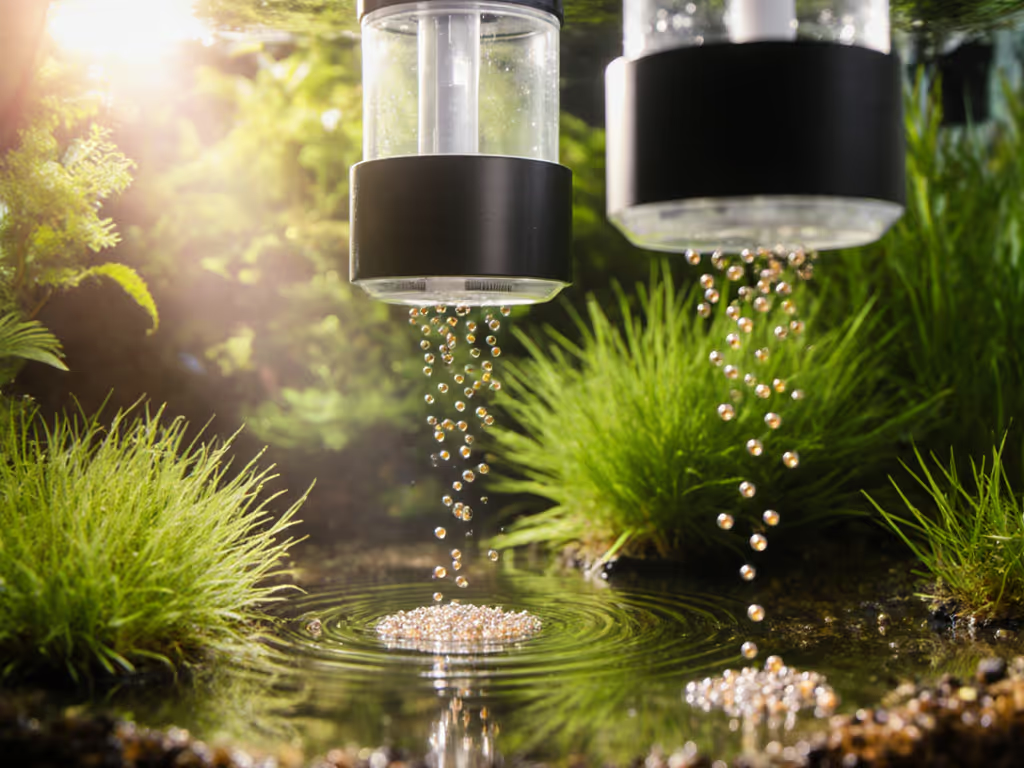
The difference between a thriving nano aquarium and a struggling one often comes down to one simple factor: precision. With less water volume to buffer mistakes, nano tank feeder considerations become crucial for success. Unlike larger systems, nano tanks offer no margin for error when it comes to overfeeding, underfeeding, or inconsistent schedules. Yet they also present unique opportunities (the same precision that demands careful attention also means you can observe every feeding interaction, every response, every subtle behavior change). Whether you're managing a 5-gallon planted cube with a betta or a 10-gallon reef setup with clowns, the aquarium feeder landscape has evolved significantly, offering both manual and automated solutions engineered specifically for tight spaces.
Today's options range from simple mechanical timers to sophisticated micro-portion dispensers designed for compact tanks. But here's what I've learned through years of mentoring aquarists: the best feeder isn't always the most advanced one. It's the one that lets you pause, watch, then adjust.
FAQ: Understanding Nano Tank Feeding Challenges
What Makes Nano Tank Feeding So Different?
The fundamental issue is volume. A 20-gallon tank can absorb a minor overfeeding incident. A nano tank cannot. When you overfeed even slightly in a confined space, ammonia spikes rapidly, nitrates accumulate faster, and algae blooms with alarming speed. I recall a neighbor's child who loved her guppies so much that she fed them several times daily with generous pinches of flakes. Within days, the water turned cloudy, the fish's colors faded, and her joy turned to tears. She'd learned a hard lesson: more food doesn't mean more love. What transformed her tank was something simpler (fasting for two days, then tiny portions, added vegetables, and a consistent timer). Seeing clear water and curious fish restored both her happiness and her understanding that restraint becomes care.
The water quality equation is brutal in nanos:
- Less volume = Less dilution buffer for excess nutrients
- Smaller waste capacity = Faster parameter degradation
- Fewer fish = Greater sensitivity to individual feeding errors
This is why feeding in small nano aquariums demands both consistency and restraint. If your setup is newly cycled, follow our new tank feeding schedule to avoid ammonia spikes.
Why Does Portion Control Matter So Much in Compact Tanks?
Micro-portion control isn't a luxury feature for nano tanks; it is essential to success. Most manual feeders dispense portions far too large for a 5 or 10-gallon system. A pinch that's appropriate for a 40-gallon breeder tank can be 5-10 times too much for a nano. For model picks that excel at micro-portions in tight spaces, see our tiny tank feeders guide.
Here's what happens when portions are imprecise:
- Uneaten food decays, fueling bacterial blooms and ammonia production
- Fish consume more than needed, leading to excess metabolic waste
- Behavioral changes occur, including aggression, lethargy, and color loss
- Water parameters destabilize rapidly, creating stress that compounds over days
The emotional stakes run high. You want your fish to thrive. You want visible evidence that they're healthy and active. But excess food isn't evidence of care, it is evidence of anxiety masked as generosity. Start small, observe closely, let the fish teach you. This isn't a catchy phrase; it's the foundation of every thriving nano aquarium I've witnessed.
How Do I Know Whether Manual Feeding or Automatic Feeding Is Right for My Nano?
This depends on your specific situation and your capacity for consistency. Let me outline the genuine trade-offs without pretense:
Manual Feeding Advantages:
- Forces you to observe your fish daily, noticing behavioral and color changes
- Builds intuition about their actual appetite and individual preferences
- Eliminates dependence on battery or electrical components
- Gives you immediate feedback to adjust portions based on response
Manual Feeding Challenges:
- Requires consistency even when you're tired, traveling, or overwhelmed
- Prone to user error (sometimes you forget, sometimes you overfeed out of nervousness)
- Creates genuine stress when you need to leave for more than a day
- Makes it difficult to maintain exact routines across multiple nano tanks
Automatic Feeder Advantages:
- Provides consistent, repeatable schedules that don't depend on your mood
- Eliminates human error once properly calibrated
- Enables travel confidence without guilt
- Often includes space-saving nano feeders engineered to fit on small tank rims
- Allows detailed feeding logs if you use advanced models with data tracking
Automatic Feeder Challenges:
- Initial setup requires patient observation to verify accuracy
- Can malfunction without immediate notice if not monitored
- May create a false sense of security if you abandon observation entirely
- Some models are bulkier than ideal for nano tank aesthetics
For many aquarists I mentor, the honest answer is hybrid: manual feeding during your normal routine, with an automatic backup for travel. This gives you the daily observation benefit while protecting your fish when life gets complicated.
What Does "Ultra-Compact Automatic Feeder" Actually Mean?
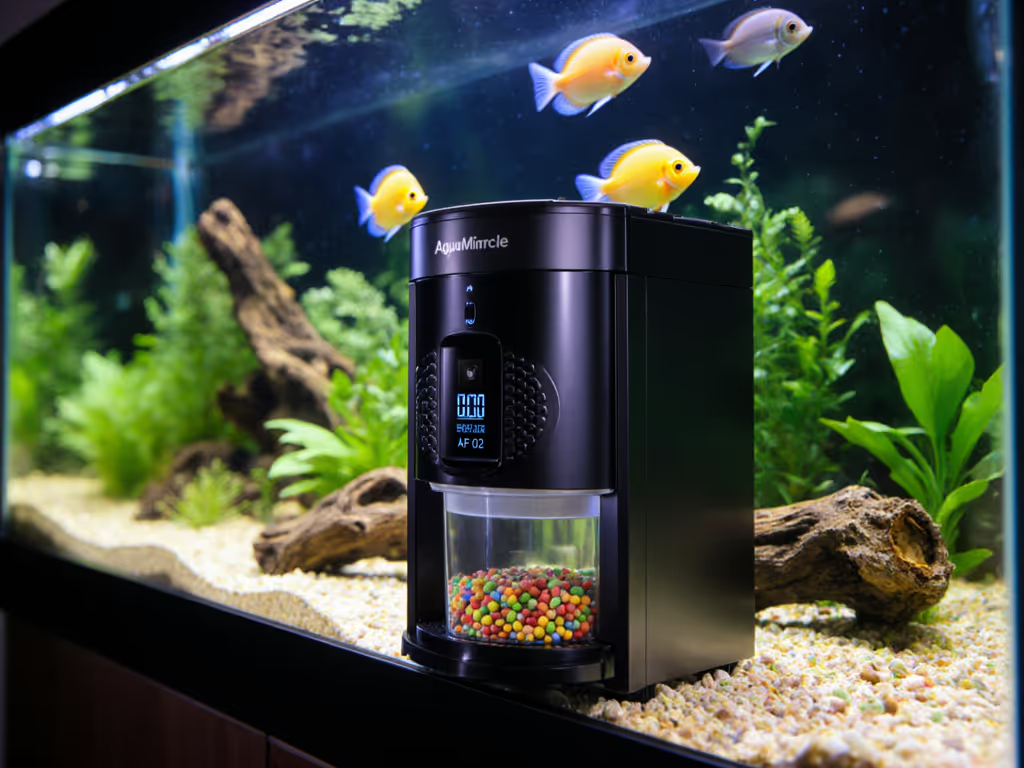
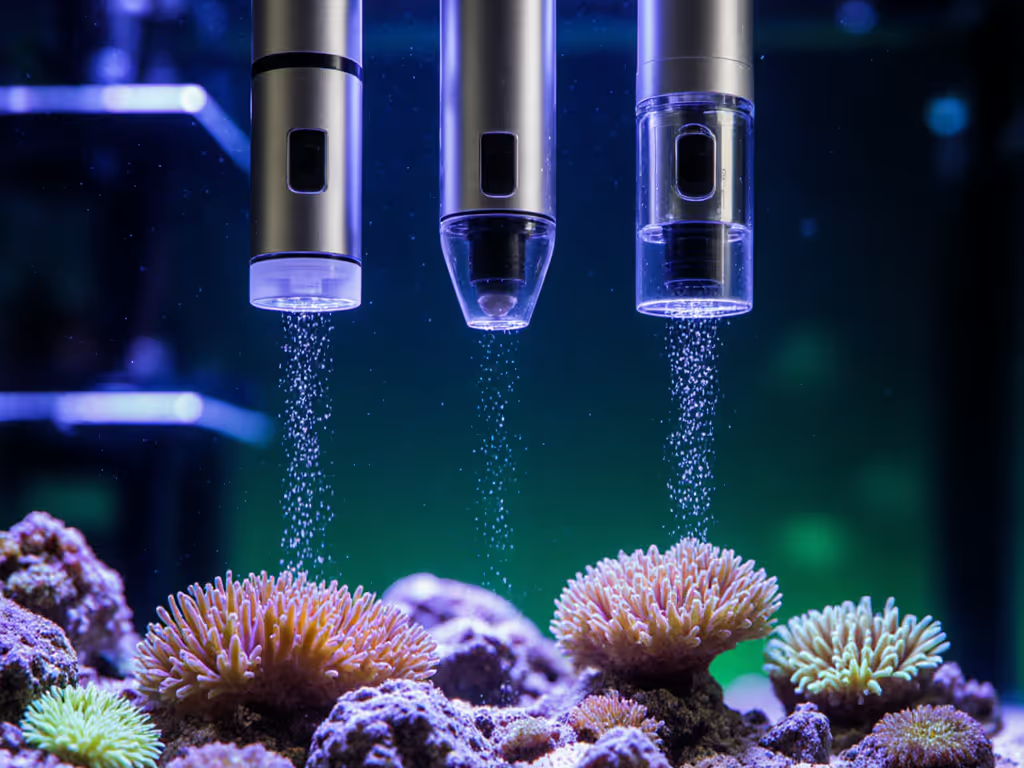
Ultra-compact automatic feeder designs are engineered to occupy minimal space while maintaining precision. Traditional feeders resemble tissue boxes (roughly 6 inches tall and 4 inches in diameter). Nano-specific models compress this into a form factor perhaps 2-3 inches in diameter and 3-4 inches tall, designed specifically for slim aquarium rims.
The engineering challenge is substantial. These feeders must simultaneously:
- Hold enough food for 3-7 days without spoiling or clumping
- Dispense micro-portions consistently, often 0.5-2 gram increments
- Operate quietly enough not to startle sensitive fish
- Mount securely to slim-profile tanks without tipping
- Maintain mechanical accuracy despite space constraints
The best models achieve this through precision dispensing mechanisms (typically a rotating drum or disk with carefully calibrated holes) rather than vibration-based systems that jam when encountering larger pellets or any debris.
How Do I Verify That My Feeder Is Actually Dispensing the Right Amount?
This is where observation becomes your greatest asset. Before you trust any feeder with your fish, conduct a methodical test: For step-by-step calibration across feeder types, follow our calibration guide.
- Run a dry test first: Dispense 5-10 cycles into a small container on a kitchen scale and record the total weight
- Calculate average per cycle: Divide total weight by number of dispensing cycles
- Observe actual feeding behavior: Watch how your fish respond. Do they consume everything within 2-3 minutes? Do pieces sink uneaten?
- Adjust downward initially: Most new nano aquarists set portions too high. Conservative is correct
- Keep a detailed feeding log: Note the date, portion setting, water parameters, and behavioral observations
I cannot overstate this: pause, watch, then adjust. Don't trust the manufacturer's default settings. Trust your observations and your fish's response.
What About Feeding During Travel? Isn't That Risky?
Travel anxiety is real, and it's justified by legitimate concerns. Leaving your fish feels irresponsible. But here's the counterintuitive truth: your fish can survive short absences (5-7 days) without any feeding at all, especially if water quality is pristine beforehand. Fish have evolved to handle periods of food scarcity; the wild doesn't offer consistent daily meals.
That said, an automatic feeder offers genuine peace of mind and is far safer than overfeeding before you leave or having a non-hobbyist friend overfeed out of kindness. See our 7-day test of vacation fish feeder reliability for data-backed picks.
Safe travel feeding strategy:
- Clean the tank thoroughly before departure through water changes
- Do a 25-30% water change to establish a pristine baseline
- Load your feeder with tested portion sizes you've already verified
- Run the feeder for 1-2 days before departure to verify operation
- Set feeding schedules for 1-2 small meals per day, not 3-4
- Ask a fellow aquarist to check on the tank if possible, rather than asking non-hobbyists to feed
This approach honors your fish's biological needs while acknowledging reality. Underfeeding during travel is far less risky than the overfeeding that typically happens when well-meaning non-aquarists take over feeding duties.
Comparison Framework: What Matters When Choosing
When evaluating space-saving nano feeders, consider these dimensions systematically:
Precision and Consistency
- Does the feeder dispense the same amount each cycle without variation?
- Can you adjust portions in small increments, or are changes too coarse?
- Does it handle your specific food type (pellets, flakes, micro-pellets, or freeze-dried foods)?
Reliability and Failure Modes
- What happens if the battery dies? Does it simply stop, or does it dump all food catastrophically?
- How often do users report mechanical jams or dispensing failures?
- Is customer support responsive if something fails?
Observation Compatibility
- Does the feeder allow you to see food being dispensed, or is it opaque?
- Can you easily open it for cleaning and refilling without frustration?
- Does it report any data back to you, such as battery level or cycle count?
Physical Integration
- Will it physically mount on your specific tank type without modification?
- Does it obstruct light, water flow, or visual access to your aquascape?
- Can you position it so fish can't knock it loose during exploration?
Acoustic Impact
- Does the motor sound startle your fish during dispensing?
- Will it wake you up if running early morning or late evening?
The Deeper Philosophy: Why Observation Matters More Than Automation
Here's what I tell every aquarist I mentor, from beginners to experienced collectors: the feeder is a tool, not a solution. The solution is understanding your fish and your system.
An automatic feeder that dispenses the same amount every day works perfectly if your fish's needs remain static. But they don't. Needs change with:
- Seasonal appetite fluctuations tied to temperature and day length
- Growth stages (juveniles eat more proportionally than adults)
- Behavioral changes during breeding, territorial disputes, or stress
- Water temperature variations affecting metabolic rate
- Recovery periods after illness or injury
The best feeder is the one that keeps you connected to your fish's needs, not the one that disconnects you from them.
If you choose automation, choose it as a complement to observation, not a replacement. Check on your tank regularly. Notice if your fish seem less interested in food than usual. Spot tank parameter changes before they become crises. A feeder that provides feeding logs or sends notifications is valuable precisely because it invites you to reflect on the data and adjust your approach accordingly.
Conclusion: Finding Your Nano Tank Feeder Peace
Nano tank feeder comparison ultimately isn't about finding the objectively "best" device. It's about identifying the solution that matches your life, your fish's actual needs, and your commitment to ongoing observation. Some aquarists thrive with manual feeding because it anchors their daily routine and keeps them genuinely engaged. Others gain authentic peace of mind from a micro-portion automatic feeder that lets them travel without guilt or anxiety.
What matters is that you:
- Start small: Begin with conservative portion sizes
- Observe closely: Notice your fish's feeding response and water quality trends
- Let the fish teach you: Adjust based on what you learn, not on assumptions or habit
The precision available in today's nano feeder options means you can create feeding schedules that are both consistent and genuinely matched to your fish's actual needs. That combination (reliability plus responsiveness) is what transforms feeding from a source of anxiety into a source of confidence and connection.
As you evaluate your options, remember that the path to thriving nano tanks isn't paved with perfect technology. It's paved with attention, restraint, and a willingness to pause, watch, then adjust.
Further Exploration: Your Next Steps
Begin your journey toward precision feeding with these actionable steps:
-
Test your current feeding routine: For one week, manually feed and keep detailed notes on portions, fish behavior, appetite response, and any water quality changes. This baseline data becomes invaluable for comparison and future adjustments.
-
Research feeder reviews within nano aquarist communities: Forums, Reddit communities, and local aquarium clubs are filled with experienced aquarists who've tested these tools in systems similar to yours. Their real-world feedback is more reliable than marketing claims or general reviews.
-
Visit a local specialty aquarium store: Handle feeders in person if possible. Check their weight, the tactile feel of adjustment mechanisms, and whether they'll realistically fit your tank setup without dominating the landscape.
-
Start a comprehensive feeding log: Whether you use manual or automatic feeding, document portions, times, water parameters, and behavioral observations. Data breeds confidence and enables you to refine your approach over time.
Your nano tank's future thriving hinges not on choosing the perfect device, but on committing to observation and responding thoughtfully to what you learn.
Related Articles