Automatic Aquatic Turtle Feeders: Durability & Serviceability
By Sana Okeke • 15th Mar
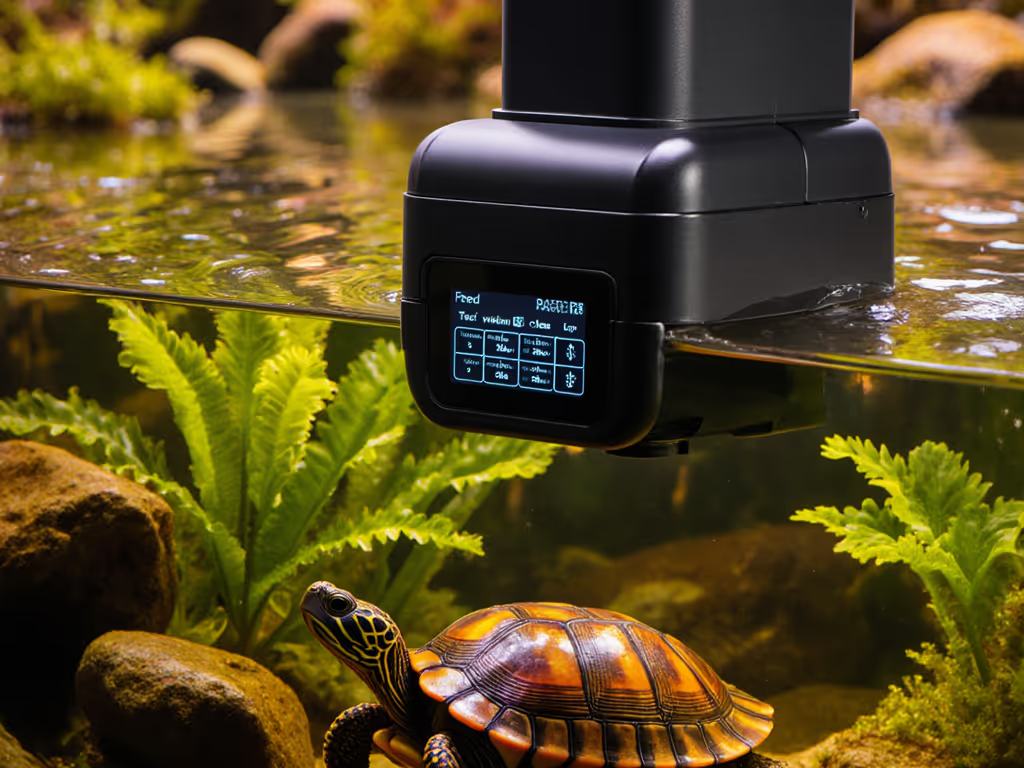
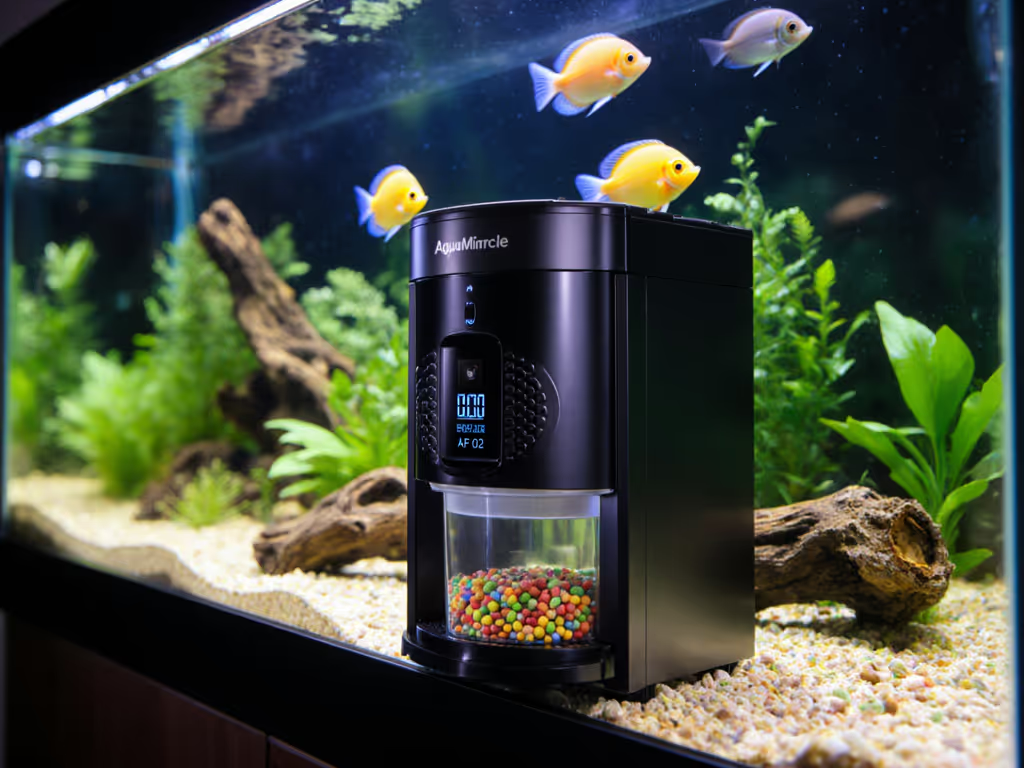
When considering an automatic aquarium feeder for your aquatic turtles, the conversation should never start with aesthetics or feature count; it should start with whether you can actually maintain it. An automatic aquarium feeder that fails mid-trip or clogs after three weeks of use isn't convenient; it's a source of stress that defeats the entire purpose of automation. This guide dissects what makes aquatic turtle feeding solutions genuinely reliable, examining the mechanical integrity, user workflows, and serviceability that separate feeders you can trust from those that merely promise convenience.
The Case for Durability Over Feature Density
Most hobbyists evaluate feeders by counting features: Wi-Fi connectivity, multiple feeding schedules, smartphone apps. But that approach inverts the hierarchy of need. A feeder's primary job is to dispense food consistently, every single day, without intervention. Everything else is secondary.
Durability in feeder design means predictable behavior under real conditions: humidity spikes when the tank hood is closed, pellet variation between brands, power fluctuations from batteries nearing end-of-life, and the accumulation of microscopic debris that builds up over months. These aren't edge cases; they're the baseline operating environment for any submerged or proximal device in an aquarium setting.
Serviceability (your ability to diagnose problems, access components, and restore function without manufacturer support) determines whether a feeder becomes a permanent fixture or a frustration. A feeder with a sealed chamber and no user-accessible parts might seem clean and modern, but when it jams, you're stuck. Conversely, a design with a clear access point and standardized fasteners lets you troubleshoot with basic tools and confidence.
Mechanical Reliability: The Foundation
The mechanism that actually delivers food is where durability becomes tangible. Turtle pellet feeder reliability depends on the dispensing method and material choices.
Motor and Actuation Design
The Zoo Med Turtlematic uses a screw-and-flap mechanism: a motor-driven screw pushes food against a pivoting flap, which drops pellets into the tank. This design has virtues. Screw-based systems handle a wider range of pellet sizes without jamming, compared to impeller or gravity-fed designs. The contact points are exposed and cleanable. If the flap becomes sticky from algae or mineral deposits, you can access it without disassembly.
What matters operationally is that the motor runs only when feeding occurs. Battery drain is a critical constraint for any battery-powered device. If battery longevity is a concern, compare options in our rechargeable vs disposable battery life test to select a power setup that won't die mid-trip. The Turtlematic includes a 12-hour sleep function that suspends operation during nighttime, reducing wasteful cycles. For hobbyists using this feeder on a two to four week vacation, the difference between a device cycling constantly and one running only at scheduled intervals can mean the difference between batteries lasting through your trip or failing mid-journey.
Material Selection and Sealing
Aquarium environments are hostile to electronics. Humidity inside the feeding chamber promotes corrosion, mineral precipitation, and mold growth. The Turtlematic addresses this by including a side-mounted port for optional air pump attachment, which reduces chamber humidity by enabling ventilation. This isn't a luxury. It is a pragmatic concession to the physics of wet environments. For a deeper dive into keeping food dry and mechanisms clog-free, read our moisture control guide.
Sealing quality matters equally. A feeder bottle screw-on interface that is gasketed prevents moisture from wicking into the motor housing. Conversely, designs with open seams or compression-fit components invite water infiltration over time. When evaluating any turtle-safe feeder design, look for explicit mention of gasket materials and sealing specifications (not just "waterproof" marketing claims).
The User Interface and Workflow Impact
The relationship between feeder UI and reliability isn't obvious, but it's profound. A confusing interface leads to incorrect setup, which users then attribute to mechanical failure. A clear UI reduces setup errors and builds operator confidence.
The Turtlematic's programmatic model is intentionally simple: it's preset for a single daily feeding, with a sleep function and manual feed button for testing. This constraint isn't a limitation; it is a design choice that eliminates a common failure mode: users accidentally setting up incompatible schedules or overriding automatic functions in ways the device wasn't engineered to handle. Comparing this to competitors like the Exo Terra feeder, which offers more scheduling flexibility, involves a trade-off. More options mean more configuration paths, and thus more ways the system can be set up incorrectly. The best feeder is often the one whose constraints match your actual use case, not the one with the most buttons.
Serviceability in Practice: Maintenance Workflows
Imagine returning from a two-week trip to find the feeder isn't dispensing. Before you call support or order a replacement, you should be able to diagnose the issue in under five minutes.
Clear access design enables this. The Turtlematic's screw-and-flap mechanism sits on the feeder's exterior, meaning you can inspect it visually, remove buildup with a small brush, or manually move the flap to confirm mechanical function without tools. For step-by-step upkeep that prevents mold and sticking parts, follow our fish feeder deep clean routine. If the issue is battery-related, you swap fresh batteries and test. If it's a pellet jam, you can clear it. Most problems resolve in the field.
Contrast this with sealed-chamber designs where the dispensing mechanism is encased and inaccessible. When they fail, your only option is replacement. That's not a feeder you can maintain; it's a feeder you eventually discard.
Spare parts availability is equally critical. The Turtlematic uses Zoo Med's standard Aquatic Turtle Food bottles, which you'll likely have multiple units of anyway. This means the feeder's primary consumable (the hopper container) is the same thing you're buying monthly for regular feeding. You're not hunting for proprietary components that the manufacturer discontinued or charges $15 to ship internationally.
Battery access should be straightforward. AA or AAA batteries are standard; proprietary rechargeable packs are not. Standard batteries mean you can source replacements anywhere, anytime, on any trip. They also mean you can keep spares in your travel bag without worrying about format compatibility.
Travel-Proofing: Where Durability and Workflow Converge
Automatic feeders primarily exist to solve one problem: feeding your turtles while you're away. A feeder that requires attention, troubleshooting, or constant adjustment during your absence isn't solving that problem; it is creating a new source of stress.
Travel-proofing requires three mechanical features working in concert: a hopper or reservoir with locking security (so pellets don't spill if the tank is jostled), a gasketed interface that resists moisture infiltration, and a clear operational model you can verify before departure.
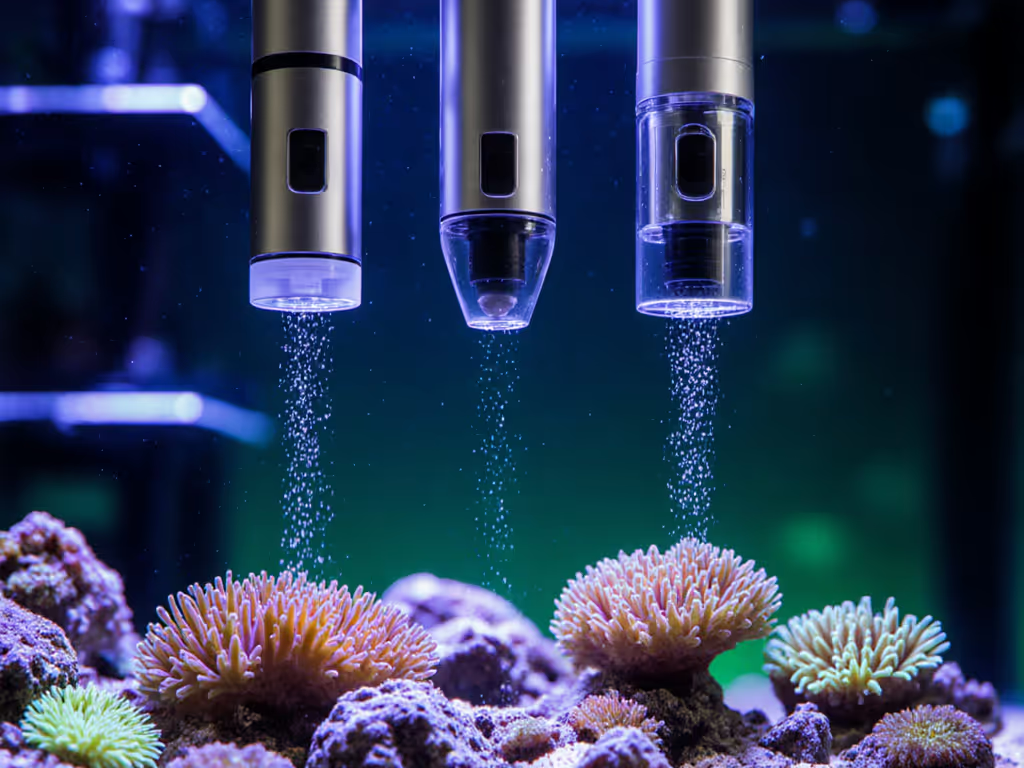
I tested three feeders on a reef tank and a brackish setup before a two-week international trip. Only the unit with all three elements (locked hopper, gasketed drum interface, and transparent operation logic) survived the humidity swings and the particular pellet degradation that occurs in high-moisture environments. The lesson wasn't abstract: when you're boarding a flight, you need absolute certainty that your feeder will function correctly for 14 days without intervention. See how different solutions held up in our 14-day vacation feeding comparison. That certainty comes from simple, proven designs, not from feature lists.
Capacity and Autonomy: Matching Feeder Specs to Your Schedule
The Turtlematic is designed to operate for approximately one to two months on a full hopper, depending on feeding volume and battery life. This is a realistic autonomy window for most hobbyists taking standard vacations or business trips. It's not unlimited autonomy, but autonomy is a spectrum, not a binary.
Some feeders scale capacity by allowing direct bottle attachment (as the Turtlematic does), while others use fixed hoppers that fill manually. Attached bottles give you a clearer visual of remaining food and simplify refilling during your last pre-trip check. Fixed hoppers require more careful capacity calculation. Use our feeder capacity guide to size a hopper or bottle to your turtle's intake and trip length.
For extended absences beyond two months, no single-device solution is practical. At that point, you're either boarding your tank with a professional, arranging for a trusted individual to visit, or considering whether a fully automated setup is the right approach for your specific travel pattern.
Reliability Under Real Conditions: What the Data Shows
One review documenting a two-week continuous operation on a 210-gallon tank with two red-eared sliders reported consistent, successful feeding with no dispensing issues, minimal food wastage, and no visible degradation of pellet quality. This represents the baseline: a feeder performing its core function over an extended period in a live tank with demanding inhabitants.
When comparing designs, ask for similar evidence: real-world operation logs, failure rates from active hobbyist communities, and specific incident reports. Anecdotal satisfaction is less useful than documented operational history.
Critical Gaps: What to Verify Before Purchasing
The features described in marketing materials don't always translate to practical reliability. Verify these specifics:
- Motor cycle time and efficiency: How long does one feed cycle take? Is there audible noise that could disturb your household? Does the motor cycle on predictable schedules or unpredictably?
- Pellet compatibility range: Test the feeder with your specific food brand and size before committing. Pellets from different manufacturers vary in density and shape; a feeder optimized for one may jam or under-dispense with another.
- Battery longevity under realistic conditions: Manufacturers often cite maximum battery life under ideal lab conditions. Request data on battery performance with the sleep function disabled and the feeder actively cycling.
- Moisture management: Does the feeder include ventilation options? How is the motor chamber sealed? Has it been tested in high-humidity environments over 30+ days?
- Support responsiveness: Contact the manufacturer's support team with a technical question. How long does it take for a response? Are they helpful or dismissive? This indicates whether you'll get actual help if something goes wrong.
The Serviceability Philosophy: Buy Once, Maintain Easily, and Sleep Well on Travel Days
The feeder you choose should require minimal intervention, survive common failure modes through simple troubleshooting, and give you confidence that your turtles will be fed correctly whether you're home or traveling. That confidence doesn't come from features; it comes from design choices that prioritize reliability, clarity, and user access over complexity.
Actionable Next Steps
Before purchasing any automatic feeder, execute this evaluation:
- Document your feeding schedule: Write down your current daily turtle feeding time and portion size. This becomes your baseline for feeder configuration.
- Identify your travel pattern: Calculate your longest regular absence (vacation, work trips) and any multi-month scenarios. Match feeder autonomy to this pattern, not to marketing claims.
- Source compatibility test: Acquire the exact feeder model you're considering and test it with your current food brand for one full week in your tank. This reveals jams, noise, or unexpected behavior before full commitment.
- Support and parts availability verification: Verify that the manufacturer offers online support, that replacement batteries are standard formats, and that hopper components are in active stock. Document supplier information for future reference.
- Install and configure during normal operations: Set up the feeder and run it daily for two weeks before any trip. This lets you confirm functionality and troubleshoot any issues while you're home.
The right feeder is the one you can maintain correctly every time. Choose for serviceability, and the convenience follows naturally.
Related Articles