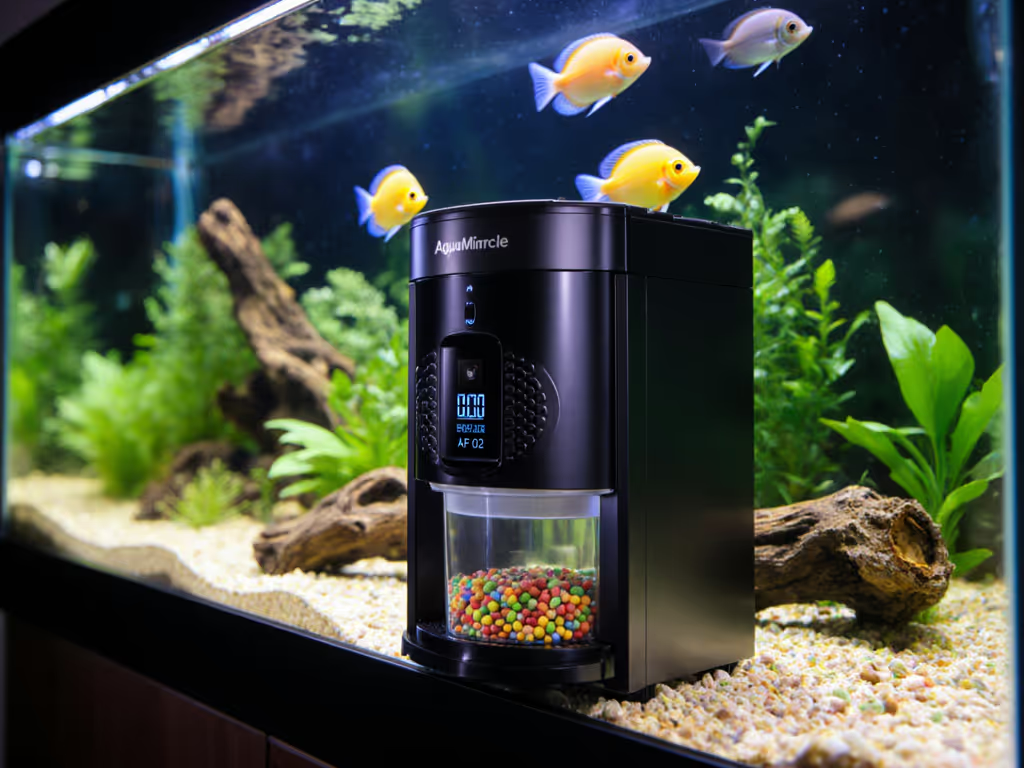
Coral Propagation Feeder Comparison: Micro-Feeding Reliability
By Noura Al-Hassan • 25th May
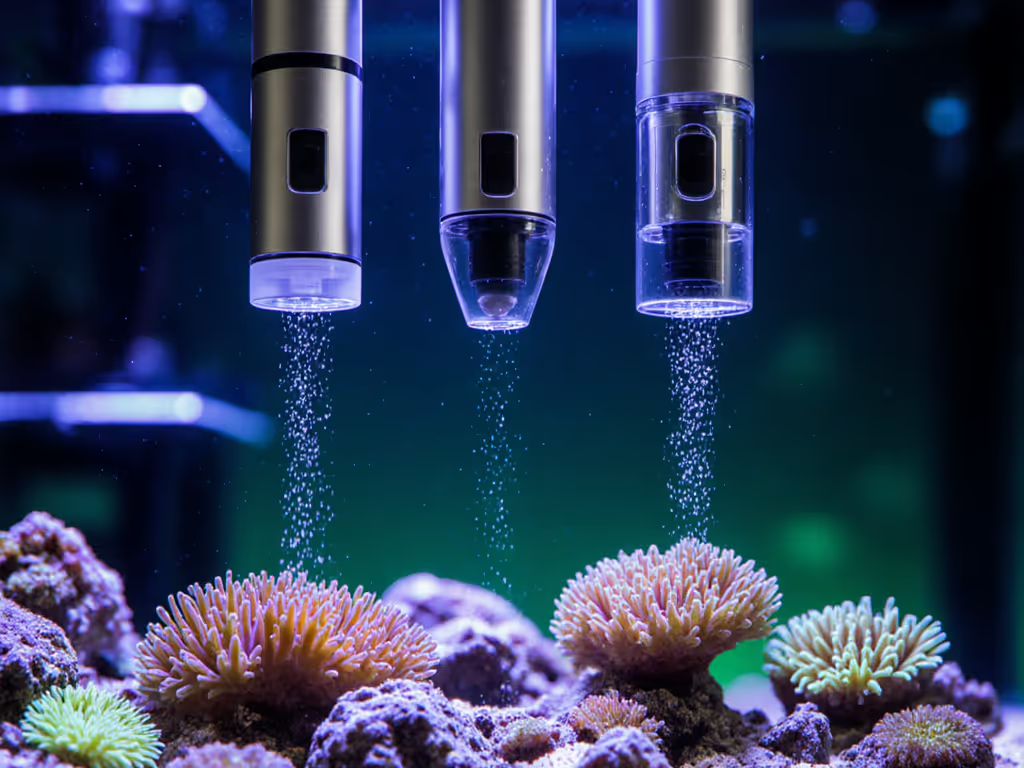
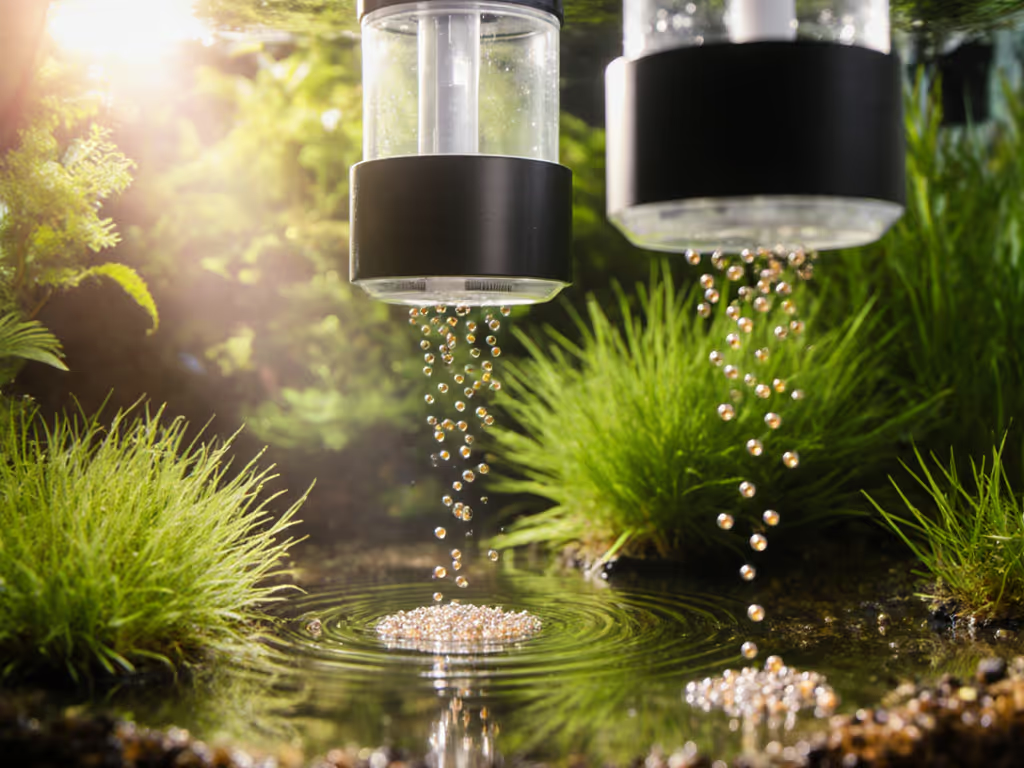
Coral propagation lives or dies on consistency, and nowhere is that more obvious than in micro-feeding. This coral propagation feeder comparison focuses on one thing above all: frag tank feeder reliability (mechanical, nutritional, and ecological), so your system grows frags, not nitrate and film algae. For model-specific evaluations, see our best high-end reef feeders for coral health.
Nutrition first; devices follow the biology, not the hype.
Below, I'll tackle the most common questions I get from serious frag keepers about micro-feeding for coral frags, and compare the main coral fragment feeding system designs people actually use on propagation tanks.
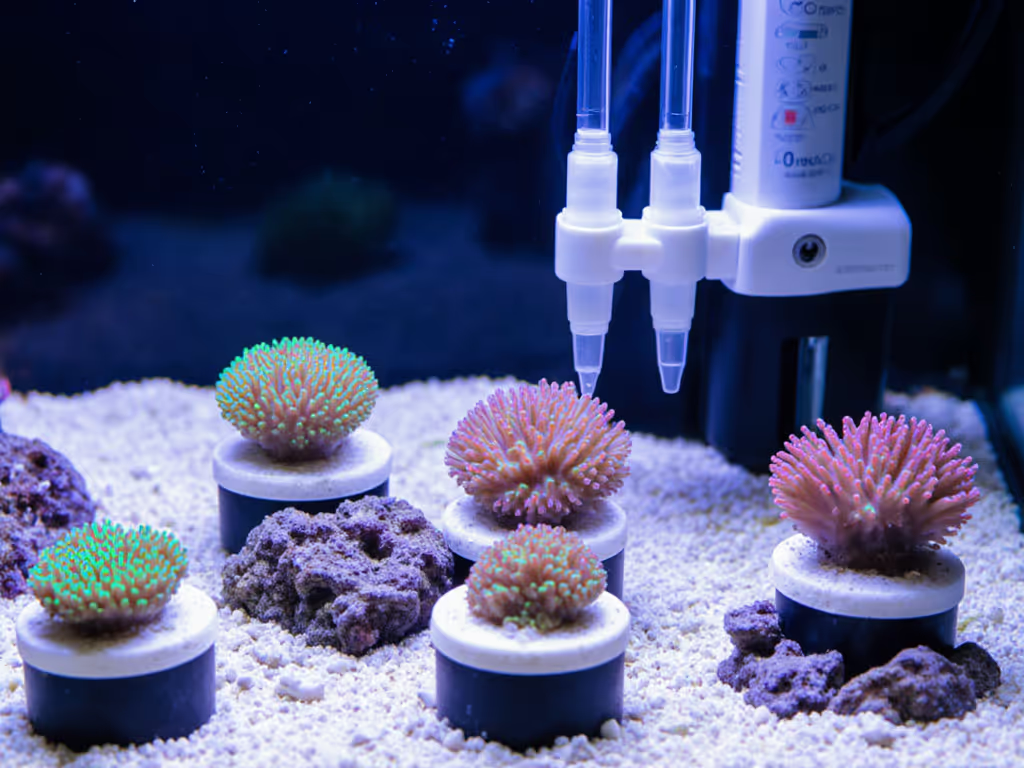
What does "micro-feeding reliability" really mean in a frag system?
When we evaluate frag tank feeder reliability, we are not just asking "Does it turn on?"
A reliable propagation tank food delivery setup should be consistent on three fronts:
- Mechanical reliability
- Delivers the same volume at the same time daily.
- Doesn't clog, siphon, or drift out of calibration over a few weeks.
- Nutritional reliability
- Delivers the intended particle size and density of food (not just diluted soup).
- Keeps particulate foods suspended long enough to reach polyps.
- Preserves food quality (cold chain, no prolonged warm-soak in stagnant water).
- Ecological reliability
- Adds enough nutrition to support growth and color.
- Does not routinely push phosphate and nitrate beyond your export capacity.
- Plays nicely with your skimmer, filter roller, and refugium.
In practice, many systems hit one or two of these and fail at the third. My bias as a nutrition analyst is simple: a feeder that "works" but steadily destabilizes nutrients is not working.
Let's separate claims from data.
FAQ 1 - Do frag systems really need a dedicated micro-feeder?
Short answer: Not always. Dedicated micro-feeders shine when you have:
- High frag density (racks packed wall-to-wall)
- Limited time for manual target feeding
- Frequent travel or irregular work hours
They are less critical when:
- The tank is lightly stocked with frags
- You are home most evenings and enjoy pipette feeding
- Your nutrient budget is already tight and hard to export
From repeated lab and hobby systems, a pattern holds:
- Corals tolerate mild underfeeding better than chronic overfeeding.
- Nutrient spikes from inefficient feeders often do more harm (algae, tissue recession from unstable parameters) than slightly leaner rations.
In one cichlid grow-out split we ran (fish, not corals, but the principle holds), the periodically fasted group showed better condition and water quality than the heavy-fed group on the same filtration. That project cemented my rule: dial in the ration first, then build devices to deliver that, not more.
So if your filtration is marginal or your export is already working hard, start by tightening the manual regimen, then consider automation.
FAQ 2 - What types of coral fragment feeding systems are most common?
Broadly, frag keepers use five categories of feeders for propagation tank food delivery:
1. Programmable dosing pumps with a food reservoir
- Typically peristaltic dosing pumps pulling from a small reservoir of blended coral food.
- Food types: fine particulate powders rehydrated in tank water, amino acid solutions, very thin phyto/zooplankton blends.
Pros
- Excellent volume precision and timing.
- Great for very fine foods (e.g., <200 µm particles) and dissolved nutrients.
- Easy to integrate with controllers and logs.
Cons
- Particles settle quickly without agitation; lines can deliver mostly water early, then sludge later.
- High risk of clogging with larger particles or gels.
- Food quality declines rapidly if the reservoir is warm and stagnant.
Best suited for:
- SPS-dominated frag tanks needing micro-feeding for coral frags with extremely fine particles (e.g., powdered blends, phyto).
- Systems where you want many very small feeds per day without big nutrient pulses.
2. Agitated reservoirs + dosing pump
This is a refinement of #1: a small reactor or bottle with an internal stir bar or recirculation pump, feeding a dosing head.
Pros
- Better nutritional reliability because particles remain more evenly suspended.
- Enables use of slightly larger particulate foods without severe settling.
- More consistent particle density dose-to-dose.
Cons
- Moving parts increase failure points.
- Internal pumps can warm the mix and shear delicate plankton.
- Cleaning burden is higher; biofilm and bacterial growth can explode in warm, food-rich water.
Best suited for:
- Heavier frag systems where you want to automate micro-feeding for coral frags with mixed particle foods while preserving some consistency.
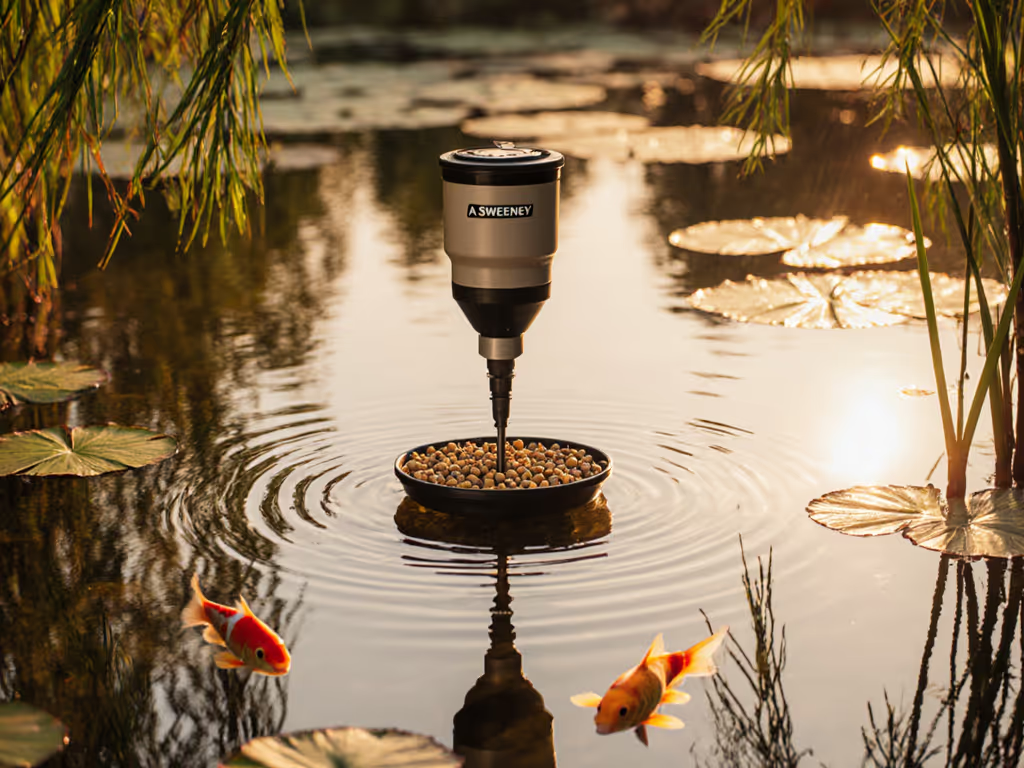
3. Dry-auto feeders adapted for coral diets
- Standard drum or carousel fish feeders dispensing powdered coral foods or crumble.
Pros
- Simple, inexpensive hardware.
- Mechanically quite reliable if kept dry.
- Works for some powdered foods that behave like dry flake.
Cons
- Limited to dry, free-flowing foods. Many coral foods clump badly with humidity.
- Portion size is coarse; tiny changes in drum opening can double or triple output.
- Aimed at fish, not corals; food often ends up at the surface or locked in weirs. For a reef-specific auger design that solves many of these issues, see our Avast Plank v3.6 review.
Best suited for:
- Mixed frag + fish systems where you are primarily feeding fish but want some spillover for corals.
4. Gravity-fed drip or siphon systems
- Elevated container of food mix; flow controlled by a clamp or valve to drip into a high-flow area.
Pros
- Very low-tech; no pump to fail.
- Good for short durations (e.g., a 2-4 hour drip during your time away).
- Useful backup when pumps fail.
Cons
- Highly sensitive to head pressure, air intrusion, and salt creep.
- Flow rate drifts as the reservoir empties - poor frag tank feeder reliability long-term.
- Easy to accidentally create a siphon that empties the container or back-siphons tank water.
Best suited for:
- Temporary feeding setups, not long-term automation.
5. Lab-style syringe or stepper pumps
- Precision syringe pumps or stepper-driven systems adapted from lab dosing.
Pros
- Extremely accurate small-volume delivery.
- Can deliver true micro-doses (sub-ml) on tight schedules.
- Great for experimental setups and data-driven trials.
Cons
- Cost and complexity.
- Limited food volume per syringe; frequent reload needed.
- Sensitive to particle size; better for solutions than suspensions.
Best suited for:
- Advanced experimental frag racks where you track growth vs. dosing and treat the system like a lab bench.
FAQ 3 - How do different feeders handle particulate vs dissolved foods?
Most common coral foods fall into a few categories:
- Dissolved/near-dissolved: amino acid supplements, some carbohydrate or vitamin blends.
- Fine particulates: powdered foods and rehydrated mixes in the 5-200 µm range.
- Coarse particulates: larger zooplankton and chopped foods (artemia, copepods, mysis, etc.).
From a feeder's perspective:
- Dissolved foods are easy; almost any dosing pump can deliver them reliably.
- Fine particulates demand agitation and short residence times in the reservoir. They settle and clump, turning lines into pseudo-filters.
- Coarse particulates are rarely compatible with long, narrow tubing. They belong in short-run target feeding, not micro-dosing lines.
For frag systems, especially SPS and small-polyp LPS, you typically want:
- Majority of automated feeding as dissolved + fine particulates via dosing systems.
- Periodic manual feeding of coarser foods (if appropriate) when you are present.
A common failure mode: using a dosing pump on a thick particulate slurry. The first week looks fine; by week three, you are dosing biofilm and sludge.
FAQ 4 - How does each feeder type impact frag tank nutrient control?
Frag tank nutrient control is where many good ideas go bad.
Key dynamics:
-
Short, heavy feeds (manual baster, pipette) create spikes.
- Pros: Frags get a clear feeding window; skimmer can respond.
- Cons: If export is weak, nitrate/phosphate climb quickly.
-
Many tiny feeds (dosing pumps) flatten the curve.
- Pros: Polyps get more natural, low-density prey access; stable nutrient input.
- Cons: Skimmer efficiency may drop with constantly elevated DOC; biofilms and bacterial blooms can increase.
By feeder type:
| Feeder Type | Nutrient Risk Profile |
|---|---|
| Simple dosing pump (dissolved foods) | Low to moderate; easy to control with exact ml/day |
| Agitated reservoir + dosing | Moderate; risk rises with richer mixes and longer reservoir dwell time |
| Dry auto-feeder | Moderate; very sensitive to humidity and portion variability |
| Gravity drip | High variability; easy to under- or over-shoot |
| Syringe / lab pumps | Low; precise, but small volumes only |
If your system already runs "nutrient rich" (NO₃ > 15-20 ppm, PO₄ > 0.15-0.2 ppm), I typically recommend:
- Use automation only for dissolved or very fine foods.
- Keep particulate-rich feeds manual and tied to observation.
- Increase mechanical export (roller mat, filter sock changes) before you ramp feeder schedules.
FAQ 5 - How do I test and calibrate a frag tank feeder before trusting it?
Treat your feeder like a dosing experiment:
- Bench test with fresh water
- Run the pump into a graduated cylinder for a week at the intended schedule. Step-by-step setup tips are in our feeder calibration guide.
- Log delivered volume vs. programmed volume.
- Add a surrogate "food"
- Use a safe, visible powder (e.g., fine inert dye or very fine salt) to see settling and concentration issues.
- Examine the effluent at the start vs. end of a dose cycle with a white dish or microscope if you have one.
- Map nutrient impact
- Once on the tank, change only one variable at a time: the feeder schedule.
- Test nitrate and phosphate at least twice weekly for the first month.
- If you see a clear upward trend, cut feed volume by 25-50% before blaming export.
- Fail-safe planning
- Prefer feeders that fail "off" rather than "on" (e.g., dosing pumps that stop if they error out).
- Avoid any setup where a siphon could slowly drain a large food reservoir into the tank.
A micro-feeder is only as good as your logbook. Without data, it is just another variable.
FAQ 6 - How should I design a micro-feeding schedule for coral frags?
Here, biology leads.
General principles for a coral fragment feeding system:
- Match particle size to polyp size
- Small-polyp SPS (Acropora, Montipora): favor dissolved and very fine particles.
- LPS (e.g., some Favids, Euphyllia): benefit from larger particles but can still use fine feeds as background nutrition.
- Non-photosynthetic (NPS) corals: typically require denser, more frequent particulate feeding.
- Respect photoperiod and flow
- Many corals feed more actively in lower light and moderate flow. Program your schedules to match natural daily cycles with our circadian rhythm feeder guide.
- Schedule micro-feeding in the evening or just after lights ramp down, with enough flow to suspend food but not strip it immediately into overflow.
- Start lean, then titrate up
- Begin with 30-50% of the manufacturer's suggested coral food dose when automated (they assume manual, less frequent feeding).
- Watch for tissue inflation, polyp extension, and color over 4-6 weeks.
- Use manual feeds as "events," not background noise
- Reserve larger, particulate-rich feeds for times when you can observe and compensate (e.g., temporarily reducing other rations, cleaning skimmer cup more often).
In my own and client frag tanks, a common successful pattern is:
- 4-8 tiny automated micro-feeds of fine food and/or amino blend during the dark period.
- 1-2 moderate manual feeds per week of larger particulate foods, tied to cleaning days.
Nutrition first; devices follow the biology, not the hype.
FAQ 7 - Which feeder is best for my frag setup?
Let's walk through a few typical scenarios.
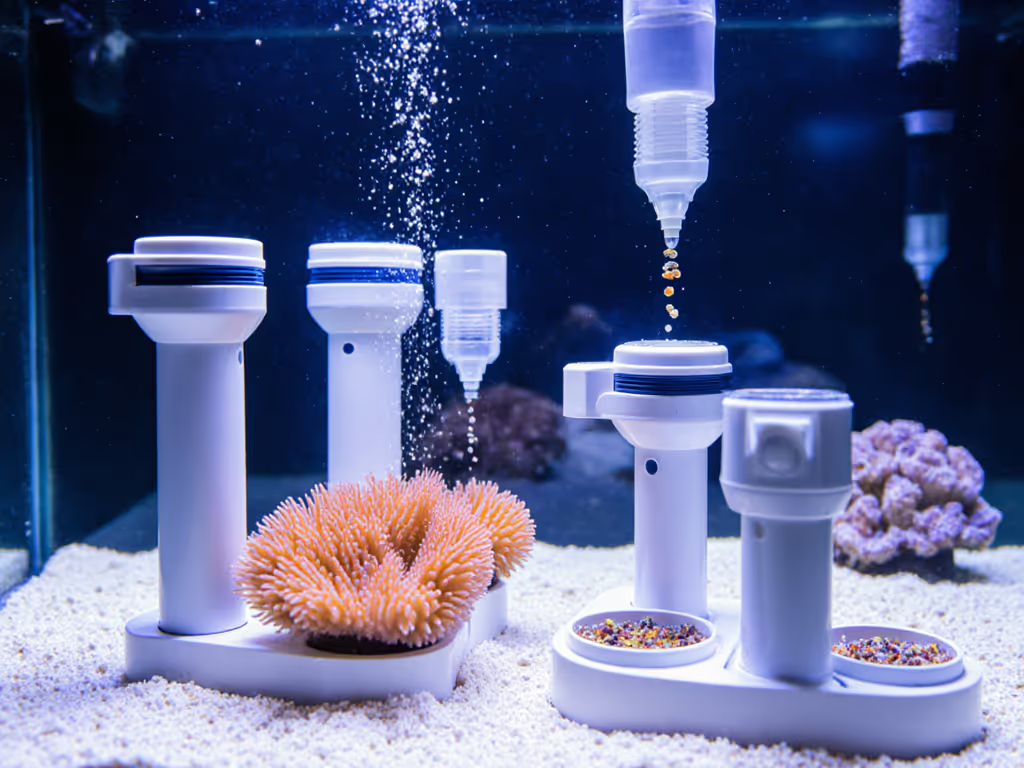
Scenario A - 40-80 L SPS-focused frag tank
Goals: Clean look, low nutrients, stable growth, limited time.
Recommended approach:
- Feeder type: Simple dosing pump with a small, chilled or frequently refreshed reservoir of fine food + amino blend.
- Schedule: 2-4 tiny doses at night; total daily volume modest.
- Manual feeding: Very light target feeding once weekly at most.
Why: This prioritizes frag tank nutrient control while still giving small-polyp frags frequent low-density feeding.
Scenario B - 150-250 L mixed frag tank (SPS + LPS) with fish
Goals: Good color and growth, moderate nutrients, visible feeding responses.
Recommended approach:
- Feeder type: Agitated reservoir + dosing pump for fine mixed foods.
- Schedule: 3-6 micro-feeds per night, tuned via nutrient testing.
- Manual feeding: 1-2 targeted particulate feeds per week for LPS, coordinated with water changes.
Why: The higher bioload and volume can buffer more input, but you still want automation to cover your schedule. Agitation keeps particle density consistent.
Scenario C - NPS-heavy propagation
Goals: High feeding frequency, strong export, maximum control.
Recommended approach:
- Feeder type: Combination of syringe or high-precision dosing pumps for dissolved + fine particulate foods.
- Schedule: Many small feeds (e.g., hourly) during dark periods.
- Manual feeding: Regular targeted coarse feeding, paired with aggressive export (oversized skimmer, frequent filter maintenance).
Why: NPS corals are less forgiving of underfeeding, so you bias toward density and frequency, but you must overbuild export to avoid collapse.
FAQ 8 - How do I know if my micro-feeding setup is working?
Look at three data streams:
- Coral metrics
- Polyp extension during and after feeding windows.
- Tissue fullness; no chronic "retracted" look.
- Gradual growth on plug rims and bases over months.
- Water chemistry
- Stable or gently rising nitrate and phosphate that you can manage with export.
- No sudden swings correlated with feeder malfunction or schedule changes.
- System behavior
- Skimmer consistency (no constant overflows after feeding events).
- Glass and rock algae at manageable levels.
- No unexplained bacterial hazes or odors.
If coral response is positive and nutrients are stable with a tolerable maintenance load, your coral propagation feeder comparison has paid off, regardless of which device you chose.
If not, treat the feeder like any other piece of life-support: adjust, log, and re-test.
Where to go from here
If you've read this far, you are already in the right mindset: analytical, patient, and willing to test. The next step is to:
- Map your current feeding inputs in ml and grams, not "a squirt" or "a pinch."
- Decide which fraction must be automated to match your schedule.
- Choose the simplest feeder that can deliver that fraction without compromising frag tank nutrient control.
Then, run your own mini trial. Change one variable, keep a log, and evaluate over at least a month. Share your results with your local club or online group; our collective data is still far behind the hardware hype. Your system can help close that gap.
Let's separate claims from data, and let your corals write the final review on your feeder choice.
Related Articles