Parameter-Responsive Feeding: Simple Water-Based Methods
By Mei-Lin Zhou • 19th Mar
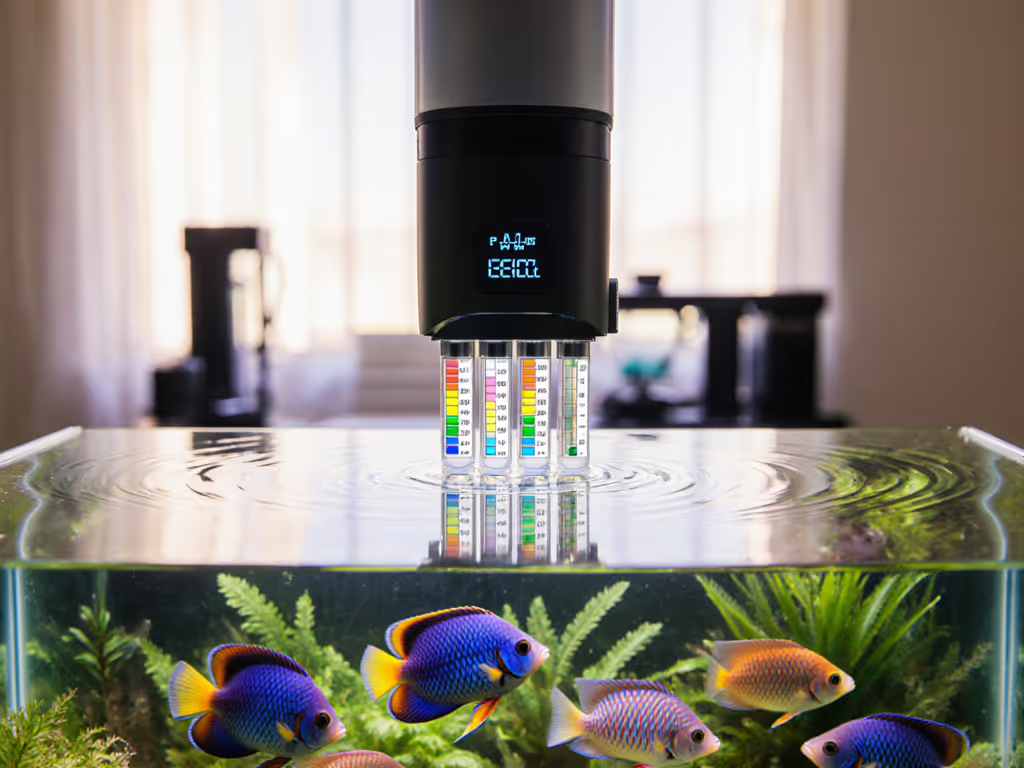
Parameter-responsive feeding means adjusting your fish's meals based on real-time water quality measurements rather than following a fixed schedule alone. Water quality-based feeding schedules work because fish physiologically regulate their appetite in response to environmental conditions, and observing these signals helps you feed precisely what they need, when they need it. This approach transforms feeding from routine guesswork into responsive stewardship.
For conscientious aquarists managing established systems, this method offers what you've likely been seeking: a scientific, data-driven framework that eliminates the anxiety of over-feeding or nutrient imbalance while maintaining the pristine water clarity and fish vitality you've worked to achieve.
Why Your Water Parameters Tell You When to Feed
What does ammonia have to do with feeding decisions?
Ammonia-triggered feeding recognizes a fundamental truth: uneaten food decays into ammonia, and fish waste also produces ammonia. When you check ammonia levels and find them climbing, it's your signal to reduce portions or frequency (not because the fish are hungrier, but because your tank is telling you it's already processing the previous meal's bioload). Conversely, at zero ammonia with established fish, you have metabolic "room" for feeding without harming water stability.
The relationship is indirect but predictable. Fish absorb nutrients, and their waste becomes ammonia. If ammonia rises sharply between tests, feeding was too generous for your tank's current biofilter capacity. For newly cycled aquariums, follow our new tank feeding schedule to prevent early-stage ammonia spikes. This observation-based approach means you're reading your tank's actual state rather than guessing.
How do nitrate-based feeding protocols work?
Nitrate-based feeding protocols use accumulated nitrate (the end product of the nitrogen cycle) as a longer-term feeding gauge. Nitrate builds slowly and reflects cumulative feeding over weeks. If your weekly test shows nitrate climbing faster than expected, feeding has likely been excessive. If it's stable or creeping up only slightly, your feeding volumes match your tank's capacity to process them.
Many experienced keepers track nitrate trends bi-weekly or weekly. A tank reaching 40 ppm nitrate in four weeks suggests feeding reduction is needed; one holding 20 ppm over the same period indicates you're within safe margins. This parameter essentially shows you the "thermal mass" of your feeding decisions over time.
Start small, observe closely, let the fish teach you.
This isn't about rigid thresholds, it's about reading the story your parameters tell.
What role does pH play in feeding timing?
pH-adaptive feeding considers that pH fluctuations sometimes signal bacterial processing load. A stable pH means your buffer capacity and biofilter are balanced. A dropping pH trend, especially combined with rising ammonia or nitrite, suggests bioload is stressing your system, a sign to ease feeding back.
Additionally, fish feeding behavior itself is pH-sensitive. Research on multiple species shows that at pH extremes (very acidic or alkaline water), fish exhibit reduced appetite even when feed is available. Conversely, at your target pH range for your species, feeding response is most robust. This means parameter-responsive feeding also respects the natural physiological window in which your fish genuinely want to eat.
How to Implement Real-Time Parameter Response
What does a real-time feeding routine actually look like?
Real-time parameter response doesn't mean testing every time you feed. Instead, it means weekly or bi-weekly parameter checks informing your next adjustment cycle. Here's a practical framework:
1. Establish your baseline
- Test ammonia, nitrite, nitrate, and pH weekly for two weeks before making changes.
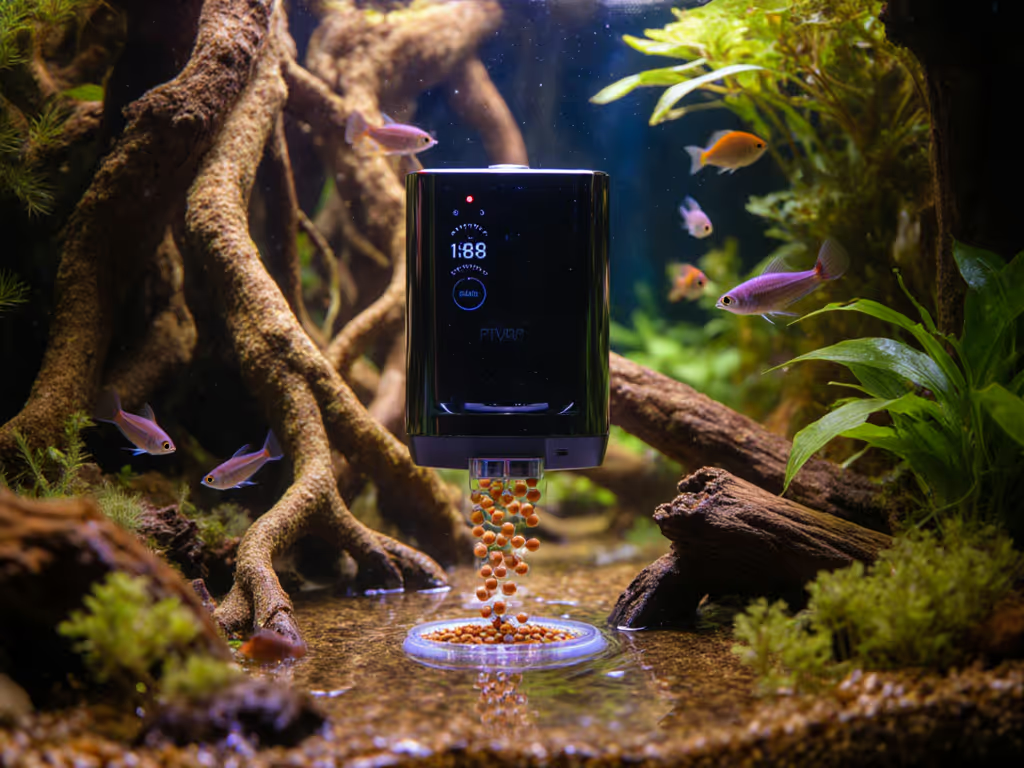
- Record the numbers and the feeding volumes you're currently using. If you want automation to follow your measurements, explore our guide to responsive feeding systems that adjust portions based on live water data.
- Note any visible signs: fish behavior, algae growth, water clarity.
2. Feed on schedule, but adjust portions based on trends
- If ammonia stays at zero and nitrate rises slowly, portions are appropriate.
- If ammonia spikes above 0.25 ppm between water changes, reduce portions by 20-30% at the next feeding. For precise portion setup across models, follow our Calibrate Fish Feeders guide.
- If nitrate accelerates (e.g., jumping 15 ppm in one week rather than your baseline of 5 ppm), trim feeding frequency over the next two weeks.
3. Retest after two weeks of adjustment
- Compare ammonia, nitrite, and nitrate to your baseline.
- If they've stabilized closer to your target range, you've found a sustainable volume.
- If they're still climbing, make another incremental adjustment.
This cycle respects what fish physiology research shows: fish don't need enormous daily meals, and their bodies efficiently convert smaller, frequent portions into growth and vitality. Your parameters are simply confirming whether those portions match your tank's processing capacity.
How should I handle feeding during high bioload periods?
When you notice parameters creeping upward (perhaps because of seasonal changes, plant die-off, or a temporary system disruption), parameter-responsive feeding gives you a clear action: moderate portions until values stabilize. You're not guessing whether "the fish seem okay." You're reading data.
I once knew a neighbor whose child adored her guppies. She fed them generously because she loved them, but the cloudy water hid the fish she wanted to admire. When we stepped back, fasted gently for two days, fed tiny pinches, and set a timer, the water cleared within a week. The joy of seeing clear water and curious, active fish taught her family something profound: restraint becomes care. Your parameters are simply the more sophisticated version of that same wisdom, letting observation guide restraint.
Where do light and dissolved oxygen fit in?
Research confirms that dissolved oxygen levels significantly affect how efficiently fish utilize feed. A tank with excellent aeration and water movement shows better feed conversion than one with sluggish circulation. Similarly, photoperiod (the daily light cycle) influences feeding behavior and circadian appetite regulation. Learn to program biology-first schedules with our Auto-Feeder Circadian Rhythms guide. A well-lit tank with consistent 10-14 hour photoperiod supports stable feeding behavior; fish in dimly lit or erratically lit systems show variable appetite.
When implementing parameter-responsive feeding, also verify that your aeration and lighting are optimal. They're not directly measured in ammonia or nitrate, but they're the foundation upon which parameter-based adjustments actually work.
Practical Next Steps
Start by testing your current parameters at consistent times weekly. Don't change feeding immediately; gather baseline data for three weeks. Record ammonia, nitrite, nitrate, and pH alongside your feeding schedule and portions.
After three weeks, you'll see the pattern. If ammonia is spiking, reduce portions. If nitrate is stable and ammonia stays near zero, you're calibrated well, note that volume and stick with it. If parameters are erratic, look for husbandry factors beyond feeding (filter maintenance, plant load, biofilter maturity). For a cohesive routine that ties feeding to water changes and upkeep, see Integrate Feeders Into Tank Maintenance.
Here's a routine you can repeat: Test weekly, compare to the previous week's reading, adjust portions by 10-20% if the trend warrants it, and retest in fourteen days. Over two months, this iterative loop brings you to a feeding level perfectly matched to your tank's capacity.
Your fish won't tell you in words when feeding is optimized, but your parameters will. That clarity, backed by data and observation, is what transforms feeding from a source of anxiety into a source of confidence.
Related Articles