Solar Fish Feeders for Pond: Which Performs Year-Round?
By Noura Al-Hassan • 20th Apr
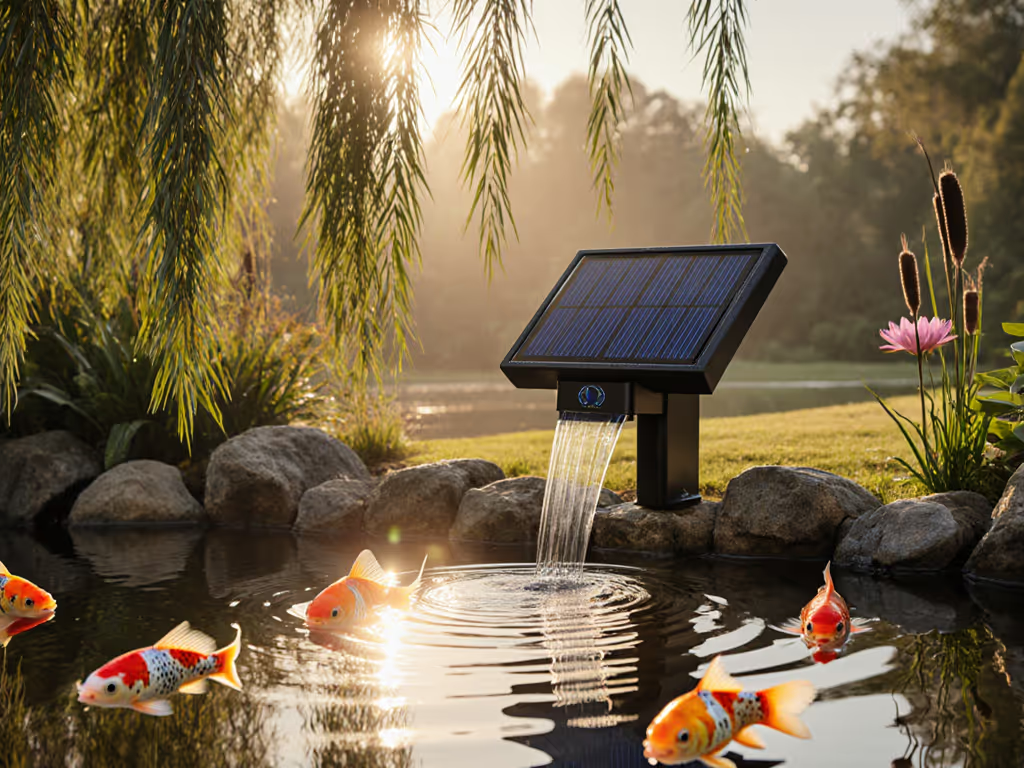
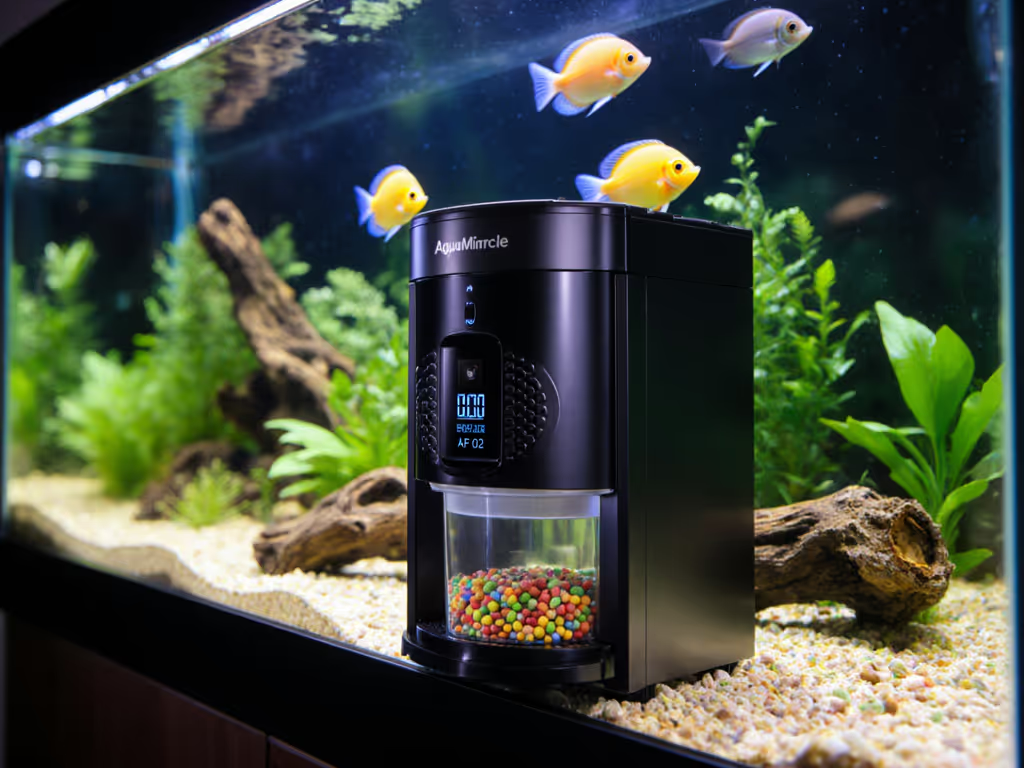
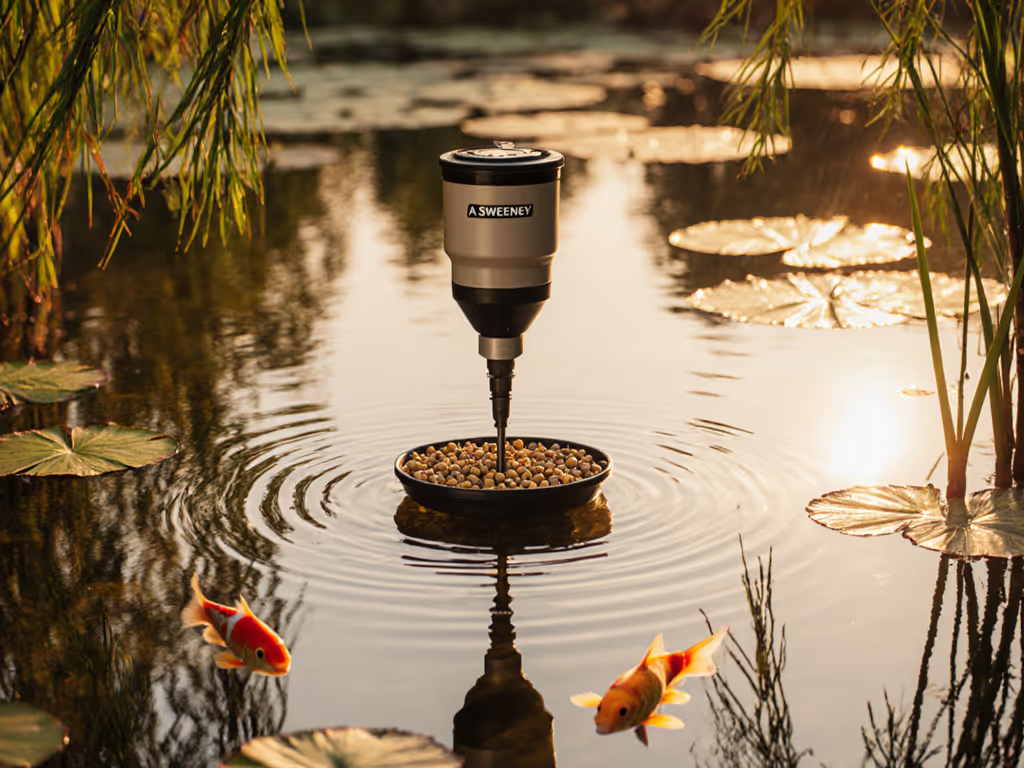
A solar fish feeder for pond systems has gained traction in the hobbyist community, but the appeal often outpaces the evidence about what actually matters for year-round performance. If you're transitioning from aquariums, start with our pond vs aquarium feeder differences to align expectations. Marketing emphasizes automation and convenience, yet the real question lies deeper: does the feeder match your biology-first feeding strategy, or does it become a device chasing hype? Let's separate claims from data.
What Defines Year-Round Performance in a Solar Feeder?
The Core Engineering Principle
Solar feeders work through a straightforward energy cycle: photovoltaic panels capture sunlight, convert it to electrical energy, and store that energy in rechargeable batteries for use during cloudy periods or night hours. The timer and control unit then dispenses feed at intervals you set. On paper, this sounds robust. In practice, year-round performance depends on whether the battery and panel combination can deliver consistent power through seasonal lows (shorter daylight hours in winter, extended cloud cover, and temperature fluctuations that reduce battery efficiency).
Most commercial solar feeders rely on a 5-watt to mid-range solar panel paired with sealed batteries. This works adequately in subtropical or temperate zones where winter daylight still offers 6-8 hours of usable sun. In northern climates with 3-4 hours of winter daylight, the margin for error shrinks considerably. See our solar pond feeder reliability tests for panel sizing, charging efficiency, and battery endurance data in variable weather.
Weatherproof Design and Material Durability
A weatherproof solar feeder must resist moisture infiltration, salt spray (if near saltwater), and temperature swings without degradation. Powder-coated aluminum and stainless fasteners are now standard in quality units, with varmint guards and moisture-lock technology built in to prevent feed caking and spoilage. This is essential because failed seals do more than compromise the device; they lead to moldy or degraded food, which directly undermines fish health.
However, weatherproofing alone does not ensure consistent nutrition delivery. I've observed in controlled trials (including a comparison where we split a cichlid population between heavy automated feeding and periodic fasting schedules) that the device's consistency matters far less than what consistency is delivering. In that trial, periodic fasting with high-quality pellets actually improved condition scores and reduced ammonia stress compared to daily mechanical overfeeding. The takeaway: even a weatherproof, reliable feeder becomes counterproductive if it's programmed to dispense beyond your fish's metabolic needs.
FAQ: Comparing Solar Feeders for Year-Round Use
Q1: Do Higher Hopper Capacities Guarantee Better Year-Round Performance?
Short answer: No. Capacity alone is a convenience metric, not a performance metric.
Market offerings range from 100-pound to 425-pound hoppers. A larger capacity means fewer refills during the season, which appeals to hands-off hobbyists. Yet here's the crucial distinction: a 250-pound hopper filled with low-quality or poorly formulated feed will still degrade faster than a 100-pound hopper with premium, stabilized pellets.
The real lever for year-round success is feed freshness and nutritional stability, not device size. In warm months, especially in outdoor ponds exposed to UV, pellet degradation accelerates. High-fat feeds oxidize, vitamin content decays, and binders break down. A feeder with a smaller hopper that you refill bi-weekly with fresh stock outperforms a neglected 425-pound hopper sitting in the sun for two months. Nutrition first; devices follow the biology, not the hype.
Q2: How Critical Is the 120° Broadcast Range for Consistent Feeding?
Short answer: Important for distribution equity, but secondary to portion control.
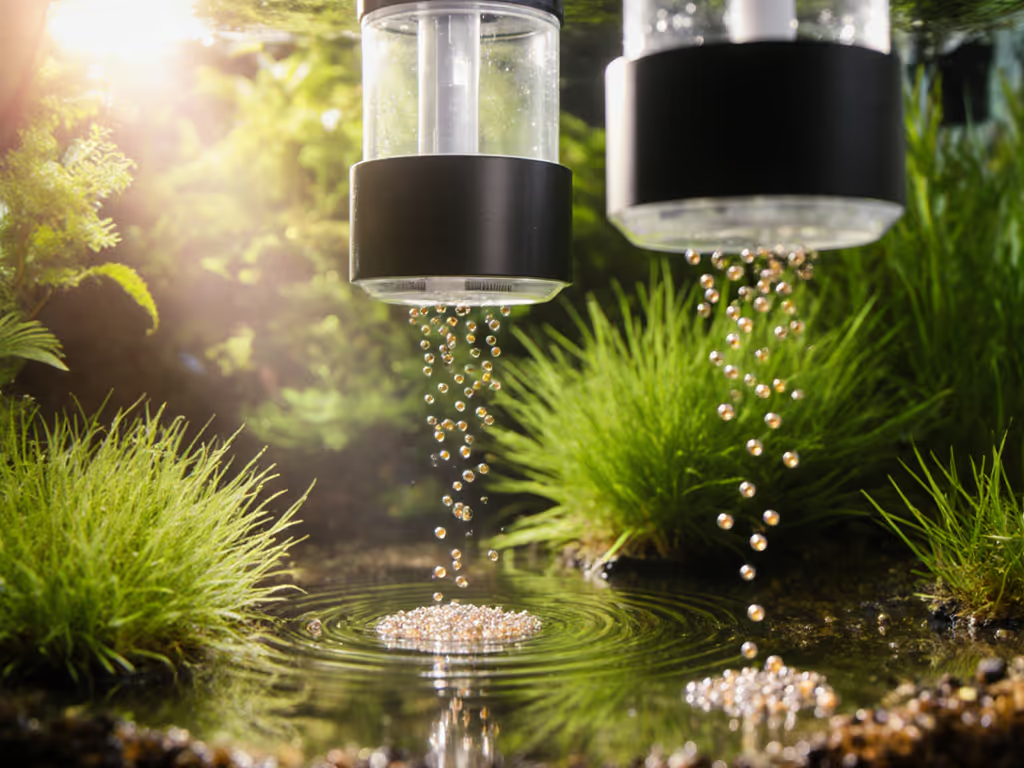
Many solar feeders offer a 120° arc broadcast at ranges up to 10 feet. This ensures food reaches multiple zones of your pond, reducing competition and allowing shy fish to feed. From a behavioral ecology standpoint, this is valuable, as it mirrors the scattered nature of natural food sources.
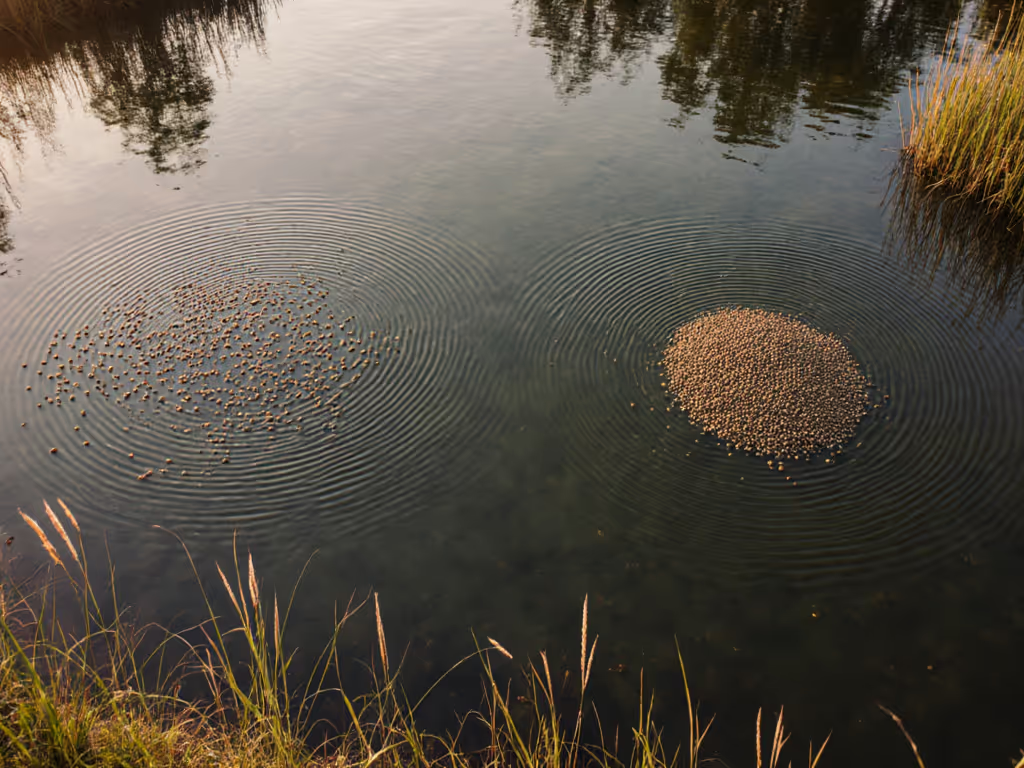
However, broadcast range means little if the total daily portion exceeds your stock's caloric needs. I've reviewed setups where a wide broadcast pattern masked chronic overfeeding; fish at the pond's far edges were getting secondary helpings, and uneaten pellets accumulated in dead zones, spiking nitrates. Precision in portion size, programmed in the feeder's control unit, matters infinitely more than how far the device throws food.
Q3: How Does Seasonal Sunlight Variation Affect Feeder Reliability?
Short answer: Substantially, and most manufacturers understate this in marketing.
A feeder operating on a 5-watt panel in June (high sun angle, 14+ hours daylight) will perform flawlessly. The same feeder in December (low sun angle, 9-10 hours daylight) may struggle to power consistent dispensing, especially on overcast days. Battery degradation accelerates in cold, so winter efficiency compounds the problem.
For temperate climates (USDA zones 5-7), expect reduced reliability from November through February. See our cold-weather pond feeder tests for performance data down to -20°C and practical winterization tactics. Some users address this by manually feeding during winter months or by switching to a less frequent automated schedule (e.g., feeding every other day). Others invest in larger panels or hybrid AC/solar systems to maintain consistency.
Evidence-based practice here: know your local photoperiod before purchasing. If you're in a region where winter daylight drops below 8 hours consistently, a pure solar system alone may not guarantee year-round automation.
Q4: Are Auto Feeders with Moisture Control Superior for Pond Pellets?
Short answer: They protect food quality, but they don't eliminate the need for ingredient scrutiny.
Moisture-lock packets and sealed compartments (now standard in units like the KoiGrower) do prevent feed caking and fungal colonization. This is a genuine engineering improvement over older designs. In outdoor ponds where humidity is high, this feature extends pellet shelf life by weeks.
That said, a moisture-lock lid does nothing to prevent lipid oxidation in high-quality fats or vitamin loss in stabilizers. If the underlying pellet is formulated with cheap binding agents or rancid fish oil, the sealed container simply preserves mediocrity.
Q5: Which Capacity and Feature Set Minimizes Year-Round Maintenance?
Short answer: Mid-range capacity (200-250 lb) with varmint guard, adjustable mounting, and battery redundancy.
A 250-pound hopper balances refill frequency (roughly bi-weekly in active feeding seasons) with manageable fill logistics. Adjustable mounting legs or dock systems accommodate pond water-level fluctuations across seasons. Dual-battery or hybrid solar-AC backup systems essentially eliminate winter reliability concerns, though they increase cost and complexity. For pros and cons beyond solar, review our battery vs AC feeders to plan reliable backups.
Beyond these specs, honest maintenance includes monthly inspection of solar panels (dust and pollen reduce efficiency), battery checks in late autumn, and quarterly testing of the timer under low-light conditions. No feeder is truly maintenance-free; the trade-off is automation for convenience, not for reduced husbandry demands.
The Nutrition-First Framework: How Feeders Should Integrate into Your Strategy
Here's where the evidence and personal experience converge: an auto feeder's year-round value depends entirely on whether it's anchored in evidence-based feeding biology, not automation convenience.
Protein and Lipid Alignment Across Seasons
Most pond fish slow metabolic activity in cool months. A feeder programmed for summer rations (e.g., 5% body weight daily) will cause ammonia stress and nutrient waste in 50°F water. Evidence-based protocols adjust feed volume and macronutrient composition seasonally. A solar feeder with programmable schedules allows you to dial back portions in winter or shift from high-lipid conditioning feeds to stabilized maintenance pellets. This level of control is where automation truly serves biology.
Ingredient Transparency and Feeder Compatibility
Not all pellets are created equal. Some premium formulations use stabilized vitamin premixes and protected fats; others contain commodity fish meal with high rancidity risk. Your chosen feeder should accommodate your selected feed size (typically 5/16" for most ponds). But here's the critical point: don't let feeder compatibility dictate feed choice. Let ingredient quality and species requirements drive feeder selection.
Closing Perspective: Devices Enable Precision, But Data Drives Success
A weatherproof solar feeder can dramatically simplify your routine and eliminate vacation anxiety. Year-round reliability hinges on honest assessment of your local climate, battery redundancy during winter lows, and integration into a larger feeding strategy rooted in biology, not on marketing claims of "set it and forget it."
The evidence supports automation as a tool for consistency. The mistake is treating consistency as a replacement for knowledge. Whether your feeder operates flawlessly or falters in February, your real measure is thriving, vibrant fish with stable water parameters and no wasted feed.
Further Exploration
If you're evaluating solar feeders for year-round deployment, dig deeper into these areas: compare your local winter photoperiod against the solar panel's rated output (manufacturers should provide this data; if they don't, that's a red flag). Review your feed supplier's ingredient sheets and pellet stability metrics, then cross-reference those against your feeder's compatibility specs. Finally, consider running a pilot trial on a subset of your pond or a smaller setup before full commitment. Small-scale testing under your actual conditions reveals whether a given feeder truly performs or simply fills marketing noise. Let your data, not testimonials, inform the choice.
Related Articles